Representative Benjamin Hutchinson Clover
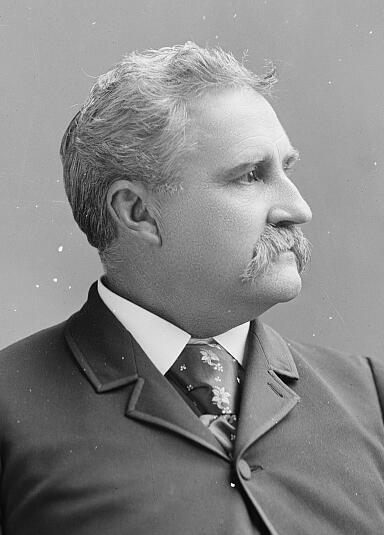
Here you will find contact information for Representative Benjamin Hutchinson Clover, including email address, phone number, and mailing address.
| Name | Benjamin Hutchinson Clover |
| Position | Representative |
| State | Kansas |
| District | 3 |
| Party | Populist |
| Status | Former Representative |
| Term Start | December 7, 1891 |
| Term End | March 3, 1893 |
| Terms Served | 1 |
| Born | December 22, 1837 |
| Gender | Male |
| Bioguide ID | C000533 |
About Representative Benjamin Hutchinson Clover
Benjamin Hutchinson Clover (December 22, 1837 – December 30, 1899) was a U.S. Representative from Kansas and a prominent agrarian leader associated with the Populist movement. He served one term in the United States House of Representatives from 1891 to 1893, representing Kansas during a period of significant political and economic change in the late nineteenth century.
Clover was born near Jefferson, Ashtabula County, Ohio, on December 22, 1837. He attended the common schools of the area, receiving a basic formal education typical of rural Midwestern communities in the mid-nineteenth century. His early life was shaped by the agricultural environment of his native Ohio, an experience that would inform his later advocacy on behalf of farmers and rural interests.
In 1871, Clover moved west to Kansas, part of a broader migration of settlers seeking opportunity on the Great Plains after the Civil War. He settled in Cambridge, in Cowley County, where he engaged in agricultural pursuits. As a working farmer, he became deeply involved in local civic affairs and educational matters. From 1873 to 1888 he served as a member of the board of school commissioners, contributing to the development and oversight of public education in his community over a span of fifteen years.
Clover emerged as a significant figure in the agrarian reform movements of the 1880s. He was twice elected president of the Kansas State Farmers’ Alliance and Industrial Union, an organization that sought to address the economic hardships facing farmers through cooperative action and political reform. His leadership in Kansas elevated him to the national stage, and he was twice chosen as vice president of the national organization of that order. Through these roles, Clover became closely associated with the broader Farmers’ Alliance and Populist currents that challenged established political and economic power structures in the late nineteenth century.
Building on his prominence in agrarian politics, Clover was elected as a member of the Populist Party to the Fifty-second Congress. He served in the U.S. House of Representatives from March 4, 1891, to March 3, 1893. During his single term in Congress, he participated in the legislative process at a time when issues such as monetary policy, railroad regulation, and agricultural relief were at the forefront of national debate. As a Populist representative from Kansas, he worked to represent the interests of his constituents, particularly farmers and rural communities, within the broader democratic process of the House of Representatives. He did not seek renomination in 1892 and thus concluded his congressional service at the end of that term.
After leaving Congress, Clover returned to private life and resumed his agricultural pursuits in Kansas. He later returned to Douglass, Kansas, continuing to live in the rural environment that had defined both his livelihood and his political commitments. On December 30, 1899, Clover died by suicide in Douglass. He was interred in Douglass Cemetery, in Butler County, Kansas. His career reflected the rise of agrarian protest and third-party politics in the Gilded Age, and his service in Congress marked the participation of Kansas Populists in national governance during a transformative era in American political history.