Representative Benjamin Contee
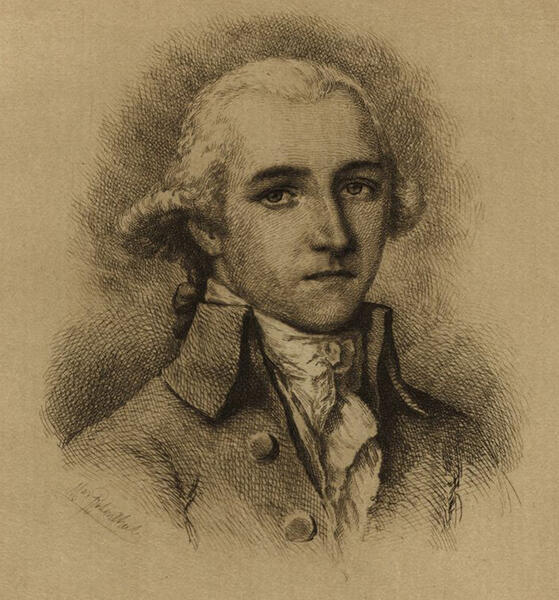
Here you will find contact information for Representative Benjamin Contee, including email address, phone number, and mailing address.
| Name | Benjamin Contee |
| Position | Representative |
| State | Maryland |
| District | 3 |
| Party | Unknown |
| Status | Former Representative |
| Term Start | March 4, 1789 |
| Term End | March 3, 1791 |
| Terms Served | 1 |
| Gender | Male |
| Bioguide ID | C000710 |
About Representative Benjamin Contee
Benjamin Contee (1755 – November 30, 1815) was an American Episcopal priest, Revolutionary War officer, and statesman from Maryland who served as a delegate to the Confederation Congress and as a member of the First United States House of Representatives. He was born at “Brookefield,” near Nottingham in Prince George’s County, Maryland, the home of his father and the original home of his ancestor Maj. Thomas Brooke Sr., Esq. (1632–1676). He was the son of Col. Thomas Contee (1729–1811) and Sarah Fendall (1732–1793), both members of prominent Maryland families closely connected with the colonial political and planter elite. Raised in the Anglican, later Episcopal, tradition, he was brought up in the church in a region where his family’s social standing and connections shaped his early opportunities and outlook.
At the outbreak of the American Revolutionary War, Contee entered the Continental Army and pursued a military career in the patriot cause. He rose to the rank of captain in the 3rd Maryland Regiment, one of the Continental Army’s most highly regarded units. The regiment distinguished itself in several campaigns and was considered an elite formation until its near annihilation at the Battle of Camden in South Carolina in 1780, a major defeat for American forces in the Southern theater. Contee’s wartime service placed him among the generation of Maryland officers whose military experience would later underpin their roles in state and national politics.
Following the war, Contee turned to public service in Maryland’s civil government. He was elected to the Maryland House of Delegates, where he served from 1785 to 1787, participating in the state’s legislative affairs during the critical postwar period when the new nation was governed under the Articles of Confederation. In 1787 he was chosen as a delegate from Maryland to the Confederation Congress, serving there from 1787 to 1788. His service in the national legislature under the old confederal system coincided with the broader movement toward constitutional reform that culminated in the drafting and ratification of the United States Constitution.
Contee advanced to federal office under the new constitutional government when he was elected as a Pro-Administration candidate to represent Maryland’s 3rd congressional district in the First United States Congress. He served in the U.S. House of Representatives from March 4, 1789, to March 3, 1791. As a member of the inaugural Congress, he took part in establishing the basic framework of the federal government, including early legislation to implement the Constitution, organize the executive departments, and address the nation’s financial and administrative foundations. His term placed him among the initial cohort of federal legislators who helped define the role of Congress in the new republic.
In his private and commercial life, Contee engaged in mercantile pursuits alongside his brother Alexander Contee (1752–1810). Together they became merchants of London, operating stores in Nottingham, Queen Anne, and Upper Marlboro, Maryland, and participating in transatlantic trade at a time when American commerce was still adjusting to independence and shifting economic relationships with Britain and Europe. Their business ventures, however, were not successful in the long term, and Benjamin Contee was eventually declared insolvent due to “mishaps in trade.” After his service in Congress, he traveled to Europe, spending time in Spain, France, and England, experiences that broadened his perspective before he returned to Maryland.
On April 8, 1788, Contee married his cousin, Sarah Russell Lee (1766–1810), thereby linking two influential Maryland families. Sarah was born at “Blenheim” in 1766 and was the daughter of Philip Thomas Lee (1736–1778) and Ann Russell (died 1777) of England. She died on December 6, 1810, at “Bromont,” near Newburg in Charles County, Maryland. The couple had several children: Sarah “Sallie” Elinor Contee (1789 – c. 1815); Philip Ashton Lee Contee Sr. (1795–1842); Edmund Henry Contee (1799–1832); and Alice Lee Contee (1803–1868), who later married Joseph Kent, a physician, congressman, and governor of Maryland. Benjamin Contee resided briefly in the mid-1790s at “Blenheim,” reflecting the continued interconnection of the Contee and Lee family estates.
After returning from Europe, Contee undertook formal theological study and entered the ministry of the Episcopal Church. He completed his preparation for holy orders and in 1803 was admitted to the priesthood by the Right Reverend Thomas John Claggett, the first Bishop of Maryland and a neighbor, friend, and fellow patriot of the Revolution. That same year, Contee became rector of William & Mary’s Parish in Charles County, Maryland. He soon gained recognition as a distinguished Episcopal clergyman and, for several years, served as the incumbent of Port Tobacco Parish in Charles County. His ministry reflected both his long-standing religious upbringing and the broader revival and reorganization of the Episcopal Church in the early national period.
Contee’s ecclesiastical responsibilities expanded over time. In 1808 he added Trinity Parish to his charge, and in 1811 he assumed responsibility for St. Paul’s Parish in Prince George’s County, Maryland, thereby overseeing multiple congregations in the region where he had been born and raised. Alongside his clerical duties, he continued to serve in local public office as a judge of the Orphans’ Court, which oversaw probate and guardianship matters, and he was consistently a member of the diocesan Standing Committee, a key advisory and governing body within the Episcopal Church in Maryland. These roles underscored his continuing influence in both civic and religious affairs.
In his later years, Contee lived at the glebe house of Trinity Parish near Allen’s Fresh in Charles County, where he carried out his pastoral work until his death. He died on November 30, 1815. Although the precise location of his burial is uncertain, it is believed that Benjamin Contee and his wife were interred in the Contee family cemetery at “Locust Hill” just outside Port Tobacco, a site that has since been destroyed. If not buried there, they were likely laid to rest in the original Christ Church cemetery in Port Tobacco, which is now covered by swamp. His life spanned the transition from colonial Maryland through the Revolution and the founding of the United States, and his combined careers as soldier, legislator, merchant, and clergyman reflected the complex public service of his generation.