Representative Benjamin Dean
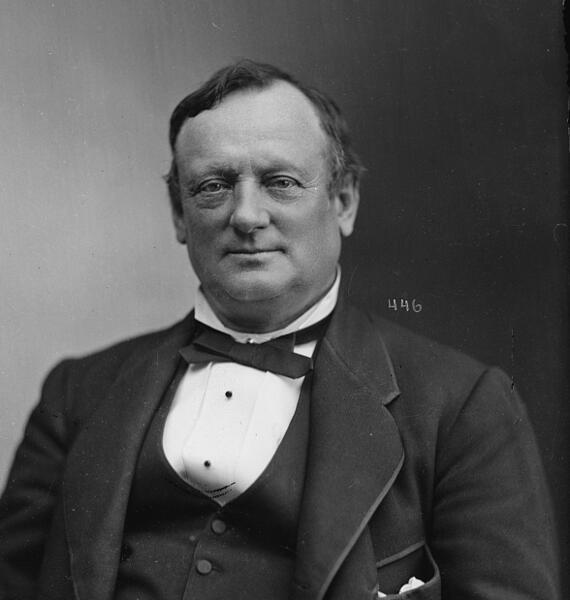
Here you will find contact information for Representative Benjamin Dean, including email address, phone number, and mailing address.
| Name | Benjamin Dean |
| Position | Representative |
| State | Massachusetts |
| District | 3 |
| Party | Democratic |
| Status | Former Representative |
| Term Start | October 15, 1877 |
| Term End | March 3, 1879 |
| Terms Served | 1 |
| Born | August 14, 1824 |
| Gender | Male |
| Bioguide ID | D000170 |
About Representative Benjamin Dean
Benjamin Dean (August 14, 1824 – April 9, 1897) was a Democratic member of the U.S. House of Representatives from Massachusetts who served one term in Congress from 1877 to 1879. His service in the House of Representatives occurred during a significant period in American history, in the years following the Civil War and Reconstruction, when he participated in the legislative process and represented the interests of his Massachusetts constituents.
Dean was born in Clitheroe, Lancashire, England, United Kingdom, on August 14, 1824, the fifth child of Alice Lofthouse and Benjamin Dean. He emigrated to the United States with his family at the age of five and was raised in Lowell, Massachusetts, a growing industrial center in the early nineteenth century. He attended the public schools of Lowell and later pursued higher education at Dartmouth College in New Hampshire, laying the academic foundation for his legal and political career.
In 1845 Dean was admitted to the bar and began the practice of law in Lowell, where he founded the firm of Dean & Dinsmoor, Attorneys. His legal practice prospered, and in 1852 he moved to Boston, Massachusetts, where he continued to practice law and established himself as a prominent attorney. Over the ensuing decades he built a substantial reputation in the Boston legal community, which in turn supported his entry into public life.
Dean’s political career began at the state and municipal levels. He served in the Massachusetts Senate, including during the 84th Massachusetts General Court in 1863 and the 90th Massachusetts General Court in 1869, participating in state legislative affairs during and after the Civil War. In addition, he served on the Common Council of the City of Boston, contributing to the governance and development of the rapidly expanding city. These roles helped establish him as a significant Democratic figure in a state largely dominated by other parties during that era.
Dean was elected as a Democrat to the Forty-fifth United States Congress, representing Massachusetts in the U.S. House of Representatives. His term in Congress extended from 1877 to 1879, and he is recorded as serving in the Forty-fifth Congress from 1878 to 1879. During this single term, he took part in the national legislative process at a time of economic adjustment and political realignment in the post-Reconstruction United States. He did not seek reelection in 1878 and returned to private life after the completion of his term.
Following his congressional service, Dean resumed his law practice in Boston, remaining active in civic affairs. He served as chairman of the board of parks commissioners, playing a role in the oversight and development of public parks in the city. Beyond his professional and political work, he was deeply involved in fraternal and social organizations. A 33-degree Mason, he served as grand master of the Grand Commandery of the United States from 1880 to 1883 and attended the Tricentennial Conclave in San Francisco in 1883 with his wife and youngest daughter, Mary. He was also a member of the Boston Yacht Club and owned Outer Brewster Island in Boston Harbor, reflecting his social standing and personal interests.
Dean married Mary Anne French, daughter of Josiah Bowers French, a mayor of Lowell, and a descendant of the prominent Cotton and Mather families of Massachusetts Bay. Together they had six children, among them the noted marine artist Walter Lofthouse Dean and Judge Josiah French Dean, both of whom carried forward the family’s public and professional prominence. The family’s connections linked Dean to longstanding New England political, religious, and cultural traditions.
Benjamin Dean died at his home in South Boston, Massachusetts, on April 9, 1897. He was interred at Lowell Cemetery in Lowell, the city where he had grown up and begun his legal career, closing a life that spanned immigration from England, advancement in the law, service in state and municipal government, a term in the United States Congress, and continued civic and fraternal leadership in Massachusetts.