Senator Benjamin Fitzpatrick
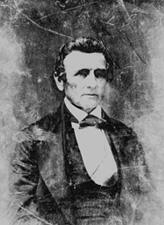
Here you will find contact information for Senator Benjamin Fitzpatrick, including email address, phone number, and mailing address.
| Name | Benjamin Fitzpatrick |
| Position | Senator |
| State | Alabama |
| Party | Democratic |
| Status | Former Representative |
| Term Start | January 1, 1848 |
| Term End | March 3, 1861 |
| Terms Served | 3 |
| Born | June 30, 1802 |
| Gender | Male |
| Bioguide ID | F000174 |
About Senator Benjamin Fitzpatrick
Benjamin Fitzpatrick (June 30, 1802 – November 21, 1869) was an American politician who served as the 11th Governor of Alabama and as a United States Senator from that state. A member of the Democratic Party, he was a prominent figure in Alabama and national politics in the decades preceding the Civil War and contributed to the legislative process during three terms in the United States Senate.
Fitzpatrick was born in Greene County, Georgia, on June 30, 1802. Orphaned at the age of seven, he was taken in by his sister, Celia Fitzpatrick Baldwin, who brought him to the Alabama Territory in 1815. Settling along the Alabama River, he helped his brothers manage family landholdings and gained early experience in local affairs by serving as a deputy under the first sheriff of Autauga County. These formative years in frontier Alabama shaped his familiarity with the region’s agricultural economy and its emerging political institutions.
Pursuing a legal career, Fitzpatrick worked in the law office of Nimrod E. Benson before formally studying law. He was admitted to the bar in 1821 and commenced practice in Montgomery, Alabama. From 1822 to 1823 he served as solicitor of the Montgomery circuit, an early prosecutorial post that established his reputation in the state’s legal community. In 1829 he moved from active legal practice to his plantation in Autauga County, where he engaged in planting, reflecting the increasingly agrarian basis of his livelihood and political constituency.
Fitzpatrick entered high state office when he became the 11th Governor of Alabama in 1841, serving until 1845. His gubernatorial tenure coincided with the lingering effects of the Panic of 1837, which had plunged the country into economic depression. His predecessor, Arthur P. Bagby, had introduced measures to assist the state banks, but the legislature rejected most of them. Confronted with the continuing financial crisis and instability in the state banking system, Fitzpatrick oversaw the closure of all the state banks, a decisive and controversial step in Alabama’s fiscal history. After leaving the governorship, he returned to planting but remained an influential Democratic leader.
Fitzpatrick’s national career began with his appointment as a Democrat to the United States Senate to fill the vacancy caused by the death of Senator Dixon H. Lewis. He served his first Senate term from November 25, 1848, to November 30, 1849, when a successor was elected. He was again appointed to the Senate on January 14, 1853, to fill the vacancy created by the resignation of William R. King, who had been elected Vice President of the United States. Fitzpatrick was subsequently elected on December 12, 1853, and served from January 14, 1853, to March 3, 1855. During this period he held important procedural roles as chairman of the Committee on Printing and the Committee on Engrossed Bills. He was elected to the Senate again on November 26, 1855, to fill a vacancy caused by the failure of the Alabama legislature to elect his successor, and he continued in that body until 1861. Over the course of these three Senate terms, from 1847 to 1861, he represented Alabama during a critical era of sectional tension and served several times as President pro tempore of the Senate, placing him in the line of succession to the presidency and underscoring his standing among his colleagues.
Fitzpatrick’s prominence in national Democratic politics was further demonstrated in 1860, when he was nominated for Vice President of the United States by the wing of the Democratic Party that supported Stephen A. Douglas of Illinois for president. He declined the nomination, leading to the selection of Herschel V. Johnson of Georgia as the vice-presidential candidate instead. As the secession crisis intensified following the election of Abraham Lincoln, Fitzpatrick aligned with his home state. He withdrew from the Senate on January 21, 1861, after Alabama seceded from the Union, thus ending his service in the United States Congress during one of the most consequential periods in American history.
During the Civil War years, Fitzpatrick did not take a particularly active role in the politics of the Confederacy, despite his long experience in public office. However, he reemerged in public life at the close of the conflict. In 1865 he served as president of the Alabama constitutional convention, which met in the aftermath of the Confederacy’s collapse to reorganize the state’s government and legal framework under federal Reconstruction requirements. His leadership at the convention reflected both his enduring influence in Alabama and the effort to navigate the transition from a slave-based society to a postwar order.
Fitzpatrick’s personal life was closely tied to prominent Alabama families. In 1827 he married Sarah Terry Elmore, the daughter of John Elmore. Their marriage produced several children—Elmore J., Morris, Phillips, James M., and John A.—before Sarah’s death in 1839. In 1846 he married his second wife, Aurelia Blassingame. Of their children, only one son, Benjamin Jr., survived to adulthood. Fitzpatrick spent his later years at his Oak Grove Plantation near Wetumpka, Alabama, where he continued to oversee his agricultural interests. He died there on November 21, 1869, at the age of 67, leaving a legacy as a key Democratic leader, governor, and long-serving United States Senator from Alabama.