Representative Benjamin Franklin Funk
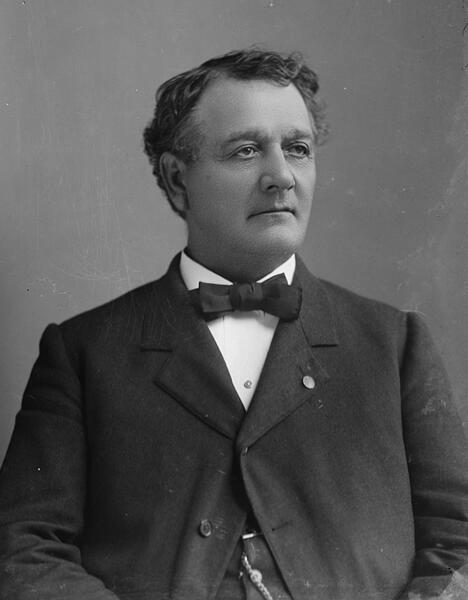
Here you will find contact information for Representative Benjamin Franklin Funk, including email address, phone number, and mailing address.
| Name | Benjamin Franklin Funk |
| Position | Representative |
| State | Illinois |
| District | 14 |
| Party | Republican |
| Status | Former Representative |
| Term Start | August 7, 1893 |
| Term End | March 3, 1895 |
| Terms Served | 1 |
| Born | October 17, 1838 |
| Gender | Male |
| Bioguide ID | F000427 |
About Representative Benjamin Franklin Funk
Benjamin Franklin Funk (October 17, 1838 – February 14, 1909) was a Republican U.S. Representative from Illinois and a prominent civic leader in Bloomington and McLean County. He served one term in the United States House of Representatives from 1893 to 1895 and was the father of Frank Hamilton Funk. Over the course of his career, he combined agricultural pursuits with extensive service in local government, higher education governance, and state institutional oversight.
Funk was born in Funk’s Grove Township, McLean County, Illinois, on October 17, 1838. He was the son of Isaac Funk, a well-known early settler and stock raiser in central Illinois whose family gave its name to Funk’s Grove. Raised in a rural environment, Benjamin Funk attended the local public schools before pursuing higher education. He enrolled at Illinois Wesleyan University in Bloomington, Illinois, an institution with which he would maintain a long and influential association throughout his life.
In 1862, amid the American Civil War, Funk left his studies at Illinois Wesleyan University to enlist in the Union Army. He joined the Sixty-eighth Regiment, Illinois Volunteer Infantry, as a private and served for five months. Following his period of military service, he returned to Illinois Wesleyan University and completed his course of study. After finishing his education, he engaged in agricultural pursuits, reflecting both his family background and the economic character of McLean County in the postwar period.
Funk returned to Bloomington in 1869, where he quickly became a leading figure in municipal affairs. He was elected mayor of Bloomington and served two extended periods in that office, first from 1871 to 1876 and again from 1884 to 1886. His mayoral tenure coincided with a time of growth and modernization in the city, and he played a central role in its civic administration. Beyond city government, he emerged as an important figure in higher education governance, serving as president of the board of trustees of Illinois Wesleyan University for twenty years. He also served as a trustee of the asylum for the blind in Jacksonville, Illinois, contributing to the oversight of state charitable and educational institutions.
At the state and national political level, Funk was active within the Republican Party. He served as a delegate to the Republican National Convention in 1888, participating in the party’s national deliberations and candidate selection. Building on his local and party leadership, he was elected as a Republican to the Fifty-third Congress, representing Illinois in the U.S. House of Representatives from March 4, 1893, to March 3, 1895. During this single term in Congress, Benjamin Franklin Funk contributed to the legislative process, participated in the democratic governance of the nation, and represented the interests of his Illinois constituents at a time of significant economic and political change in the United States.
Funk sought renomination in 1894 but was unsuccessful, and his congressional service concluded at the end of the Fifty-third Congress. After leaving the House of Representatives, he returned to his agricultural interests in Illinois, resuming the pursuits that had anchored his life before and between periods of public office. He remained a respected figure in Bloomington and McLean County, known for his long record of public service at the local, educational, and national levels.
Benjamin Franklin Funk died in Bloomington, Illinois, on February 14, 1909. He was interred in Bloomington Cemetery. His life and career reflected the trajectory of a nineteenth-century Midwestern civic leader who combined farming, municipal leadership, educational stewardship, and national legislative service, and he was part of a family that continued to be active in Illinois public life through his son, Frank Hamilton Funk.