Senator Benjamin Goodhue
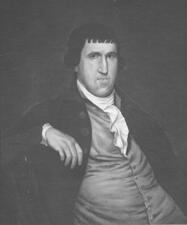
Here you will find contact information for Senator Benjamin Goodhue, including email address, phone number, and mailing address.
| Name | Benjamin Goodhue |
| Position | Senator |
| State | Massachusetts |
| Party | Federalist |
| Status | Former Representative |
| Term Start | March 4, 1789 |
| Term End | November 8, 1800 |
| Terms Served | 6 |
| Born | September 20, 1748 |
| Gender | Male |
| Bioguide ID | G000286 |
About Senator Benjamin Goodhue
Benjamin Goodhue (September 20, 1748 – July 28, 1814) was a Representative and a Senator from Massachusetts, a prominent Federalist, and an influential member of the group of Essex County Federalists known as the Essex Junto. He supported the Patriots during the American Revolution and became known in the early national period as a strong advocate of a vigorous central government and commercial development. Over the course of his national legislative career, he served multiple terms in Congress, first in the House of Representatives and then in the Senate, contributing significantly to the formative legislative framework of the United States.
Goodhue was born in Salem in the Province of Massachusetts Bay to Benjamin and Martha (Hardy) Goodue. His father, originally a blacksmith by trade, later became a successful merchant, providing the younger Goodhue with an early introduction to commerce and maritime trade in one of New England’s most active ports. Goodhue pursued higher education at Harvard College, from which he graduated in 1766. After completing his studies, he returned to Salem and joined his father in the merchant business, gaining practical experience in trade and finance that would later inform his legislative interests, particularly in revenue and commercial policy.
During the American Revolutionary War, Goodhue remained active as a merchant while also aligning himself firmly with the Patriot cause. His political involvement deepened in the late 1770s when he participated in the Massachusetts constitutional conventions of 1779 and 1780. The latter convention produced the present Constitution of Massachusetts, one of the oldest functioning written constitutions in the world, and Goodhue’s participation placed him among the early architects of state governance in the post-colonial era. Following the adoption of the state constitution, he was elected as a state representative to the inaugural Massachusetts House of Representatives in 1780, marking the beginning of his formal legislative career.
Goodhue’s influence in Massachusetts politics expanded when he moved from the lower to the upper chamber of the state legislature. He was elected to the Massachusetts Senate, where he served in 1783 and again from 1786 to 1788. These years coincided with a period of economic strain and political unrest in Massachusetts, including Shays’s Rebellion, and helped shape his conviction that a stronger national government was necessary to stabilize the new republic. When the United States Constitution was adopted, Goodhue emerged as a supporter of its framework and, as the Federalist Party coalesced, he joined its ranks as a committed advocate of its principles.
With the establishment of the new federal government, Goodhue was elected as a Representative from Massachusetts to the First United States Congress and to the three succeeding Congresses. He served in the House of Representatives from March 4, 1789, until his resignation in June 1796. His service in Congress occurred during a significant period in American history, as the institutions and precedents of the federal government were being created and tested. A member of the Federalist Party, he contributed to the legislative process during six terms in office across both chambers of Congress and represented the interests of his Massachusetts constituents in the early national legislature.
In the House, Goodhue quickly became associated with financial and commercial legislation. He was one of two congressmen who drafted the nation’s first revenue code, a foundational measure for the fiscal operations of the new federal government. His expertise in commerce and trade led to his service as chairman of the Committee on Commerce and Manufactures in the Fourth United States Congress, where he played a key role in shaping policies intended to foster American manufacturing and regulate foreign trade. His positions reflected both his mercantile background and the broader Federalist vision of a commercially robust, centrally guided national economy.
Goodhue’s congressional career continued in the upper chamber when he was elected in 1796 to the United States Senate from Massachusetts, filling the vacancy caused by the resignation of Senator George Cabot. He was reelected and served in the Senate from June 11, 1796, to November 8, 1800. As a senator, he remained an active Federalist voice, participating in debates over foreign policy, fiscal measures, and the scope of federal authority during the administrations of George Washington and John Adams. He was described by contemporaries as a leading member of the Essex Junto, a group of Massachusetts Federalists, most of them from Essex County, who were known for their strong support of Federalist policies and, at times, their opposition to the emerging Democratic-Republican movement. Goodhue resigned from the Senate on November 8, 1800, and retired from public service thereafter.
In his later years, Goodhue lived in Salem, where he had long been a respected figure in both commercial and political circles. He died in Salem on July 28, 1814. His legacy as an early national legislator and Federalist leader endured, particularly in the realms of revenue policy and commercial regulation. Reflecting the recognition of his contributions, a World War II Liberty ship was later named in his honor, commemorating his role in the establishment of the United States’ fiscal and commercial foundations.