Representative Benjamin Franklin Grady
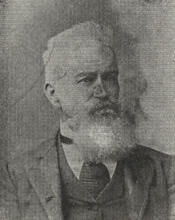
Here you will find contact information for Representative Benjamin Franklin Grady, including email address, phone number, and mailing address.
| Name | Benjamin Franklin Grady |
| Position | Representative |
| State | North Carolina |
| District | 3 |
| Party | Democratic |
| Status | Former Representative |
| Term Start | December 7, 1891 |
| Term End | March 3, 1895 |
| Terms Served | 2 |
| Born | October 10, 1831 |
| Gender | Male |
| Bioguide ID | G000350 |
About Representative Benjamin Franklin Grady
Benjamin Franklin Grady (October 10, 1831 – March 6, 1914) was a teacher, author, and United States Representative from North Carolina. A member of the Democratic Party, he represented North Carolina’s 3rd congressional district in the U.S. House of Representatives from 1891 to 1895, serving two terms during a significant period in American political and social history.
Grady was born near Sarecta, in Albertson Township, Duplin County, North Carolina, on October 10, 1831. Little is recorded in standard references about his early childhood, but his later career as an educator and author suggests a strong early grounding in classical and scientific studies. He came of age in the antebellum South, in a region where agriculture and local schooling shaped the opportunities available to ambitious young men.
Pursuing a career in education, Grady became a teacher of mathematics and natural sciences. By the time of the Civil War, he was on the faculty of Austin College in Texas, where he taught these subjects. His work at Austin College placed him within the growing network of Southern higher education institutions in the mid-nineteenth century and established his reputation as a capable educator in the sciences.
With the outbreak of the Civil War, Grady left his academic post to join the Confederate Army. He served in Company K, 25th Regiment of the Texas Cavalry, reflecting the decision of many Southern professionals to enter military service. His wartime experience, and his alignment with the Confederate cause, would later inform his postwar writings on constitutional issues and the conflict between North and South.
Grady’s personal life spanned both Texas and North Carolina. He married Olivia Penelope Hamilton on May 30, 1861, in Huntsville, Texas, during the early months of the Civil War. After the war, he returned to North Carolina, where he married Mary Charlotte Bizzell on November 10, 1870, in Clinton, North Carolina. Settling in his home state, he resumed his work in education and public affairs and became Superintendent of Schools in Duplin County, North Carolina, a position that placed him at the center of local educational administration during the Reconstruction and post-Reconstruction era.
Building on his prominence as an educator and local official, Grady entered national politics as a Democrat. In the election of 1890 he defeated African-American Republican John S. Leary in a contest for a seat in the U.S. House of Representatives from North Carolina’s 3rd District. He took office in March 1891 and served in Congress until March 1895, completing two consecutive terms. During his tenure in the House of Representatives, Grady participated in the legislative process and represented the interests of his constituents at a time marked by debates over economic policy, race, and the legacy of Reconstruction. His service in Congress occurred during a significant period in American history, as the nation grappled with industrialization, agrarian unrest, and the evolving political order in the post–Civil War South.
After leaving Congress, Grady continued to engage in public discourse through writing. In 1899 he published “The Case of the South Against the North,” a work that employed historical evidence to justify the South’s war against the North on the basis of constitutional principles. The book reflected his enduring commitment to a Southern constitutional interpretation of the Civil War and placed him among those former Confederates who sought to defend the Southern cause in print during the late nineteenth century.
Benjamin Franklin Grady spent his later years in North Carolina, remaining associated with the communities in Duplin and Sampson Counties where he had lived, taught, and served in public office. He died in Clinton, Sampson County, North Carolina, on March 6, 1914.