Representative Benjamin Huntington
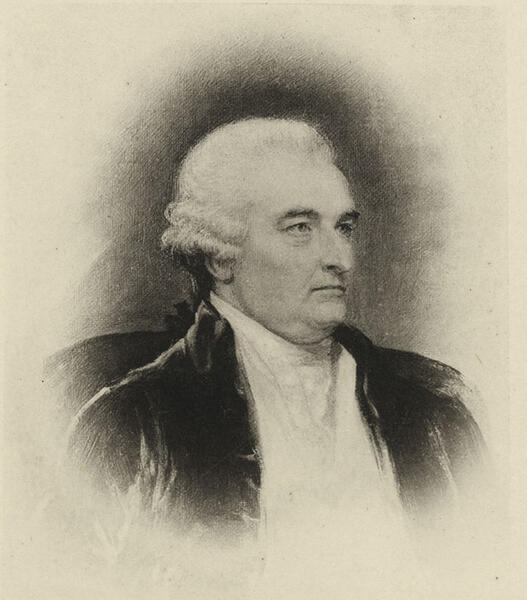
Here you will find contact information for Representative Benjamin Huntington, including email address, phone number, and mailing address.
| Name | Benjamin Huntington |
| Position | Representative |
| State | Connecticut |
| District | -1 |
| Party | Unknown |
| Status | Former Representative |
| Term Start | March 4, 1789 |
| Term End | March 3, 1791 |
| Terms Served | 1 |
| Born | April 19, 1736 |
| Gender | Male |
| Bioguide ID | H000995 |
About Representative Benjamin Huntington
Benjamin Huntington (April 19, 1736 – October 16, 1800) was an eighteenth-century American lawyer, jurist, and politician from Connecticut who served as a delegate to the Second Continental Congress and as a member of the U.S. House of Representatives during the First United States Congress. He represented Connecticut in the United States Congress from 1789 to 1791, serving one term in the House of Representatives during a formative period in the nation’s history. During this time, he contributed to the legislative process and participated in the early development of the federal government under the new Constitution.
Huntington was born in Norwich in the Connecticut Colony, the only child of Daniel Huntington and his second wife, Rachel (Wolcott) Huntington. Raised in a prominent New England family, he received a classical education and entered Yale College, from which he graduated in 1761. In October 1764 he was appointed surveyor of lands for Windham County, reflecting early recognition of his abilities in public service. He subsequently studied law and was admitted to the bar in 1765, beginning the practice of law in Norwich. In recognition of his professional standing and public service, Yale College later conferred upon him the honorary degree of Doctor of Laws (LL.D.).
On May 5, 1765, Huntington married Anne Huntington of Windham, Connecticut. The couple made their home in Norwich, where he built his legal and political career. They had at least one son, named Benjamin Huntington. Anne Huntington died on October 6, 1790, in Norwich. Throughout these years, Huntington’s growing legal practice and expanding public responsibilities placed him among the leading figures of his community and colony.
Huntington’s political career began in the colonial and revolutionary era. He served as a member of the Connecticut House of Representatives from 1771 to 1780, and during the critical years of the American Revolution he rose to positions of leadership, serving as speaker of the House in 1778 and 1779. In 1775 he was appointed to the committee of safety in the State House and was designated to advise Governor Jonathan Trumbull during the recesses of the legislature, a role that placed him at the center of Connecticut’s wartime governance. In 1778 he was appointed a delegate to the Provincial Congress at New Haven, further deepening his involvement in the revolutionary cause.
At the national level, Huntington served as a delegate to the Continental Congress from 1780 to 1784, and again in 1787 and 1788, participating in the confederation government during the final years of the Revolutionary War and the critical period leading up to the adoption of the Constitution. Within Connecticut’s state government, he was a member of the council of assistants from 1781 to 1789 and again from 1791 to 1792, and he served in the State Senate from 1781 to 1790 and from 1791 to 1793. He also held important judicial responsibilities, serving as a judge of the Connecticut Supreme Court of Errors from 1784 to 1790 and again from 1791 to 1793, thereby influencing the development of the state’s highest court of appeal.
When the new federal government under the Constitution went into operation in 1789, Huntington was chosen to represent Connecticut in the First Congress of the United States. Elected as a Pro-Administration Party candidate, he served in the U.S. House of Representatives from March 4, 1789, to March 3, 1791. During this single term in Congress, he represented the interests of his Connecticut constituents and took part in establishing the legislative precedents and institutional framework of the new national government. His service in Congress occurred during a significant period in American history, as the First Congress organized the executive departments, established the federal judiciary, and addressed foundational issues of finance and governance.
In addition to his legislative and judicial roles, Huntington was a leading municipal figure in his hometown. Upon the incorporation of Norwich as a city in 1784, he was elected its first mayor, an office he held until his resignation in 1796. In 1793 he was appointed a judge of the superior court of Connecticut, a position he held until 1798, further extending his long record of judicial service. These overlapping roles in local, state, and national institutions underscored his prominence in the political and legal life of Connecticut during the late eighteenth century.
Benjamin Huntington died on October 16, 1800, in Rome, New York. His remains were returned to Connecticut, and he is interred in the Old Colony Cemetery in Norwich. His career as a lawyer, legislator, jurist, and early member of Congress linked the colonial, revolutionary, and early national periods, and his service at multiple levels of government reflected the broad responsibilities assumed by leading public figures in the founding era.