Senator Benjamin Franklin Jonas
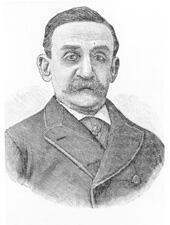
Here you will find contact information for Senator Benjamin Franklin Jonas, including email address, phone number, and mailing address.
| Name | Benjamin Franklin Jonas |
| Position | Senator |
| State | Louisiana |
| Party | Democratic |
| Status | Former Representative |
| Term Start | March 18, 1879 |
| Term End | March 3, 1885 |
| Terms Served | 1 |
| Born | July 19, 1834 |
| Gender | Male |
| Bioguide ID | J000204 |
About Senator Benjamin Franklin Jonas
Benjamin Franklin Jonas (July 19, 1834 – December 21, 1911) was an American politician, lawyer, and Confederate Army officer who served as a Democratic U.S. Senator from Louisiana from 1879 to 1885. An influential figure in Louisiana politics during the post–Civil War and Reconstruction era, he was the third Jew to serve in the United States Senate, the first practicing Jew and the first Ashkenazi Jew to sit in that body, and the second Jewish U.S. Senator from Louisiana after Judah P. Benjamin. Jonas was also the last Jewish Senator from the Deep South until Jon Ossoff of Georgia was elected in 2021.
Jonas was born on July 19, 1834, in Williamsport, Grant County, Kentucky, to Abraham Jonas (1801–1864), a merchant and lawyer, and Louisa Block. During his childhood, the family moved to Quincy, Illinois, where his father became a prominent local figure, serving as a Republican member of the state legislature and as postmaster. Abraham Jonas was personally acquainted with Abraham Lincoln, and after Abraham Jonas’s death in 1864, President Lincoln appointed the widowed Mrs. Jonas to succeed her late husband as postmaster. Growing up in Quincy, Benjamin Jonas attended the public schools and was exposed early to both civic life and national politics through his father’s activities and connections.
In 1853, Jonas moved to New Orleans, Louisiana, where his maternal uncle, Abraham Block, was already well known as an important figure in the Red River settlements. Seeking a legal career, Jonas enrolled at the University of Louisiana (now Tulane University) to study law. He completed his legal education in 1855, was admitted to the bar the same year, and commenced the practice of law in New Orleans. His relocation to Louisiana marked a decisive shift in his regional and political identity, as he aligned himself with Southern interests despite his family’s strong Republican ties in Illinois.
With the outbreak of the American Civil War, Jonas cast his lot with the Confederacy. In 1862 he enlisted in the Confederate States Army and served in Fenner’s Battery, an artillery unit. He later became adjutant of a battalion of artillery in Hood’s Corps in the Army of Tennessee. Jonas served until the end of the war, rising to the rank of major. His wartime service solidified his standing among Southern Democrats and provided him with connections that would prove important in his subsequent political career in Louisiana.
After the war, Jonas returned to New Orleans and resumed the practice of law while becoming active in Democratic Party politics during the turbulent Reconstruction period. In 1865, he was elected to the Louisiana House of Representatives, where he served until 1868. In 1872, he was elected to the Louisiana State Senate, but he declined to take the seat. He continued to hold important local offices, being appointed city attorney of New Orleans in 1875 and serving in that capacity until 1879. During this period he was again elected to the state House of Representatives in 1876, further entrenching his role in state and municipal governance.
Jonas’s prominence in Louisiana politics led to his election as a United States Senator from Louisiana in 1879. A member of the Democratic Party, he served a single term in the Senate from March 4, 1879, to March 4, 1885, representing the interests of his constituents during a significant period in American history marked by the end of Reconstruction and the consolidation of Democratic control in the South. In the 46th Congress he served as chairman of the Committee on Interior and Insular Affairs, contributing to the legislative process on matters relating to public lands and territorial administration. Although he sought another term in 1884, he was not re-elected and his Senate service concluded in 1885.
Following his departure from the Senate, Jonas continued in federal service when he was appointed Collector of the Port of New Orleans in 1885, a position he held until 1889. After completing his tenure as collector, he returned to private legal practice in New Orleans. Throughout his career he was socially and professionally active in the city’s elite circles and was a member of The Boston Club of New Orleans, one of the city’s most prominent social clubs.
Jonas’s religious and ethnic background gave his public career particular historical significance. He was the second Jewish U.S. Senator from Louisiana, following Judah P. Benjamin (who served from 1853 to 1861), and the third Jewish senator in U.S. history, the others being Benjamin and David Levy Yulee of Florida (who served from 1845 to 1851 and from 1855 to 1861). Unlike Yulee and Benjamin, both of whom married Christian wives and ceased to openly practice Judaism, Jonas remained an openly practicing Jew throughout his public life. As the first practicing Jew and the first Ashkenazi Jew in the Senate, he represented a notable milestone in the integration of Jewish Americans into national political office.
Benjamin Franklin Jonas died in New Orleans on December 21, 1911. He was buried in the Dispersed of Judah Cemetery, one of the historic Jewish cemeteries of New Orleans. His career spanned the antebellum, Civil War, Reconstruction, and post-Reconstruction eras, and his service in the Louisiana legislature, as city attorney of New Orleans, as a U.S. Senator from 1879 to 1885, and later as Collector of the Port of New Orleans reflected both the political evolution of the South and the gradual emergence of Jewish Americans in high public office.