Senator Benjamin Jordan
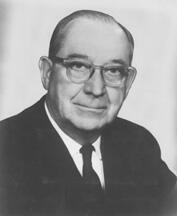
Here you will find contact information for Senator Benjamin Jordan, including email address, phone number, and mailing address.
| Name | Benjamin Jordan |
| Position | Senator |
| State | North Carolina |
| Party | Democratic |
| Status | Former Representative |
| Term Start | April 19, 1958 |
| Term End | January 3, 1973 |
| Terms Served | 8 |
| Born | September 8, 1896 |
| Gender | Male |
| Bioguide ID | J000267 |
About Senator Benjamin Jordan
Benjamin Everett Jordan (September 8, 1896 – March 15, 1974) was an American businessman and Democratic politician who represented North Carolina in the United States Senate from 1958 to 1973. Over the course of three terms in office, he contributed to the legislative process during a significant period in American history, participating in the democratic process and representing the interests of his constituents during the Cold War, the civil rights era, and the Vietnam War.
The eldest of six children, Jordan was born in Ramseur, Randolph County, North Carolina, to Rev. Henry Harrison Jordan and Annie Elizabeth (née Sellars) Jordan. His father was a Methodist minister and circuit rider, and the family’s religious background strongly influenced Jordan’s later civic and church activities. He received his early education in local public schools and then attended Rutherford College Preparatory School from 1912 to 1913. In 1914 he enrolled at Trinity College in Durham, North Carolina (now Duke University), but left the following year and moved to Wellington, Kansas, where he worked in his uncle’s jewelry store, gaining early experience in business and management.
Toward the end of World War I, Jordan entered military service with the United States Army. From 1918 to 1919 he served overseas with the Tank Corps and was later assigned to the occupation forces in Germany. After his discharge, he returned to North Carolina and began work in the textile industry as a floor sweeper at the Myrtle Textile Mill in Gastonia. Demonstrating notable aptitude and ambition, he rose through the ranks and by 1923 had become plant superintendent of the Gastonia Textile Company. In 1924 he married Katherine McLean; the couple had two sons, Benjamin Everett Jr. and John McLean, and one daughter, Rose Ann, and remained married until his death.
In 1927 Jordan and members of his family purchased an abandoned textile mill in Saxapahaw, Alamance County, which they renamed the Sellars Manufacturing Company. Jordan served as the company’s secretary-treasurer and general manager, eventually turning over day-to-day management to his sons as his political responsibilities expanded. Through this enterprise he helped revive the Saxapahaw community by employing local residents and supporting the development of a community center. His business interests extended beyond Saxapahaw: he was general manager, treasurer, and director of the Jordan Spinning Company near Franklinville and held the same positions with the Royal Cotton Mill Company in Wake Forest. He also served as secretary-treasurer of the National Processing Company in Burlington and was a director of both the Cotton Textile Institute and the North Carolina Cotton Manufacturers Association. A devout Methodist like his father, Jordan was an adult Bible instructor from 1927 to 1958, chairman of the Methodist Board of Stewards from 1930 to 1950, and vice president of the Board of Methodist Colleges from 1952 to 1956.
Jordan’s involvement in Democratic politics began in the 1930s, when he became active as a fundraiser for the North Carolina Democratic Party. His political connections deepened through family ties when his first cousin’s husband, W. Kerr Scott, was elected Governor of North Carolina in 1948. Jordan emerged as a prominent party leader, serving as chairman of the Democratic State Executive Committee from 1949 to 1954 and as a Democratic National Committeeman from 1954 to 1958. He also held several important state and local public service positions, including membership on the North Carolina Peace Officers Benefit and Retirement Commission from 1943 to 1958 and the North Carolina Medical Care Commission from 1945 to 1951. In addition, he served as chairman of the board of trustees of Alamance County General Hospital, reflecting his interest in health care and community institutions.
Jordan’s congressional service began following the death of Senator W. Kerr Scott, who had been elected to the United States Senate in 1954. On April 19, 1958, Governor Luther H. Hodges appointed Jordan to the Senate to fill the vacancy caused by Scott’s death. On November 4, 1958, Jordan was elected in his own right to complete the remaining two years of Scott’s term, defeating Republican Richard C. Clarke Jr. by a margin of 70 percent to 30 percent. He was subsequently re-elected to full terms in 1960 and 1966, serving continuously until January 3, 1973. During his Senate career, Jordan became an influential figure, particularly through his role as chairman of the Senate Committee on Rules and Administration from 1963 to 1973. In that capacity he led the high-profile investigation of Senate aide Bobby Baker in 1964, which examined allegations of corruption and influence peddling within the Senate.
As a legislator, Jordan supported research in medical science and agriculture, industrial uses of farm products, missile development, and space exploration, aligning himself with efforts to modernize the economy and strengthen national defense. He sponsored the Cotton Allotment Transfer Act, which assisted farmers with small allotments by allowing more flexibility in the transfer of cotton acreage, a measure of particular importance to his agricultural constituents in North Carolina. Like most Southern senators of his era, Jordan was a supporter of segregation and generally aligned with conservative Southern Democrats on civil rights issues. In foreign policy, he voted in favor of the Gulf of Tonkin Resolution in 1964, authorizing expanded U.S. military involvement in Vietnam, but later joined a majority of senators in calling for American forces to be brought home. His shift on Vietnam prompted his senior North Carolina colleague, Senator Sam Ervin, to ask him pointedly, “Everett, have you lost your mind?”
By the early 1970s Jordan’s political fortunes began to wane as his health declined and the Democratic electorate in North Carolina changed. In the 1972 Democratic primary he was unseated by Representative Nick Galifianakis of Durham, receiving 44.5 percent of the vote to Galifianakis’s 55.5 percent. Galifianakis subsequently lost the general election to Republican Jesse Helms. During that same year, on May 29, 1972, Jordan narrowly escaped injury in a mass shooting while campaigning at Raleigh’s North Hills Shopping Center. A 22-year-old gunman, Harvey Glenn McLeod, opened fire from the parking lot with a Ruger 10/22 rifle, killing four people and injuring seven others before dying by suicide. Jordan’s campaign stop at the shopping center had been unannounced, and he was not believed to have been a target. His press aide, Wes Hayden, was critically wounded but made a swift recovery and returned to work within a month. At the time of the primary and the shooting, Jordan was 76 years old and facing serious health challenges.
After leaving the Senate in January 1973, Jordan retired to his home in Saxapahaw. He died there on March 15, 1974, at the age of 77. He was buried at Pine Hill Cemetery in Burlington, North Carolina. His legacy in the state is commemorated by B. Everett Jordan Lake in Chatham County and by B. Everett Jordan Elementary School in Saxapahaw, part of the Alamance-Burlington School System, both named in his honor.