Senator Benjamin Watkins Leigh
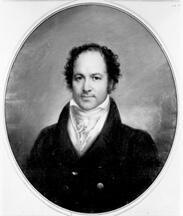
Here you will find contact information for Senator Benjamin Watkins Leigh, including email address, phone number, and mailing address.
| Name | Benjamin Watkins Leigh |
| Position | Senator |
| State | Virginia |
| Party | Anti-Jacksonian |
| Status | Former Representative |
| Term Start | February 26, 1834 |
| Term End | July 4, 1836 |
| Terms Served | 2 |
| Born | June 18, 1781 |
| Gender | Male |
| Bioguide ID | L000232 |
About Senator Benjamin Watkins Leigh
Benjamin Watkins Leigh (June 18, 1781 – February 2, 1849) was an American lawyer, legislator, and United States Senator from Virginia whose career spanned the formative decades of the early republic. A prominent member of the Virginia bar and a leading conservative voice in state and national politics, he served in the Virginia House of Delegates and represented Virginia in the United States Senate from 1834 to 1836, during a significant period in American political and sectional conflict. Over the course of his public life he was associated with the Anti-Jacksonian and later Whig opposition to President Andrew Jackson.
Leigh was born on June 18, 1781, at “Gravel Hill,” the glebe of Dale Parish in Chesterfield County, Virginia. He was the son of the Reverend William Leigh, an Anglican clergyman who died in 1787, and Elizabeth Watkins Leigh, who died in 1799. Orphaned at a relatively young age, he grew up in the Tidewater and Piedmont world shaped by the legacy of the colonial gentry and the American Revolution. He attended the College of William and Mary in Williamsburg, where he received a classical education and prepared for the legal profession. After reading law, he was admitted to the bar and began practicing in Petersburg, Virginia, in 1802. In addition to establishing his practice, he helped raise his younger brother William, assuming family responsibilities early in his adult life.
Leigh’s legal ability quickly brought him into public life. He first entered elective office as a member of the Virginia House of Delegates, representing Dinwiddie County from 1811 to 1813. After this initial legislative service, he moved to Richmond, where he rose rapidly in his profession and became one of the state’s leading lawyers. In 1819 he was selected to prepare the revised Code of Virginia, a major undertaking that helped systematize and modernize the state’s statutory law. His expertise in constitutional and appellate matters led to his appointment as reporter of the Virginia Court of Appeals, a position he held from 1829 to 1841, during which he compiled and published the court’s decisions. Leigh also played a significant role in the Virginia Constitutional Convention of 1829–1830, serving as a delegate and aligning with the conservative eastern interests that sought to preserve traditional political arrangements against demands for broader representation and reform. He returned to the Virginia legislature as a representative of Henrico County in the session of 1830–1831. In 1831 he was among the founding members of the Virginia Historical Society and served as the first chairman of its standing committee, reflecting his interest in the preservation of the Commonwealth’s legal and political heritage.
Leigh’s prominence in state affairs led to his selection for high-profile assignments in moments of national crisis. During the nullification controversy of the early 1830s, when South Carolina asserted the right to nullify federal tariffs, every state expressed disapproval of South Carolina’s course. It was Leigh who was sent as Virginia’s representative to urge South Carolina to desist from carrying matters to extremities, seeking a compromise that would avert a rupture of the Union. His reputation as a careful lawyer and moderate conservative made him a logical choice for such a delicate mission, and his efforts formed part of the broader negotiations that helped produce the Compromise Tariff of 1833 and temporarily defused the crisis.
Leigh entered national office when the Virginia legislature appointed him to the United States Senate as an Anti-Jacksonian, later identified with the Whig Party, to fill the vacancy created by the resignation of Senator William Cabell Rives. He took his seat in 1834 and was reelected by the legislature in 1835, serving until his resignation on July 4, 1836. His tenure thus encompassed two terms in office and coincided with intense national debates over executive power, banking policy, and slavery. As a senator, he participated in the legislative process at a time when the Anti-Jacksonian and Whig opposition challenged President Andrew Jackson’s use of presidential authority, particularly in matters such as the Bank of the United States and the removal of federal deposits. Leigh represented the interests of his Virginia constituents while aligning with those who favored a more restrained executive and a stronger role for Congress.
During Leigh’s service in the Senate, the controversy over slavery and abolition reached new levels of intensity. The House of Representatives adopted a “gag rule” that automatically tabled all anti-slavery petitions, while a similar measure failed in the Senate, which instead approved an alternate method of effectively ignoring such petitions. President Jackson called on Congress to censor anti-slavery publications from the federal mails, but the Senate defeated the proposed bill by a vote of 25 to 19. Leigh took a strongly pro-slavery and pro-censorship position, proposing a statewide boycott of pro-emancipation newspapers in Virginia and arguing that Virginians had the right “to suppress to the utmost of our power what we deem inflammatory, dangerous, mischievous.” His stance reflected the increasingly defensive posture of many Virginia leaders toward antislavery agitation and the growing sectional polarization of the 1830s. After resigning from the Senate on July 4, 1836, he returned to Richmond and resumed the full-time practice of law, remaining a respected figure at the bar and in conservative political circles.
Leigh’s private life was closely intertwined with several of Virginia’s leading families. He married three times. His first marriage, on December 24, 1802, was to Mary Selden Watkins (c. 1784–1813), daughter of Thomas Watkins and Rebecca Cary Selden Watkins. After Mary’s death in 1813, he married Susanna “Susan” Colston (b. 1792), daughter of merchant Rawleigh Thomas Colston and Elizabeth Marshall Colston, a sister of Chief Justice John Marshall, on November 30, 1813. Before Susan’s death, they had two children: William B. Leigh (1814–1888), who married Gabriella “Ella” Wickham, daughter of John Wickham, in 1850 and, after her death in 1851, married Mary White Colston, daughter of U.S. Representative Edward Colston and Sara Jane Brockenbrough Colston, in 1854; and Mary Susan Selden Leigh (1816–1900), who married Conway Robinson. After Susan’s death, Leigh married Julia Wickham (1801–1883), daughter of John Wickham and Elizabeth Selden McClurg Wickham, on November 24, 1821. They had several children who continued the family’s prominence in professional and social life: Elizabeth Wickham Leigh (1824–1895), who married Charles Meriwether Fry, president of the Bank of New York from 1876 to 1892; John Wickham Leigh (1824–1904), who married Camille Bowie, daughter of Thomas Hamilton Bowie Jr., in 1841; Chapman Johnson Leigh (1828–1911), who married Annie C. Carter, daughter of Hill Carter and Mary Braxton Randolph Carter, in 1860; Julia Wickham Leigh (1828–1916), who married Dr. Thomas Randolph Harrison in 1849; Maj. Benjamin Watkins Leigh Jr. (born January 18, 1831, in Richmond, Virginia; killed July 3, 1863, at the Battle of Gettysburg), who married Helen Leckie Jones, daughter of James Y. Jones, on April 18, 1855, and whose children included William Leigh (b. 1856), Benjamin Watkins Leigh III (known as Watkins, b. 1859), Robert Leckie Leigh (b. June 1863), and a daughter, Mary Leigh, who married T. C. Bailey Jr. of Raleigh and died early in the marriage leaving a daughter, Helen Bailey; Anne Carter Leigh (1832–1917), who married Charles Old Jr., son of William Old; Virginia Leigh (1835–1866), who married Dr. Francis Peyre Porcher in 1855; and Alice Leigh (1843–1913), who never married.
In his later years, Leigh remained in Richmond, where he continued to practice law and to be consulted on questions of constitutional and statutory interpretation. He was regarded as an authoritative figure in Virginia’s legal community and as a representative of the older Federalist and conservative Republican traditions that had shaped the Commonwealth’s politics since the early national period. He died in Richmond on February 2, 1849, and was buried in Shockoe Hill Cemetery, a resting place for many of the city’s leading citizens. His Richmond residence, known as the Benjamin Watkins Leigh House, was later recognized for its historical significance and was listed on the National Register of Historic Places in 1969.