Representative Benjamin Franklin Loan
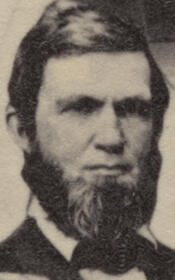
Here you will find contact information for Representative Benjamin Franklin Loan, including email address, phone number, and mailing address.
| Name | Benjamin Franklin Loan |
| Position | Representative |
| State | Missouri |
| District | 7 |
| Party | Republican |
| Status | Former Representative |
| Term Start | December 7, 1863 |
| Term End | March 3, 1869 |
| Terms Served | 3 |
| Born | October 4, 1819 |
| Gender | Male |
| Bioguide ID | L000384 |
About Representative Benjamin Franklin Loan
Benjamin Franklin Loan (October 4, 1819 – March 30, 1881) was a U.S. Representative from Missouri and a Missouri State Militia general who served the Union during the American Civil War. A member of the Republican Party during his later political career, he contributed to the legislative process during three terms in the United States House of Representatives from 1863 to 1869, representing Missouri during a critical period encompassing the Civil War and early Reconstruction.
Loan was born in Hardinsburg, Breckinridge County, Kentucky, on October 4, 1819. He pursued an academic course and received a college education in Kentucky. After completing his formal studies, he read law in his native state, preparing for a legal career at a time when admission to the bar typically followed apprenticeship and independent study rather than formal law school training.
In 1838, Loan moved west to St. Joseph, Missouri, then an emerging river town and commercial center on the Missouri frontier. He was admitted to the bar in 1840 and commenced the practice of law in St. Joseph. Over the next two decades he established himself as a practicing attorney and local figure in northwest Missouri, building the professional and community standing that would later support both his military and political careers.
With the outbreak of the American Civil War, Loan aligned firmly with the Union cause in a deeply divided border state. On November 27, 1861, he was commissioned a brigadier general in the Federal Missouri State Militia, a force organized to maintain Union control and combat Confederate guerrilla activity within the state. As a militia general, he participated in counter-guerrilla operations, most notably leading forces in the engagement at the Battle of Yellow Creek on August 13, 1862, where his command achieved a victory over Colonel John A. Poindexter’s irregular Confederate cavalry. Loan was honorably discharged from military service on June 8, 1863, and returned to St. Joseph.
Loan’s national political career began while the Civil War was still in progress. He was elected as an Immediate Emancipationist to the Thirty-eighth Congress and subsequently reelected as a Radical Unionist to the Thirty-ninth and Fortieth Congresses, serving from March 4, 1863, to March 3, 1869. During these three consecutive terms, he sat in the House of Representatives as a member from Missouri, participating in the democratic process and representing the interests of his constituents at a time when questions of slavery, Union preservation, and Reconstruction dominated national debate. In the Fortieth Congress he served as chairman of the Committee on Revolutionary Pensions, overseeing matters related to pensions for veterans and survivors of the American Revolutionary War. He was an unsuccessful candidate for reelection in 1868 to the Forty-first Congress.
Loan played a notable role in the early stages of the effort to remove President Andrew Johnson from office. On June 7, 1867, while serving in the House, he introduced a resolution calling for Johnson’s impeachment. At that time, many Radical Republicans favored immediate impeachment, while a substantial portion of the broader Republican congressional caucus remained hesitant. Although Loan’s specific resolution was never brought to a vote, the House on the same day adopted a separate resolution introduced by Representative James Mitchell Ashley, which initiated the first formal impeachment inquiry against President Johnson. Loan’s action thus formed part of the broader Radical push that ultimately led to Johnson’s impeachment by the House in 1868.
After leaving Congress, Loan continued to be active in public affairs. In 1869, President Ulysses S. Grant appointed him a member of the board of visitors to the United States Military Academy at West Point, New York, reflecting both his military background and his standing within the Republican Party. He then resumed the practice of law in St. Joseph, Missouri, returning to his earlier profession while remaining engaged in party politics. He served as a delegate to the Republican National Convention in 1876 and that same year was an unsuccessful candidate for election to the Forty-fifth Congress, marking his final bid for national office.
Benjamin Franklin Loan spent his later years in St. Joseph, where he continued his legal and civic activities until his death. He died there on March 30, 1881. He was interred in Mount Mora Cemetery in St. Joseph, Missouri, closing a career that had encompassed frontier law practice, Civil War military service, and influential participation in Congress during one of the most consequential eras in American political history.