Representative Benjamin Franklin Martin
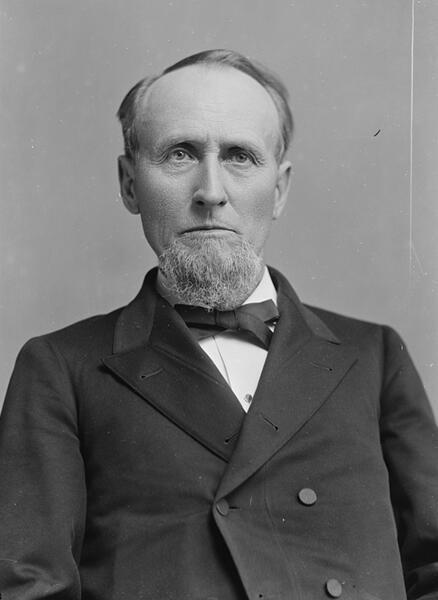
Here you will find contact information for Representative Benjamin Franklin Martin, including email address, phone number, and mailing address.
| Name | Benjamin Franklin Martin |
| Position | Representative |
| State | West Virginia |
| District | 2 |
| Party | Democratic |
| Status | Former Representative |
| Term Start | October 15, 1877 |
| Term End | March 3, 1881 |
| Terms Served | 2 |
| Born | October 2, 1828 |
| Gender | Male |
| Bioguide ID | M000169 |
About Representative Benjamin Franklin Martin
Benjamin Franklin Martin (October 2, 1828 – January 20, 1895) was a nineteenth-century politician, lawyer, and teacher from Virginia and later West Virginia who served as a Democratic Representative from West Virginia in the United States Congress from 1877 to 1881. His congressional service spanned two terms during a significant period in American history, in the years following the Civil War and Reconstruction, when the political, economic, and social structures of the reunited nation were being reshaped.
Martin was born near Farmington, Virginia (now Farmington, Marion County, West Virginia), on October 2, 1828. He came of age in the antebellum era in the portion of northwestern Virginia that would, during the Civil War, separate from the Old Dominion and become the new state of West Virginia. The rural setting of his early life and the shifting political identity of his native region would later inform his public career, particularly as West Virginia emerged as a distinct political entity within the Union.
Martin pursued higher education at Allegheny College in Meadville, Pennsylvania, an institution associated with a rigorous classical curriculum. He graduated in 1854, a period when relatively few from his region obtained a college education, and soon afterward returned to what was then Virginia to begin his professional life. He taught school in Fairmont, Virginia (now Fairmont, West Virginia), reflecting an early commitment to education and public service. While engaged in teaching, he studied law, preparing for admission to the bar at a time when legal education was typically acquired through apprenticeship and independent study rather than formal law schools.
In March 1856, Martin was admitted to the bar and commenced the practice of law. That same year he moved to Pruntytown, Virginia (now Pruntytown, West Virginia), where he established himself as an attorney. His legal practice developed against the backdrop of mounting sectional tensions that would soon lead to the Civil War and the eventual creation of West Virginia in 1863. As the new state took shape, Martin became increasingly involved in public affairs, drawing on his legal training and regional experience.
Martin’s formal political career in West Virginia began in the postwar era. He was a member of the West Virginia Constitutional Convention in 1872, participating in the revision of the state’s fundamental law during a crucial phase of its early development. That same year he served as a delegate to the Democratic National Convention, marking his emergence on the national political stage and aligning him with the Democratic Party at a time when it was rebuilding its strength in the wake of the Civil War. He remained active in party affairs and later again served as a delegate to the Democratic National Convention in 1888, underscoring his continued influence within Democratic circles.
In 1876, Martin was elected as a Democrat to the United States House of Representatives from West Virginia, beginning his service in the Forty-fifth Congress on March 4, 1877. He was reelected to the Forty-sixth Congress and served continuously until March 3, 1881. During these two terms in office, he contributed to the legislative process and participated in the democratic governance of the nation at a time marked by debates over economic policy, federal-state relations, and the lingering issues of Reconstruction. As a member of the House of Representatives, he represented the interests of his West Virginia constituents, bringing the perspective of a border-state region that had experienced both the divisions of the Civil War and the challenges of postwar reconstruction. In 1880 he was an unsuccessful candidate for renomination, which concluded his service in Congress after four years.
Following his departure from Congress, Martin resumed the practice of law, this time in Grafton, West Virginia. He continued his legal career there for the remainder of his life, maintaining his role as a respected member of the bar and a figure of standing in his community. His post-congressional years reflected a return to the profession that had first launched his public life, even as he remained identified with the Democratic Party and the political development of West Virginia.
Benjamin Franklin Martin died in Grafton, West Virginia, on January 20, 1895. He was interred in Woodlawn Cemetery in Fairmont, West Virginia, returning in death to the community where he had once taught school and begun his professional ascent. His life spanned the transformation of his birthplace from a Virginia county to part of a new state and encompassed service as an educator, lawyer, constitutional convention delegate, national party delegate, and member of the United States House of Representatives.