Representative Benjamin S. Rosenthal
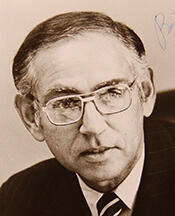
Here you will find contact information for Representative Benjamin S. Rosenthal, including email address, phone number, and mailing address.
| Name | Benjamin S. Rosenthal |
| Position | Representative |
| State | New York |
| District | 8 |
| Party | Democratic |
| Status | Former Representative |
| Term Start | January 3, 1961 |
| Term End | January 3, 1983 |
| Terms Served | 11 |
| Born | June 8, 1923 |
| Gender | Male |
| Bioguide ID | R000442 |
About Representative Benjamin S. Rosenthal
Benjamin Stanley Rosenthal (June 8, 1923 – January 4, 1983) was an American Democratic Party politician from New York who served as a Representative from New York in the United States Congress from 1961 to 1985. He represented the northern portion of Queens during twelve congressional terms, from 1962 until his death, and at the time of his passing at age 59 he was the third-most senior representative in the New York delegation. A member of the Democratic Party, he contributed actively to the legislative process over more than two decades in the House of Representatives, participating in the democratic process and representing the interests of his constituents during a significant period in American history.
Rosenthal was born in New York City on June 8, 1923, and was raised in the city’s public school system. He attended Stuyvesant High School, one of New York’s specialized public high schools, and went on to study at Long Island University and the City College of New York. His upbringing and education in New York City helped root his later political career in the concerns of urban, working- and middle-class communities, particularly those in Queens and neighboring boroughs.
During World War II, Rosenthal served in the United States Army from 1943 to 1946. After his military service, he pursued legal studies, receiving an LL.B. from Brooklyn Law School in 1949. He was admitted to the New York bar that same year and commenced the practice of law in New York City. Seeking further specialization, he earned an LL.M. from New York University in 1952. His legal training and practice provided the foundation for his later work on complex legislative issues, including consumer protection and oversight of federal programs.
Rosenthal entered Congress as a Democrat in the early 1960s. He was elected to the Eighty-seventh United States Congress to fill the vacancy caused by the resignation of Representative Lester Holtzman, taking office on February 20, 1962. He was re-elected that fall and then again to ten succeeding Congresses, ultimately serving twelve terms in the House of Representatives. Throughout his tenure, he was known as a “regular” or machine Democrat aligned with the Queens Democratic organization, yet he consistently held liberal views on national policy. He became an early and outspoken opponent of the Vietnam War and developed a reputation for his work on consumer protection issues, reflecting his concern for the rights and welfare of ordinary citizens.
As a member of the House of Representatives, Rosenthal’s service coincided with major developments in American political and social life, including the civil rights movement, the Great Society programs, the Vietnam War, and the Watergate era. Representing the northern portion of Queens, he focused on the needs of his urban district while also engaging in broader national debates. On May 17, 1962, he entered into the Congressional Record a statement praising Mad magazine on its tenth anniversary, noting that the publication—whose offices lay within his district, then designated New York’s 8th Congressional District—had “for the last 10 years…humorously pointed out the laughable foibles of business, labor, advertising, television, sports and entertainment – to say nothing of politics.” This gesture reflected both his attentiveness to local institutions and his appreciation for cultural commentary and satire.
Rosenthal continued to win re-election throughout the 1960s and 1970s and into the early 1980s, solidifying his status as a senior member of the New York delegation. He was re-elected again in 1982 to the 98th United States Congress. However, by this time he was battling cancer. He was sworn in to that Congress from his hospital bed at Georgetown University Hospital in Washington, D.C., underscoring his determination to continue serving despite serious illness. He died there from complications of cancer on January 4, 1983, just one day after the 98th Congress met for the first time. His death created a vacancy in his Queens district, and on March 1, 1983, Gary Ackerman was elected to the seat and went on to hold it through 2013.
Rosenthal is buried in Beth David Cemetery in Elmont, New York. His legacy in public service is commemorated in several ways, most notably through the Benjamin S. Rosenthal Library at Queens College, City University of New York, which is named in his honor. The library’s Department of Special Collections and Archives holds his papers, preserving documentation of his legislative work, his role in New York and national politics, and his contributions to consumer protection and liberal policymaking during his twelve terms in Congress.