Senator Benjamin Ruggles
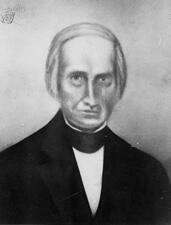
Here you will find contact information for Senator Benjamin Ruggles, including email address, phone number, and mailing address.
| Name | Benjamin Ruggles |
| Position | Senator |
| State | Ohio |
| Party | Adams |
| Status | Former Representative |
| Term Start | December 4, 1815 |
| Term End | March 3, 1833 |
| Terms Served | 3 |
| Born | February 21, 1783 |
| Gender | Male |
| Bioguide ID | R000500 |
About Senator Benjamin Ruggles
Benjamin Ruggles (February 21, 1783 – September 2, 1857) was an American lawyer, jurist, and legislator who represented Ohio in the United States Senate for three consecutive terms during a formative period in the nation’s history. Born in Abington, Connecticut, he spent his early years in New England before embarking on a professional path that would eventually lead him to the Ohio frontier and to national public office.
Ruggles studied law in Connecticut and was admitted to the bar, preparing for a legal career at a time when formal legal education was typically pursued through apprenticeship and self-directed study. In 1807 he moved west to Marietta, Ohio, where he began the practice of law. Seeking broader opportunities as Ohio developed, he relocated in 1810 to St. Clairsville, Ohio, a growing community in the eastern part of the state that would remain his principal home for the rest of his life.
Alongside his legal practice, Ruggles quickly entered public service. In 1810 he was appointed a judge in the Ohio state courts, a position he held until 1815. His five-year tenure on the bench coincided with Ohio’s early statehood and the War of 1812, a period in which the state’s legal and political institutions were still taking shape. His judicial experience helped establish his reputation as a capable lawyer and public figure, laying the groundwork for his subsequent election to national office.
In 1815, Ruggles was elected to the United States Senate from Ohio, marking the beginning of an 18-year congressional career. He served three full terms, from 1815 to 1833, during which he participated in the legislative process at a time of significant national expansion, economic development, and evolving party politics. Identified in contemporary and later sources as a member of the Adams Party, and more broadly as a National Republican and later Whig politician, he aligned himself with the political forces that supported internal improvements and a stronger national government. As a senator, he represented the interests of his Ohio constituents while taking part in the broader democratic process of the early republic. He did not run for re-election in 1832, concluding his Senate service on March 3, 1833.
Ruggles’s personal life was closely tied to both his native and adopted states. He married in Connecticut in 1812, before fully establishing himself in Ohio public life. His first wife accompanied him to St. Clairsville, where she died in 1817. He remarried in 1825, again making his home in St. Clairsville while continuing his legal and political activities. These family milestones occurred alongside his long Senate tenure, reflecting the blend of private and public responsibilities common to early nineteenth-century statesmen.
After leaving the Senate, Ruggles remained engaged in political affairs as the Second Party System took shape. By the mid-1830s he was associated with the Whig Party, and in 1836 he served as an Ohio presidential elector for Whig candidate William Henry Harrison. His role as an elector underscored his continued standing within Ohio’s political leadership even after his formal congressional service had ended.
Benjamin Ruggles spent his later years in St. Clairsville, where he had first settled in 1810 and where he had long been a prominent figure in law, politics, and community life. He died there on September 2, 1857, and was buried in Saint Clairsville Union Cemetery in St. Clairsville, Ohio. His career, spanning judicial service, three terms in the United States Senate from 1815 to 1833, and later involvement in Whig politics, placed him among the notable Ohio statesmen of the early national and antebellum eras.