Senator Benjamin Stark
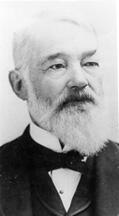
Here you will find contact information for Senator Benjamin Stark, including email address, phone number, and mailing address.
| Name | Benjamin Stark |
| Position | Senator |
| State | Oregon |
| Party | Democratic |
| Status | Former Representative |
| Term Start | July 4, 1861 |
| Term End | March 3, 1863 |
| Terms Served | 1 |
| Born | June 26, 1820 |
| Gender | Male |
| Bioguide ID | S000809 |
About Senator Benjamin Stark
Benjamin Stark (June 26, 1820 – October 10, 1898) was an American merchant, lawyer, and politician whose career spanned the Pacific Northwest and New England. A member of the Democratic Party during his federal service, he represented Oregon in the United States Senate from 1861 to 1862, serving one term in office during the early years of the Civil War. Earlier, he had been a prominent landholder and civic leader in Portland, Oregon, and later in life he served in the Connecticut House of Representatives.
Stark was born in New Orleans, Louisiana, on June 26, 1820. During his youth his family moved to Connecticut, where he received a classical education. He graduated from Union School in New London after studying the classics and subsequently attended Hebron Academy in Maine. By the mid-1830s he had relocated to New York City, where from 1835 to 1845 he engaged in mercantile pursuits and read law, laying the foundation for a career that combined commerce, land speculation, and public service.
In 1845, Stark sailed to the Oregon Country as supercargo (cargo supervisor) of the ship Toulon, bringing goods consigned to Francis Pettygrove’s warehouse at what would become Portland. The following year, in 1846, he purchased half of Asa Lovejoy’s 640-acre claim—part of the original townsite of the future city—for $390 in cash, acquiring the land primarily for speculation rather than for residence or immediate commercial development. Although he continued to travel extensively as a merchant and visited his claim only occasionally, Stark emerged as a civic leader in early Portland, including serving as a leader among the city’s Freemasons, at a time when Masonic membership was an important local status symbol.
Drawn by new opportunities, Stark sailed to San Francisco in 1848 to participate in the California Gold Rush and worked there as a merchant from 1849 to 1850. Around the time he left San Francisco in 1850 to establish a business in Portland, he discovered that his Portland land claim was in dispute. In a meeting in San Francisco with Daniel H. Lownsdale, he negotiated a settlement with the other principal stakeholders. The agreement gave Stark sole title to a roughly triangular tract—about 48 acres—in what is now downtown Portland, bounded generally by the Willamette River, Stark Street, and Ankeny Street, while Lownsdale, William W. Chapman, and Stephen Coffin compensated him for land they had already sold on his acreage. This tract included much of what was then the city’s commercial core. A subsequent dispute arose when Stark refused to sell two narrow blocks needed to connect Portland’s park blocks, underscoring his determination to protect the value of his holdings. Over time, he accumulated a substantial fortune through the sale of plots from this downtown property.
Stark was admitted to the bar in 1850 and soon entered territorial politics. In 1852 he was elected as a Whig to the Oregon Territory’s House of Representatives, representing Washington County, which at that time encompassed Portland. He also served on the Portland Public Schools board from 1852 to 1854 and originally opposed the creation of publicly financed primary schools. During the Rogue River Wars of 1853, he held the rank of colonel and took part in hostilities between settlers and Native Americans. He married Elizabeth Molthrop, further establishing his personal and social ties in the region.
With Oregon’s transition from territory to statehood, Stark’s political alignment shifted. In 1860 he was again elected to the Oregon House of Representatives, this time as a Democrat representing Multnomah County, which had been created in 1854 and included Portland. His legislative service coincided with rising national tensions over slavery and secession. A supporter of slavery and an unapologetic racist by contemporary accounts, Stark’s views placed him among the more conservative Democrats in a state that was itself divided over national issues.
Stark’s congressional service began under dramatic circumstances. Oregon’s junior United States Senator, Edward Dickinson Baker, was killed in action during the Civil War at the Battle of Ball’s Bluff in October 1861. Following Baker’s death, Oregon Governor John Whiteaker appointed Stark to fill the vacancy. Stark took his seat in the United States Senate on October 29, 1861, and served until September 12, 1862. As a Democratic senator from a Union state during a critical phase of the Civil War, he participated in the legislative process at a time when Congress was grappling with questions of war policy, civil liberties, and the future of slavery. He did not stand as a candidate in the subsequent election for a permanent replacement and was succeeded by Benjamin F. Harding, who had been Speaker of the Oregon House during Stark’s 1860 term. His service in Congress thus comprised a single, appointed term during one of the most consequential periods in American history.
After leaving the Senate, Stark remained active in Democratic Party politics. In 1864 he served as a delegate to the Democratic National Convention in Chicago. He resumed the practice of law and continued to manage and sell his Portland real estate holdings, further consolidating his wealth. Eventually he returned to New London, Connecticut, where he reentered local public life. He served on the New London board of aldermen from 1873 to 1874 and in 1874 was elected to the Connecticut House of Representatives. In addition, he served as a member of the Connecticut State Prison Commission, extending his record of public service beyond the Pacific Northwest to his adopted home state in New England.
Benjamin Stark died in New London, Connecticut, on October 10, 1898, at the age of 78 and was interred in Cedar Grove Cemetery. His name remains embedded in the geography and civic memory of Portland: Stark Street, an east–west thoroughfare in the city, is named in his honor, and the Clyde Hotel was renamed the Ben Stark Hotel in 1987 (it later became the Ace Hotel in 2005). In the early twenty-first century, however, his legacy came under renewed scrutiny due to his advocacy of slavery and racist views. In late 2017, activists in Portland proposed renaming Southwest Stark Street for gay rights activist Harvey Milk, citing Stark’s record, and the Portland City Council accepted the recommendation, reflecting evolving public attitudes toward historical commemoration.