Senator Benjamin Swift
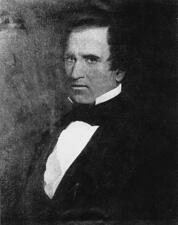
Here you will find contact information for Senator Benjamin Swift, including email address, phone number, and mailing address.
| Name | Benjamin Swift |
| Position | Senator |
| State | Vermont |
| Party | Whig |
| Status | Former Representative |
| Term Start | December 3, 1827 |
| Term End | March 3, 1839 |
| Terms Served | 3 |
| Born | April 3, 1781 |
| Gender | Male |
| Bioguide ID | S001116 |
About Senator Benjamin Swift
Benjamin Swift (April 9, 1780 – November 11, 1847) was an American lawyer, banker, and politician from Vermont who served as both a United States Representative and a United States Senator and helped found the Whig Party. Over the course of his national career he served three terms in Congress, including service in the United States Senate from 1827 to 1839, during which he contributed to the legislative process in a formative period of American political development and represented the interests of his Vermont constituents.
Swift was born on April 9, 1780, in Amenia, New York, the son of Job Swift and Mary Ann (Sedgwick) Swift. In 1786, when he was five years old, he moved with his father to Bennington in the Vermont Republic, where he attended the common schools. Growing up in the years immediately following the American Revolution, he came of age in a frontier region that was transitioning from an independent republic to statehood within the United States, an environment that helped shape his later interest in law and public affairs.
Swift pursued formal legal training at Litchfield Law School in Connecticut, which he attended in 1801. After completing his studies, he read law and was admitted to the bar in 1806. He began the practice of law in Bennington and later moved to Manchester, Vermont, to continue his legal work. In 1809 he relocated to St. Albans, Vermont, where he established a long-term law practice. In addition to his legal career, Swift engaged in banking and farming in the St. Albans area, activities that broadened his experience in commercial and agricultural matters and informed his later legislative interests.
Swift’s public career began in Vermont state politics. He held various local and state positions and was elected to the Vermont House of Representatives in 1825. He served in the Vermont State House from 1825 to 1827, participating in the governance of a rapidly developing state. His work in the legislature helped build his reputation as a capable lawyer and public servant and provided a platform for his entry into national politics.
In 1827 Swift was elected to the United States House of Representatives from Vermont as a National Republican Party candidate. He served in the Twentieth and Twenty-first Congresses from March 4, 1827, to March 3, 1831. During his tenure in the House, he took part in the democratic process at the federal level and contributed to the legislative deliberations of a period marked by growing sectional and partisan tensions. He served on the executive committee of the Congressional Temperance Society, reflecting his engagement with contemporary reform movements. After two terms in the House, he declined renomination in 1830 and returned to Vermont.
Swift subsequently advanced to the United States Senate. In 1833 he was elected as an Anti-Jacksonian candidate to represent Vermont in the Senate, serving from March 4, 1833, to March 3, 1839. His Senate service occurred during a significant period in American history, encompassing the height of President Andrew Jackson’s administration and the emergence of the Second Party System. A member of the Whig Party and one of its early organizers, Swift was a strong opponent of President Jackson and aligned himself with those who resisted Jacksonian policies on issues such as executive power and federal economic policy. As a senator from Vermont, he participated actively in the legislative process, representing his state’s interests and contributing to the formation and consolidation of the Whig Party. Although his overall congressional career encompassed three terms in office—two in the House and one in the Senate—he was not renominated for a second Senate term and concluded his federal legislative service in 1839.
After leaving the Senate, Swift returned to St. Albans, Vermont, where he resumed the practice of law and continued his activities as a farmer and local businessman. He remained a respected figure in his community and in state political circles, even as he no longer held national office. His later years were devoted to his professional pursuits and family life, and he continued to be identified with the Whig cause in Vermont during a period of ongoing political realignment.
On October 26, 1809, Swift married Rebecca Brown. The couple had nine children: Charles Henry, Cordelia, William, Catherine Sedgwick, Alfred Brown, Jane Harriet, George Sedgwick, Caroline, and Charles Benjamin. Swift died on November 11, 1847, in St. Albans, Vermont. He was interred in Greenwood Cemetery in St. Albans. His life and career were commemorated in a funeral discourse delivered on November 17, 1847, by Worthington Smith, which was later published in 1848, reflecting the regard in which he was held as a former United States senator from Vermont.