Representative Benjamin Tallmadge
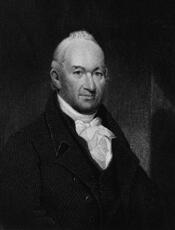
Here you will find contact information for Representative Benjamin Tallmadge, including email address, phone number, and mailing address.
| Name | Benjamin Tallmadge |
| Position | Representative |
| State | Connecticut |
| District | -1 |
| Party | Federalist |
| Status | Former Representative |
| Term Start | December 7, 1801 |
| Term End | March 3, 1817 |
| Terms Served | 8 |
| Born | February 25, 1754 |
| Gender | Male |
| Bioguide ID | T000029 |
About Representative Benjamin Tallmadge
Benjamin Tallmadge (February 25, 1754 – March 7, 1835) was an American military officer, spymaster, and politician who served as a Federalist Representative from Connecticut in the United States Congress from 1801 to 1817. Best known for his service as an officer in the Continental Army during the American Revolutionary War, he gained particular prominence as the leader of the Culper Ring, a celebrated network of spies operating in and around British-occupied New York City. His later career in public life included eight consecutive terms in the House of Representatives, during which he participated actively in the legislative process and represented the interests of his Connecticut constituents.
Tallmadge was born in 1754 in Setauket, on Long Island, in the Province of New York, into a family of modest means but strong religious and educational values; his father, the Reverend Benjamin Tallmadge Sr., was a Congregational minister. Growing up in a coastal village that would later become central to his intelligence activities, he was exposed early to the tensions between colonial communities and imperial authority. He received a classical education and showed early academic promise, which prepared him for advanced study at a colonial college and laid the foundation for his later leadership roles in both military and civic life.
Educated at Yale College in New Haven, Connecticut, Tallmadge pursued the rigorous classical curriculum typical of the period, studying Latin, Greek, philosophy, and mathematics. At Yale he formed friendships and intellectual connections that would later intersect with his Revolutionary service. His time in New England also acquainted him with the political and religious currents that shaped early American resistance to British policy. Upon completing his studies, he initially followed a path in education, but the outbreak of the American Revolutionary War soon redirected his career toward military service.
Tallmadge entered the Continental Army as the colonies moved toward open conflict with Great Britain. He was commissioned a major in the 2nd Continental Light Dragoons on June 20, 1776, and quickly distinguished himself as a capable cavalry officer. His familiarity with Long Island and the surrounding region, combined with his discretion and organizational skill, brought him to the attention of General George Washington. After the earlier director of military intelligence, Nathaniel Sackett, was relieved of his duties for failing to gain meaningful information from the enemy, Washington appointed Tallmadge as director of military intelligence. In this capacity, Tallmadge was charged with bringing intelligence from British-controlled New York to the Continental Army, a task he undertook by assembling and managing a covert network of agents.
With the assistance of Abraham Woodhull and Robert Townsend, Tallmadge organized the Culper Ring, which became one of the most effective espionage networks of the Revolutionary War. Operating under conditions of extreme risk, the ring provided Washington with detailed reports on British troop movements, logistical preparations, and strategic intentions. The Culper Ring played a role in uncovering the betrayal of Major General Benedict Arnold. When Arnold’s British contact, Major John André, was captured with incriminating documents, André was taken to North Castle, New York, where Colonel John Jameson ordered Lieutenant Solomon Allen to deliver the documents to Arnold, then still in command at West Point. Tallmadge, suspecting André to be a spy and Arnold his accomplice, tried to persuade Jameson to reverse his orders. Although he could not prevent Allen from reporting to Arnold, he did convince Jameson to send André to Salem, east of the Hudson River, and to forward the captured documents to Washington. Washington later chastised Jameson for inadvertently warning Arnold and allowing his escape, while André was placed in Tallmadge’s custody to await execution as a spy.
Tallmadge also led important field operations in support of the American cause. On November 21, 1780, he and his dragoons crossed Long Island Sound by boat from Fairfield, Connecticut, to Cedar Beach at Mount Sinai, New York. The following day they moved overland to the south shore, where they captured and destroyed Manor St. George, a fortified British outpost. On their return march to Mount Sinai, Tallmadge ordered the burning of approximately 300 tons of hay at Coram, New York, which the British had stockpiled for winter forage. The raid, often referred to as the Battle of Fort St. George, significantly disrupted British supplies. General Washington, upon receiving Tallmadge’s report, wrote to commend him, noting his “spirited execution” of the enterprise and expressing satisfaction at the destruction of the hay at Coram, which Washington believed would be “severely felt by the enemy at this time.”
From March 1781 until the disbanding of the Continental Army in November 1783, Tallmadge served at Washington’s headquarters, continuing his intelligence work and staff duties as the war drew to a close. In recognition of his service, he was brevetted to the rank of lieutenant colonel on September 30, 1783. That same year, he was admitted as an original member of the Society of the Cincinnati in the state of Connecticut, an organization of Continental Army officers formed to preserve the ideals and fellowship of the Revolutionary generation. Tallmadge remained active in the society for many years, serving as Assistant Treasurer from 1785 to 1789, Treasurer from 1789 to 1793, Vice President from 1793 to 1796, and President from 1796 to 1801. His line continues to be represented by a living descendant in the Society of the Cincinnati.
After the war, Tallmadge settled in Connecticut and entered business and public life, becoming a prominent citizen and community leader. His reputation as a trusted officer and spymaster, combined with his Federalist political views, positioned him for national office. In 1801 he was elected to the United States House of Representatives as a member of the Federalist Party, beginning a congressional career that would span sixteen years. Representing Connecticut in the House from 1801 to 1817, he served during a formative period in the early republic, which encompassed the administrations of Thomas Jefferson, James Madison, and the early years of James Monroe. Over the course of eight terms in office, Tallmadge contributed to the legislative process on issues ranging from commerce and finance to national defense and foreign policy, consistently reflecting the Federalist emphasis on a strong national government and stable economic institutions.
Tallmadge’s congressional service coincided with significant events in American history, including the Louisiana Purchase, the Embargo Act, rising tensions with Great Britain, and the War of 1812. As a Federalist, he was part of a political minority increasingly at odds with the dominant Democratic-Republican Party, yet he remained an active participant in debates over the scope of federal power, maritime rights, and the nation’s response to European conflicts. Even after leaving Congress in 1817, he remained engaged in public affairs. In 1829, he was among a group of Federalists who defended the reputation of Uriah Tracy against accusations by John Quincy Adams and William Plumer, who had alleged that Tracy was a leader of an 1804 effort to promote New England secession from the United States. Tallmadge’s intervention reflected his continued concern for the historical record and the honor of his Federalist colleagues.
In his private life, Tallmadge married and raised a large family whose members were themselves active in military and public service. His children included William Smith Tallmadge (1785–1822), who became a lieutenant colonel in the 46th United States Infantry during the War of 1812 and died unmarried in Moscow, New York; Henry Floyd Tallmadge (1787–1854), who married Maria Andrews Canfield; Maria Jones Tallmadge (1790–1878), who married John Paine Cushman, a member of the U.S. House of Representatives from New York’s 10th congressional district; Benjamin Tallmadge (1792–1831), who served as a lieutenant in the United States Navy and died unmarried near Gibraltar; Frederick Augustus Tallmadge (1794–1869), who married Elizabeth H. Canfield; Harriet Wadsworth Tallmadge (1797–1856), who married John Delafield, brother of Edward and Richard Delafield; and George Washington Tallmadge (1803–1838), who married Laura Pease, daughter of Calvin Pease. Through these descendants, Tallmadge’s family remained connected to the military, legal, and political institutions of the early United States.
Benjamin Tallmadge spent his later years in Connecticut, where he continued to be regarded as a respected veteran of the Revolution and an experienced former legislator. He died on March 7, 1835, closing a life that had spanned from the colonial era through the establishment and consolidation of the United States. His career as a Continental Army officer, leader of the Culper Ring, and long-serving Federalist member of Congress left a lasting imprint on both the military and political history of the early republic.