Representative Benjamin Franklin Whittemore
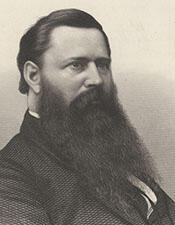
Here you will find contact information for Representative Benjamin Franklin Whittemore, including email address, phone number, and mailing address.
| Name | Benjamin Franklin Whittemore |
| Position | Representative |
| State | South Carolina |
| District | 1 |
| Party | Republican |
| Status | Former Representative |
| Term Start | March 4, 1867 |
| Term End | March 3, 1871 |
| Terms Served | 2 |
| Born | May 18, 1824 |
| Gender | Male |
| Bioguide ID | W000427 |
About Representative Benjamin Franklin Whittemore
Benjamin Franklin Whittemore (May 18, 1824 – January 25, 1894) was an American minister, Civil War chaplain, Reconstruction-era politician, and publisher who served as a Republican Representative from South Carolina in the United States Congress from 1868 to 1870. His congressional service, which spanned portions of the Fortieth and Forty-first Congresses, occurred during a significant period in American history, when the former Confederate states were being readmitted to the Union and federal policy toward freedpeople was being defined. He was later censured by the House of Representatives in 1870 for selling appointments to the United States Naval Academy and other military academies, and he spent his later years in Massachusetts as a publisher.
Whittemore was born in Malden, Massachusetts, the son of Susan Floyd and John Whittemore, who were both from Malden and had married on June 22, 1823. He attended the public schools of Worcester, Massachusetts, and pursued higher studies at Amherst College. During the period in which he studied theology, he worked in mercantile establishments, combining commercial employment with preparation for the ministry. On August 22, 1854, he married Mandanna Dora (M. Dora) Stone, the daughter of George and Betsey Stone, in Fitchburg, Massachusetts; she taught at Fitchburg High School. The couple had two children. By 1860, Whittemore was also active in Masonic circles, being a member of a lodge in Connecticut.
In 1859, Whittemore entered the ministry of the Methodist Episcopal Church as a member of the New England Conference. With the outbreak of the Civil War, he volunteered for service as a chaplain and was appointed chaplain of the 53rd Massachusetts Infantry Regiment. He later served in the same capacity with the 30th Massachusetts Infantry Regiment, Veteran Volunteers. His wartime service brought him into the South, and at the close of the conflict he was stationed in the Darlington District of South Carolina. There he chose to remain after the war, turning his attention to the education and advancement of newly freed African Americans and to the broader work of Reconstruction.
From 1865 to 1867, Whittemore served as superintendent of education for the Freedmen’s Bureau in the Darlington area of South Carolina. In that role he helped organize and establish approximately sixty schools and churches, meeting with freedmen and others in the community to develop educational programs and institutions for formerly enslaved people. In 1865 he founded the New Era, a weekly newspaper published in Darlington and described as “devoted to the restoration, reconstruction, and union of the States.” He served as its editor in 1865, with James H. Norwood succeeding him as editor the following year. His prominence in educational and civic affairs led to his appointment to the Board of Regents of the Normal School located on the campus of the University of South Carolina, where he served from 1874 to 1877.
Whittemore quickly became a leading Republican figure in Reconstruction-era South Carolina. He was a delegate to the state constitutional convention in 1867 and in the same year was elected president of the Republican State executive board. In 1868 he was elected to the South Carolina Senate, but he resigned that position before the legislative session convened in order to take a seat in the United States House of Representatives. He also served as a delegate to the 1868 Republican National Convention. Upon the readmission of South Carolina to the Union, Whittemore was elected as a Republican to the Fortieth and Forty-first Congresses and served from July 18, 1868, to February 24, 1870. During his two terms in office he participated in the legislative process at a time when Congress was shaping Reconstruction policy, representing the interests of his South Carolina constituents in the House of Representatives.
Whittemore’s congressional career was abruptly curtailed by a major scandal. On February 24, 1870, under the imminent threat of expulsion, he resigned his seat, and that same day the House of Representatives formally censured him for selling appointments to the United States Naval Academy, the United States Military Academy at West Point, and other military academies for as much as $2,000 per appointment. Later that year, he presented credentials on June 18, 1870, showing that he had been elected again to the same Congress by his district, but the House declined to allow him to take his seat. Some of his constituents argued that they had the right to elect any person who met the constitutional qualifications of citizenship, age, and residence, but Representative John A. Logan of Illinois responded that the House retained the authority to exclude a man of Whittemore’s character, noting that a representative’s vote affected the entire nation and that Congress must have the power to protect the rights of the people of the whole country. Whittemore’s case has since been noted in discussions of members of the House who have been expelled, censured, or reprimanded.
Despite his censure at the federal level, Whittemore remained active in South Carolina politics. He was elected again to the South Carolina Senate on November 22, 1870, and served there until 1877, when he resigned. His tenure coincided with the later, more violent phase of Reconstruction. After the assassinations of fellow Republican leaders S. G. W. Dill on June 4, 1868, and B. F. Randolph on October 16, 1868, the Ku Klux Klan issued a letter, printed in a newspaper, warning Whittemore that he could meet the same fate as Dill, Randolph, and others. During the 1870s, paramilitary groups such as the Red Shirts intensified efforts to suppress Black voting and overturn Republican rule. In 1876, when Alfred Rush, an African American representative from Darlington County and a former freedman, was assassinated near his home, Whittemore wrote to Governor Daniel Henry Chamberlain expressing concern and urging that a reward be offered and a thorough investigation undertaken. The letter was signed by seventeen others, including the local sheriff, two judges, and additional officials. Although a reward was posted and an investigation conducted, no one was found guilty.
After the end of Reconstruction and the Democratic Party’s consolidation of power in South Carolina, Whittemore returned to Massachusetts. He settled in Woburn, where he worked as a publisher and remained active in civic and fraternal life. He transferred his Masonic affiliation to Mount Horeb Lodge in Woburn on January 7, 1880, having earlier been initiated at Hiram Lodge in Virginia in 1865. His wife, Mandanna (also recorded as Mandana) Dora Stone Whittemore, died in Woburn on June 7, 1872, at the age of sixty-five. Benjamin Franklin Whittemore died in Montvale, Massachusetts, on January 25, 1894. He was interred in Salem Street Cemetery in Woburn, where his wife is also buried. His career, including his role as a “carpetbagging” Reconstruction congressman and the corruption case that led to his censure, has been the subject of later historical study, including analysis in works such as Christopher Shepard’s “The Carpetbagging Congressman: The Corruption Case of Benjamin Whittemore.”