Representative Benjamin Wilson
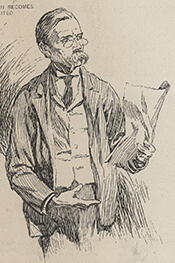
Here you will find contact information for Representative Benjamin Wilson, including email address, phone number, and mailing address.
| Name | Benjamin Wilson |
| Position | Representative |
| State | West Virginia |
| District | 1 |
| Party | Democratic |
| Status | Former Representative |
| Term Start | December 6, 1875 |
| Term End | March 3, 1883 |
| Terms Served | 4 |
| Born | April 30, 1825 |
| Gender | Male |
| Bioguide ID | W000569 |
About Representative Benjamin Wilson
Benjamin Wilson, a Democratic politician who represented West Virginia in the United States House of Representatives from 1875 to 1883, was born on November 30, 1825, near Wilsonburg in Harrison County, Virginia (now West Virginia). He was the son of a family long established in the region, and his early life unfolded in what was then the western part of Virginia, an area that would later become central to the formation of the new state of West Virginia during the Civil War. Growing up in a rural community, Wilson was exposed early to the legal and political issues that affected landholders and small communities in the Appalachian region.
Wilson received his early education in local schools in Harrison County before pursuing legal studies. He read law in the traditional manner of the time, apprenticing and studying under established attorneys rather than attending a formal law school. After completing his legal training, he was admitted to the bar and began the practice of law in Clarksburg, Virginia (now West Virginia). His legal practice, based in a growing regional center, brought him into contact with a wide range of civil and commercial matters and helped establish his reputation as a capable attorney and community leader.
Wilson’s public career began at the state level. He served as prosecuting attorney of Harrison County, gaining experience in criminal law and local administration. As sectional tensions increased in the 1850s and the nation moved toward civil conflict, he became involved in broader political questions. During the Civil War era and the creation of West Virginia, Wilson, like many in the region, navigated the complex loyalties and shifting political landscape of a border area. After the war, he continued to practice law and took part in the political reorganization of the new state, aligning himself with the Democratic Party at a time when Republicans dominated much of West Virginia’s early postwar politics.
Wilson’s most prominent public service came as a member of the United States House of Representatives. Elected as a Democrat, he served four consecutive terms in Congress from March 4, 1875, to March 3, 1883, representing West Virginia during a significant period in American history that encompassed the later years of Reconstruction and the beginning of the Gilded Age. As a member of the House of Representatives, he participated in the democratic process and contributed to the legislative work of the Forty-fourth through Forty-seventh Congresses. In this capacity, he represented the interests of his West Virginia constituents on issues such as economic development, infrastructure, and the legal and political reintegration of the former Confederate states, and he took part in debates characteristic of the post–Civil War era, including federal-state relations and questions of civil and political rights.
Throughout his congressional service, Wilson worked within the Democratic Party’s minority and majority phases in the House, as control of the chamber shifted during his tenure. His role included committee work and the routine but essential responsibilities of a Representative: introducing and supporting legislation, attending to constituent concerns, and helping shape federal policy affecting a state still in the process of economic and political consolidation after its wartime separation from Virginia. His eight years in Congress placed him among the notable early federal legislators from West Virginia, a relatively new state seeking a stable place in national affairs.
After leaving Congress in March 1883, Wilson returned to his legal practice. He resumed work as an attorney in Clarksburg, where his long experience in law and politics made him a respected figure in the community. In his later years, he remained identified with the Democratic Party and with the generation of leaders who had guided West Virginia through its formative decades following statehood. He continued to live in Clarksburg, maintaining his professional and civic engagements as health and age permitted.
Benjamin Wilson died on April 26, 1901, in Clarksburg, West Virginia. He was interred in Odd Fellows Cemetery in Clarksburg. His life spanned from the antebellum era through the Civil War and Reconstruction into the industrializing United States of the late nineteenth century. As a lawyer, county official, and four-term U.S. Representative, he played a sustained role in representing and shaping the interests of his region, and he is remembered in the historical record as one of West Virginia’s early Democratic members of Congress.