Representative Berkley W. Bedell
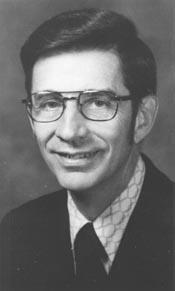
Here you will find contact information for Representative Berkley W. Bedell, including email address, phone number, and mailing address.
| Name | Berkley W. Bedell |
| Position | Representative |
| State | Iowa |
| District | 6 |
| Party | Democratic |
| Status | Former Representative |
| Term Start | January 14, 1975 |
| Term End | January 3, 1987 |
| Terms Served | 6 |
| Born | March 5, 1921 |
| Gender | Male |
| Bioguide ID | B000298 |
About Representative Berkley W. Bedell
Berkley Warren Bedell (March 5, 1921 – December 7, 2019) was an American Democratic Party politician, businessman, and advocate of alternative medicine who served as the U.S. representative for Iowa’s 6th congressional district from 1975 to 1987. A member of the Democratic Party, he represented a largely rural, farming constituency in northwestern Iowa and became known for his populist style and commitment to representative democracy. His six terms in the House of Representatives coincided with a significant period in American political and economic history, during which he played an active role in agricultural and economic policy debates.
Bedell was born in Spirit Lake, Iowa, on March 5, 1921. He grew up during the Great Depression in a small-town environment that shaped his later political focus on farmers, small businesses, and working families. As a youth, he developed a strong interest in fishing and the outdoors, which would later form the basis of his entrepreneurial career. His early experiences in rural Iowa and his exposure to the economic hardships of the era informed his later skepticism of large corporate power and his emphasis on policies designed to protect family farms and local communities.
Bedell attended Spirit Lake public schools and showed an early aptitude for business and innovation. While still in high school, he began tying fishing flies and selling them to local anglers. This sideline grew into the Berkley Fly Co., which he founded in his youth and later expanded into a nationally known fishing tackle enterprise. Over time, the company evolved into Berkley & Company, a major manufacturer of fishing lines and related products. Bedell’s success as a businessman gave him financial independence and a public profile in Iowa, and it provided him with practical experience in managing a growing enterprise, dealing with markets, and understanding the challenges faced by small and medium-sized businesses.
During World War II, Bedell served in the United States Army Air Forces, further broadening his experience beyond his home state. After the war, he returned to Spirit Lake and continued to build his company into a significant employer in the region. His business success and his growing interest in public affairs led him to become increasingly active in Democratic politics. By the late 1960s and early 1970s, he had emerged as a prominent Democratic figure in northwestern Iowa, known for his opposition to the Vietnam War and his advocacy for farmers and small-town communities.
Bedell first sought a seat in Congress in 1972, running as a Democrat against incumbent Republican Representative Wiley Mayne in Iowa’s 6th congressional district. Although he was defeated in that initial attempt, the campaign established his name recognition and political network. In the aftermath of the Watergate scandal and amid shifting political currents, he ran again in 1974. That year he defeated Mayne and was elected to the U.S. House of Representatives, beginning his service in Congress on January 3, 1975. He would go on to serve six consecutive terms, remaining in office until January 3, 1987.
During his congressional service from 1975 to 1987, Bedell became known for his populist approach and his distinctive efforts to practice representative democracy in a direct, participatory manner. He regularly held town hall meetings in his district and invited constituents to vote on motions or questions, using their preferences to guide his positions on key issues. These meetings helped him understand the problems and priorities of his constituents, particularly farmers and rural residents. As a result, he strongly backed issues important to his farming constituency, including policies related to waterway usage fees, agricultural production constraints, and farm income supports. He was an outspoken critic of policies he believed favored large agribusiness interests at the expense of family farmers, and he took a keen interest in trade, farm credit, and rural development. His tenure in Congress coincided with the farm crises of the late 1970s and early 1980s, and he frequently aligned himself with efforts to stabilize farm incomes and protect rural communities.
Bedell’s legislative work extended beyond agriculture into broader economic and foreign policy concerns. As an opponent of the Vietnam War, he remained wary of large-scale military interventions. This perspective continued to shape his public positions long after he left office. In Congress, he also supported measures aimed at improving government responsiveness and transparency, consistent with his belief that elected officials should be closely accountable to their constituents. His style and record made him one of the more visible Democratic voices from Iowa during this period, and he developed close relationships with other prominent Iowa Democrats, including Senator Tom Harkin.
In 1986, Bedell decided not to seek reelection after contracting Lyme disease from a tick bite. The illness significantly affected his health and led him to conclude that he could not continue the demanding schedule required of a member of Congress. He left office at the conclusion of his sixth term in January 1987. Although he no longer served in Congress, he remained an important political figure in Iowa and continued to speak out on issues of public policy, particularly in the areas of health care, agriculture, and foreign policy.
After leaving Congress, Bedell became a prominent advocate for alternative medicine and what he termed “health freedom.” Drawing in part on his own experiences with illness, he founded a center for alternative medicine and became associated with the National Foundation for Alternative Medicine. He promoted research and access to nontraditional therapies and argued that patients should have broader freedom to choose among medical treatments. His post-congressional work in this field was chronicled in the 2005 biography “Tackling Giants; The Life Story of Berkley Bedell,” by Larry Ramey and Daniel Haley, published by the National Foundation for Alternative Medicine.
Bedell’s friendship with Senator Tom Harkin and his long-standing role in Iowa politics ensured that he remained a sought-after figure for national politicians campaigning in the state. He was a member of the ReFormers Caucus of Issue One, a bipartisan group of former elected officials focused on political reform and reducing the influence of money in politics. In foreign policy and national security debates, he continued to voice skepticism about military interventions. In March 2003, as an opponent of the Vietnam War and a critic of the impending Iraq War, he joined 69 other former members of Congress in signing a petition urging against United States military intervention in Iraq. At a press conference on March 15, 2003, he stated that it was “unbelievable” for the United States to settle disputes with war and warned that a war in Iraq would be similar to the Vietnam conflict.
In electoral politics, Bedell remained active and outspoken well into his later years. In the 2004 presidential election cycle, he strongly supported former Vermont Governor Howard Dean over Senator John Kerry, criticizing Kerry for voting for then–Speaker Newt Gingrich’s “Freedom to Farm Act,” which Bedell argued had “wrecked the farm program.” He publicly attacked that vote as harmful to family farmers and rural communities and formally endorsed Dean’s candidacy. During the 2008 presidential election cycle, he met several times with Senator Chris Dodd as Dodd campaigned in Iowa, but ultimately he endorsed Senator Barack Obama for the Democratic nomination. In the 2020 Democratic presidential primary, Bedell endorsed Senator Elizabeth Warren, reflecting his continued engagement with progressive and reform-oriented candidates.
Bedell and his wife, Elinor, were also noted for their philanthropy and contributions to conservation and public recreation in Iowa. In 1998, the Elinor Bedell State Park was established on land donated by Berkley and Elinor Bedell near their hometown of Spirit Lake. The park, named in honor of the congressman’s wife, preserved valuable natural habitat and provided public access to outdoor recreation, reflecting the couple’s long-standing interest in the environment and the outdoors, as well as Bedell’s own lifelong connection to fishing and nature.
Berkley Bedell spent his later years dividing his time between Iowa and Florida, remaining engaged in public affairs, writing, and advocacy. He continued to speak and write about health policy, political reform, and foreign policy, maintaining his reputation as an independent-minded Democrat and a champion of grassroots participation in government. He died in Naples, Florida, on December 7, 2019, at the age of 98, from complications of a stroke he had suffered three days earlier. His long life encompassed service as a successful entrepreneur, six-term member of Congress, advocate for farmers and rural communities, and a prominent voice for alternative medicine and political reform.