Representative Bernard J. Dwyer
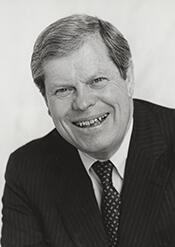
Here you will find contact information for Representative Bernard J. Dwyer, including email address, phone number, and mailing address.
| Name | Bernard J. Dwyer |
| Position | Representative |
| State | New Jersey |
| District | 6 |
| Party | Democratic |
| Status | Former Representative |
| Term Start | January 5, 1981 |
| Term End | January 3, 1993 |
| Terms Served | 6 |
| Born | January 24, 1921 |
| Gender | Male |
| Bioguide ID | D000586 |
About Representative Bernard J. Dwyer
Bernard James Dwyer (January 24, 1921 – October 31, 1998) was an American politician and a member of the Democratic Party who served as a United States Representative from New Jersey from 1981 to 1993. Over the course of six consecutive terms in the House of Representatives, he contributed to the legislative process during a significant period in late twentieth-century American history, representing the interests of his New Jersey constituents in the national legislature.
Dwyer was born on January 24, 1921, and grew up in New Jersey, where he would spend most of his life and build his political career. His early years were shaped by the economic and social conditions of the interwar period and the Great Depression, experiences that later informed his outlook on public service and government responsibility. Coming of age as the United States entered World War II, he was part of a generation whose formative experiences were closely tied to national and global conflict, economic recovery, and the expansion of federal programs.
Following his early education, Dwyer pursued further studies that prepared him for a career in public life, although his path to elected office was also influenced by military and civic experience. Like many of his contemporaries, he lived through the upheavals of World War II and the postwar era, a time in which returning veterans and young professionals increasingly entered politics at the local and state levels. These experiences helped shape his understanding of government institutions and the needs of ordinary citizens, laying the groundwork for his later roles in elective office.
Before his election to Congress, Dwyer established himself in New Jersey public affairs and Democratic Party politics, gaining experience that would prove essential once he entered the national arena. His early political work involved engagement with local issues and the concerns of communities in his home state, building a reputation as a responsive and accessible public servant. Through these roles he developed the relationships and political base that enabled his successful campaign for the U.S. House of Representatives in 1980.
Dwyer began his congressional service on January 3, 1981, at the start of the 97th Congress, and served continuously until January 3, 1993, completing six terms in office. His tenure in the House coincided with the administrations of Presidents Ronald Reagan and George H. W. Bush, a period marked by debates over federal spending, taxation, defense policy, and social programs. As a Democratic member of the House of Representatives from New Jersey, he participated in the democratic process through committee work, floor debates, and votes on major legislation, consistently seeking to represent the interests and priorities of his district. During these twelve years, he was part of the congressional deliberations that addressed Cold War policy, economic change, and evolving domestic issues.
Within Congress, Dwyer’s work reflected both national concerns and the specific needs of New Jersey, including urban development, transportation, and services for working families and veterans. He contributed to the legislative process not only through his votes but also through engagement with colleagues across the aisle, involvement in caucuses, and attention to constituent services. His office served as a link between federal agencies and the people of his district, assisting with federal benefits, regulatory matters, and local projects that required federal support.
After leaving Congress in January 1993, Dwyer retired from elective office but remained identified with the Democratic Party and with the generation of New Jersey lawmakers who had helped guide the state through the closing decades of the twentieth century. He continued to be remembered in his home state for his years of public service and his role in representing New Jersey in Washington during a time of significant political and economic transition. Bernard James Dwyer died on October 31, 1998, closing a life and career that had been closely intertwined with the civic and political life of New Jersey and the United States Congress.