Representative Bernard John Gehrmann
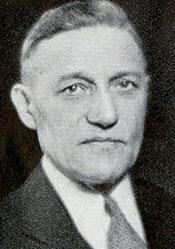
Here you will find contact information for Representative Bernard John Gehrmann, including email address, phone number, and mailing address.
| Name | Bernard John Gehrmann |
| Position | Representative |
| State | Wisconsin |
| District | 10 |
| Party | Progressive |
| Status | Former Representative |
| Term Start | January 3, 1935 |
| Term End | January 3, 1943 |
| Terms Served | 4 |
| Born | February 13, 1880 |
| Gender | Male |
| Bioguide ID | G000118 |
About Representative Bernard John Gehrmann
Bernard John Gehrmann (February 13, 1880 – July 12, 1958) was a German American immigrant, farmer, and Progressive Republican politician who served four terms as a United States Representative from Wisconsin. He represented Wisconsin’s 10th congressional district in the U.S. House of Representatives from January 3, 1935, to January 3, 1943, during a significant period in American history that encompassed the later years of the Great Depression and the early years of World War II. Over the course of his public career, he also served four years in the Wisconsin State Senate and a total of 12 years in the Wisconsin State Assembly, primarily representing Ashland County.
Gehrmann was born in Gnesen, near Königsberg, in East Prussia, Germany, on February 13, 1880. He attended the common schools in Germany before immigrating to the United States with his parents in 1893. The family settled in Chicago, Illinois, where he entered the workforce at a young age. In Chicago he was employed in a packing plant and later learned the printing trade while working for a German-language daily newspaper. Determined to further his education, he attended night school while working, gaining the skills and experience that would later support his involvement in public affairs and agricultural education.
In 1896 Gehrmann moved to Wisconsin and settled on a farm near Neillsville in Clark County, where he engaged in agricultural pursuits and established himself as a working farmer. In 1915 he moved again within the state, this time to a farm near Mellen in Ashland County, which would remain his home base for the rest of his life. His experience as a farmer shaped his political outlook and informed his later work on behalf of rural communities. From 1920 to 1933, he conducted farmers’ institutes throughout Wisconsin for the University of Wisconsin College of Agriculture, helping to disseminate modern agricultural practices and strengthen the state’s farming economy.
Gehrmann’s public service began at the local level in Ashland County. He served as clerk of the school board from 1916 to 1934, town assessor from 1916 to 1921, and chairman of the town board from 1921 to 1932. These roles gave him practical experience in local governance, education administration, and fiscal matters, and they helped build his reputation as a representative of rural interests. His work in local government and agricultural education laid the groundwork for his entry into state politics and his identification with progressive reform.
Gehrmann was elected to the Wisconsin State Assembly in 1927 and served there until 1933, representing Ashland County. During this period he aligned with the Progressive Republican movement that was influential in Wisconsin politics, reflecting his commitment to agricultural, labor, and governmental reforms. In 1932 he served as a delegate to the Republican National Convention, further raising his profile within the party. He was then elected to the Wisconsin State Senate, serving in 1933 and 1934. His combined service in the Assembly and Senate totaled 12 years in the state legislature, during which he became a recognized advocate for rural and progressive causes.
In 1934 Gehrmann was elected as a member of the Progressive Party to the Seventy-fourth Congress, and he was subsequently reelected to the three succeeding Congresses, serving from January 3, 1935, to January 3, 1943. As a member of the U.S. House of Representatives, he represented Wisconsin’s 10th congressional district and participated in the legislative process during a transformative era marked by New Deal legislation and the nation’s gradual mobilization for World War II. He worked within the framework of the Progressive Party and Progressive Republican traditions to represent the interests of his largely rural constituency, contributing to debates on agricultural policy, economic relief, and federal support for local communities. He was an unsuccessful candidate for reelection in 1942 to the Seventy-eighth Congress, ending his continuous service in the House after four terms.
After leaving Congress, Gehrmann continued his involvement in public service at the federal and state levels. From January 1943 to April 1945 he was employed by the United States Department of Agriculture, drawing on his long experience as a farmer and agricultural educator to assist in federal agricultural programs during the wartime period. He then returned to state politics, winning election again to the Wisconsin State Assembly in 1946, 1948, 1950, and 1952. In 1954 he was elected to the Wisconsin State Senate for a term scheduled to run through January 1957, extending his legislative career well into the postwar era and reaffirming his longstanding role as a representative of Ashland County and northern Wisconsin.
Bernard John Gehrmann died of a heart attack in Mellen, Wisconsin, on July 12, 1958. He was interred in Mellen Union Cemetery. His legacy in Wisconsin politics included not only his own decades of service at the local, state, and federal levels, but also the continuation of public service in his family; his son, Bernard E. Gehrmann, likewise served in the Wisconsin State Assembly.