Representative Bernard William Kearney
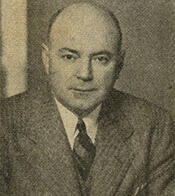
Here you will find contact information for Representative Bernard William Kearney, including email address, phone number, and mailing address.
| Name | Bernard William Kearney |
| Position | Representative |
| State | New York |
| District | 32 |
| Party | Republican |
| Status | Former Representative |
| Term Start | January 6, 1943 |
| Term End | January 3, 1959 |
| Terms Served | 8 |
| Born | May 23, 1889 |
| Gender | Male |
| Bioguide ID | K000030 |
About Representative Bernard William Kearney
Bernard William “Pat” Kearney (May 23, 1889 – June 3, 1976) was a Republican member of the United States House of Representatives from New York who served eight consecutive terms in Congress from 1943 to 1959. A prominent legislator during a significant period in American history, he was noted for his strong anti-communist stance, his advocacy for veterans, and his service on the House Un-American Activities Committee (HUAC) during the Cold War. Over the course of his public career, he combined long military service, legal practice, and political leadership at the local, state, and national levels.
Kearney was born in Ithaca, New York, on May 23, 1889. Details of his early schooling are not extensively documented, but he pursued legal studies and graduated from Albany Law School. After completing his legal education, he was admitted to the bar and, in 1914, began the practice of law in Gloversville, New York. His move into legal practice in Gloversville marked the beginning of a long association with that community, both professionally and politically, and laid the groundwork for his later roles in local government and national politics.
Parallel to his early legal career, Kearney embarked on a lengthy record of military service. He enlisted in the New York National Guard in 1909 and, as a young soldier, took part in the 1916 border patrol mission associated with the Pancho Villa Expedition along the Mexican border. During World War I he completed officer training, received a commission, and served in France as a member of the 27th Division, gaining experience in overseas combat operations. After the war, he continued his National Guard service, rising through the ranks. He commanded the 105th Infantry Regiment as a colonel and later the 53rd Brigade as a brigadier general. He remained in the National Guard after World War I, ultimately attaining the rank of brigadier general and retiring from the National Guard in 1940.
Kearney’s prominence in veterans’ affairs grew out of his wartime service and his ongoing involvement with veterans’ organizations. Active in the Veterans of Foreign Wars, he served as National Commander of the VFW from 1936 to 1937, a position that gave him national visibility and influence on veterans’ policy. His leadership in the VFW helped establish his reputation as a forceful advocate for those who had served in the armed forces and foreshadowed his later legislative work on behalf of veterans in Congress.
While building his military and veterans’ credentials, Kearney also developed a substantial career in local government and law. Beginning in 1920, he held a series of legal and judicial offices in upstate New York. He served as Gloversville city judge, then as assistant district attorney of Hamilton and Fulton Counties, and later as district attorney of Fulton County. These positions reflected both his legal expertise and his growing role in Republican Party politics in the region. His work at the local level provided him with practical experience in public administration and law enforcement, and it strengthened his ties to the communities he would later represent in Congress.
With the approach of World War II, Kearney again took on military responsibilities. Although he had retired from the National Guard in 1940, he served during World War II in the New York Guard, a state defense force organized for homeland security duties while National Guard units were federalized. In this capacity he commanded a brigade. During the National Guard’s post–World War II reorganization, he was recalled to service, promoted to major general, and assigned as commander of the 27th Infantry Division, the same division in which he had served during World War I. He retired from the military again in 1948, concluding nearly four decades of intermittent uniformed service.
Kearney’s election to Congress in 1942 marked the beginning of his national legislative career. Running as a Republican, he won a seat in the U.S. House of Representatives from New York and took office on January 3, 1943. He was reelected seven times, serving eight terms in total, and remained in the House until January 3, 1959. His tenure in Congress coincided with World War II, the immediate postwar era, and the early decades of the Cold War, a period of profound change in American domestic and foreign policy. As a member of the House of Representatives, he participated in the democratic process and represented the interests of his New York constituents while also engaging in national debates over security, veterans’ benefits, and anti-communism.
Within the House, Kearney became known as a prominent anti-communist and a strong advocate for veterans. He served on the House Un-American Activities Committee (HUAC) during the Cold War, taking part in investigations into alleged communist influence and subversive activities in the United States. At the same time, he played a central role in shaping legislation to assist returning servicemembers. He co-authored and helped shepherd the Servicemen’s Readjustment Act of 1944—widely known as the GI Bill—through Congress and was credited as the originator of the law’s title. The GI Bill became one of the most consequential pieces of social legislation of the twentieth century, providing education, housing, and other benefits to millions of veterans, and Kearney’s involvement in its passage was a major achievement of his congressional career.
After serving eight terms, Kearney chose not to run for reelection in 1958 and left Congress at the conclusion of his final term in January 1959. In retirement he divided his time between Canandaigua, New York, and Venice, Florida. He remained a respected figure due to his long record of military service, his leadership in veterans’ organizations, and his years in the House of Representatives. Bernard William “Pat” Kearney died in Venice, Florida, on June 3, 1976. In recognition of his military and public service, he was buried at Arlington National Cemetery.