Representative Bernard Shandon Rodey
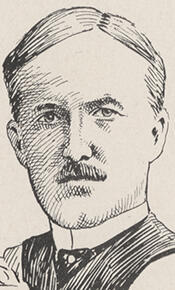
Here you will find contact information for Representative Bernard Shandon Rodey, including email address, phone number, and mailing address.
| Name | Bernard Shandon Rodey |
| Position | Representative |
| State | New Mexico |
| District | -1 |
| Party | Republican |
| Status | Former Representative |
| Term Start | December 2, 1901 |
| Term End | March 3, 1905 |
| Terms Served | 2 |
| Born | March 1, 1856 |
| Gender | Male |
| Bioguide ID | R000372 |
About Representative Bernard Shandon Rodey
Bernard Shandon Rodey (March 1, 1856 – March 10, 1927) was an Irish-born American lawyer, territorial legislator, congressional Delegate, and federal judge whose career spanned several key frontiers of United States expansion. A member of the Republican Party, he served as a Representative (Delegate) from the New Mexico Territory in the United States Congress from 1901 to 1905, contributing to the legislative process during two terms in office. His public life was marked by advocacy for higher education, territorial development, and the admission of Western territories as states.
Rodey was born on March 1, 1856, in County Mayo, Ireland. In 1862 he emigrated with his parents to the Province of Canada, where the family settled in Sherbrooke, Quebec. He received his early education there, coming of age in a bilingual, cross-border environment that exposed him to both British colonial and North American political traditions. This formative period in Canada laid the groundwork for his later interest in law and public affairs in the United States.
After leaving Canada, Rodey moved to Massachusetts to pursue legal studies. He enrolled at Harvard University, where he studied law and prepared for a professional career at the bar. In 1881 he relocated to Albuquerque, in what was then the New Mexico Territory, reflecting the broader migration of ambitious young professionals to the American West. Upon his arrival in Albuquerque he became employed as a private secretary for the Atlantic and Pacific Railroad Company, gaining experience in corporate affairs and the economic development of the region. He left the railroad to enter private legal practice and was admitted to the bar in 1883.
Rodey quickly became active in territorial politics. In 1889 he was elected to the territorial senate representing Bernalillo County. During this period he introduced landmark legislation to create the University of New Mexico. His bill provided for the acquisition of funds and land for the institution and specified that it be located in “New Albuquerque,” a developing area that would become a focal point of education and civic life in the territory. The bill’s passage on February 28, 1889, earned him recognition as the “Father of the University,” and Rodey Hall on the university campus was later named in his honor. His early legislative work reflected a commitment to building durable civic and educational institutions in the New Mexico Territory.
In 1900 Rodey was elected as a Republican to the U.S. House of Representatives as a Delegate from the New Mexico Territory, taking his seat in Congress in 1901. As a Delegate, he served from 1901 to 1905, a significant period in American history marked by rapid expansion, debates over territorial status, and questions of national identity. Although territorial Delegates did not possess a formal vote on the House floor, Rodey participated fully in committee work and the broader democratic process, representing the interests of his constituents in New Mexico. During his two terms in office he became best known for his unrelenting fight to gain statehood not only for New Mexico, but also for Arizona and Oklahoma. He opposed a consortium of Eastern senators led by Albert J. Beveridge of Indiana, who were wary of the political implications of admitting additional Western states. Rodey’s vigorous advocacy for statehood underscored his belief that the territories merited full representation and equality within the Union. He was defeated in a primary contest by William Henry Andrews in 1904, bringing his congressional service to a close in 1905.
Following his service in Congress, Rodey continued his federal career in other jurisdictions. In 1906 President Theodore Roosevelt appointed him as a federal judge for the United States District Court for Puerto Rico. His tenure on the bench, which lasted until 1910, was controversial. Rodey became embroiled in local political disputes that contributed to the debates culminating in the Olmsted Amendment, which restructured aspects of Puerto Rican governance. His decisions and the broader role of the federal court led some prominent Puerto Rican attorneys to advocate, unsuccessfully, for the abolition of the federal court in Puerto Rico or a severe limitation of its jurisdiction. Rodey left the bench in 1910 and was succeeded by John J. Jenkins. At the 1908 Republican National Convention, during this same period of his public life, he was among the Republicans who persuaded William Howard Taft to promise statehood for New Mexico and Arizona as part of Taft’s presidential campaign platform.
Rodey’s later career extended to yet another American territory. Under President William Howard Taft he was appointed as a federal government attorney in the Territory of Alaska, where he participated in investigations into a coal scandal in 1913, reflecting ongoing national concerns about resource development and public integrity in the territories. After completing his work in Alaska, he returned to Albuquerque and founded the law firm of Rodey and Rodey. This firm evolved over time into the present-day law firm of Rodey, Dickason, Sloan, Akin & Robb, a lasting institutional legacy of his legal career. Although President Warren G. Harding later attempted to draw him back into active politics, Rodey declined to seek further public office. He remained in Albuquerque until his death there on March 10, 1927, at the age of 71, leaving behind a record of service that linked Ireland, Canada, New Mexico, Puerto Rico, and Alaska in a single, wide-ranging public career.