Representative Bertram Tracy Clayton
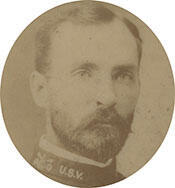
Here you will find contact information for Representative Bertram Tracy Clayton, including email address, phone number, and mailing address.
| Name | Bertram Tracy Clayton |
| Position | Representative |
| State | New York |
| District | 4 |
| Party | Democratic |
| Status | Former Representative |
| Term Start | December 4, 1899 |
| Term End | March 3, 1901 |
| Terms Served | 1 |
| Born | October 19, 1862 |
| Gender | Male |
| Bioguide ID | C000492 |
About Representative Bertram Tracy Clayton
Bertram Tracy Clayton (October 19, 1862 – May 30, 1918) was an American soldier and politician who served as a U.S. Representative from New York from 1899 to 1901. A member of the Democratic Party, he contributed to the legislative process during one term in office and represented the interests of his constituents in the United States House of Representatives during a significant period in American history.
Clayton was born on October 19, 1862, in Clayton, Barbour County, Alabama, into a family that would become prominent in both military and political life. He was the son of Henry DeLamar Clayton, a Confederate general during the American Civil War who later served as president of the University of Alabama, and Victoria Hunter Clayton. Growing up in the post–Civil War South, he was exposed early to public affairs and military tradition, influences that would shape his later career in both the armed forces and elective office.
Clayton pursued higher education at the United States Military Academy at West Point, New York, graduating in the class of 1886. His education at West Point provided him with rigorous training in engineering, military science, and leadership, and placed him among a cohort of officers who would go on to serve in key roles in the late nineteenth and early twentieth centuries. The discipline and professional grounding he received there formed the basis of his subsequent service as an officer in the United States Army.
Following his graduation, Clayton was commissioned into the U.S. Army and began his career as a professional soldier. He served in the regular Army during a period when the United States was expanding its military responsibilities at home and abroad. His early service included assignments typical of junior officers of the era, combining garrison duty, field service, and administrative responsibilities. This experience gave him practical insight into military organization and national defense, perspectives that would later inform his work in Congress.
Clayton entered national politics as a Democrat from New York at the close of the nineteenth century. He was elected to the Fifty-sixth Congress and served as a Representative from New York from March 4, 1899, to March 3, 1901. During his single term in the House of Representatives, he participated in the democratic process and contributed to the legislative work of the chamber at a time marked by debates over American expansion, industrial regulation, and the nation’s evolving role on the world stage. As a member of the House, he represented the interests of his New York constituents while bringing to bear his background as a career military officer.
After leaving Congress, Clayton returned to military-related service and continued his association with the armed forces. In the years leading up to and including World War I, he held positions that drew on both his military training and his experience in public life. His combined record as a soldier and legislator reflected the broader pattern of American public servants of his generation, who often moved between military and civilian roles in service to the nation.
Bertram Tracy Clayton died on May 30, 1918. His life spanned the Reconstruction era, the rise of the United States as an industrial and imperial power, and the nation’s entry into World War I. Remembered as both an American soldier and a Democratic Representative from New York, he exemplified the intertwining of military and political service that characterized many public figures of his time.