Representative Bertrand Hollis Snell
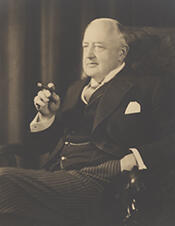
Here you will find contact information for Representative Bertrand Hollis Snell, including email address, phone number, and mailing address.
| Name | Bertrand Hollis Snell |
| Position | Representative |
| State | New York |
| District | 31 |
| Party | Republican |
| Status | Former Representative |
| Term Start | December 6, 1915 |
| Term End | January 3, 1939 |
| Terms Served | 12 |
| Born | December 9, 1870 |
| Gender | Male |
| Bioguide ID | S000652 |
About Representative Bertrand Hollis Snell
Bertrand Hollis Snell (December 9, 1870 – February 2, 1958) was an American politician and newspaper publisher who represented upstate New York in the United States House of Representatives from 1915 to 1939. A loyal and influential member of the Republican Party, he served twelve consecutive terms in Congress and rose to become one of the most powerful figures in the House during the 1920s and 1930s, particularly through his leadership of the House Rules Committee and later as House Minority Leader.
Snell was born on December 9, 1870, and grew up in upstate New York, a region whose interests he would later champion in Congress. He attended Amherst College in Massachusetts, where he formed a lasting friendship with future President Calvin Coolidge. This collegiate connection later gave him a unique role as an intermediary between the executive and legislative branches during the Coolidge administration. After college, Snell returned to New York and became active in local business and Republican politics, building a reputation as a disciplined party man and an advocate for the economic development of his region.
Elected in 1915 as a Republican to the United States House of Representatives from New York’s Thirty-first Congressional District, Snell entered Congress during a period of profound national and international change. He represented upstate New York continuously until his retirement in 1939. From the outset of his congressional career, he was intensely loyal to the regular Republican leadership, generally supporting party positions and legislative strategies. He departed from this fidelity only when he believed the interests of his constituents were directly at stake. Early in his service he introduced a bill to make the St. Lawrence River more navigable, a project he pursued unsuccessfully throughout his time in Congress. Although he did not live to see its legislative success, when the Saint Lawrence Seaway was ultimately completed during the administration of President Dwight D. Eisenhower, one of its locks was named in his honor, reflecting his long-standing advocacy for improved navigation and commerce in the region.
Snell’s rise within the House Republican hierarchy was steady and significant. In 1923 he became chairman of the powerful House Rules Committee, a post that gave him substantial influence over the flow of legislation and the broader legislative agenda. When Nicholas Longworth became Speaker of the House and John Q. Tilson became Majority Leader in 1925, Snell, as Rules Committee chairman, joined them in effectively controlling the House of Representatives on behalf of the regular Republican organization. His first major test in this role came when insurgent Republicans and Democrats sought to ease restrictions on discharge petitions, which would have weakened leadership control over the House calendar. Snell helped craft a compromise that preserved a measure of authority for the regular Republican leadership while addressing some of the insurgents’ concerns. Under his guidance, the Rules Committee became a key instrument of the Republican “Old Guard,” restricting Democrats and insurgent Republicans from obstructing President Calvin Coolidge’s program of spending cuts and tax reductions. When Democrats complained that he used the rules too restrictively, Snell replied that they would likely do the same if they returned to power, which in time they did.
During the Coolidge administration, Snell’s personal connection to the president enhanced his importance in Washington. As a college friend of Coolidge from their Amherst days, he often served as a go-between for Congress and the White House, a role that was sometimes politically delicate when differences arose between the president and congressional leaders. In the 1928 presidential election cycle, Snell backed Herbert Hoover for the Republican nomination, though without great enthusiasm; he would have preferred that Coolidge seek another term. His relationship with President Hoover cooled somewhat after Hoover attempted, unsuccessfully, to assert greater control over federal patronage in New York, an area in which Snell and other state party leaders were deeply interested. Throughout his congressional career, according to his biographer Louis A. Barone, Snell generally opposed extensive federal regulatory interference in the private sector and resisted large federal spending programs, reflecting his conservative Republican outlook.
The onset of the Great Depression and the political realignment it produced altered Snell’s trajectory in the House. His long-held ambition to become Speaker was thwarted when Republicans lost control of the chamber in the 1930 midterm elections. After Speaker Nicholas Longworth’s death in April 1931, a contest emerged within the diminished Republican ranks for the position of House Minority Leader. Although President Hoover favored John Q. Tilson, Snell prevailed in the leadership race by appealing both to the Old Guard and to more progressive Republicans. Tilson was closely associated with the increasingly unpopular Hoover administration, while Snell had made some concessions to the party’s insurgent wing. As Minority Leader, he became the principal spokesman and strategist for House Republicans during the tumultuous years of the New Deal.
With Hoover’s landslide defeat in 1932 and Franklin D. Roosevelt’s sweeping New Deal agenda, Snell spent the remainder of his congressional career leading Republican opposition to what he regarded as excessive federal intervention in the economy. His initial response to the New Deal was one of cautious but critical cooperation. In the depths of the economic crisis, he supported certain emergency measures, including the Emergency Banking Act of 1933 and the Economy Act of 1933, recognizing the need for immediate stabilization. However, he soon emerged as a consistent, if measured, critic of much of Roosevelt’s program. Snell opposed the Agricultural Adjustment Act, the Elmer Thomas amendment favoring inflationary policies, the Reciprocal Trade Agreements Act, and other early New Deal initiatives that he believed expanded federal power too far or threatened traditional economic arrangements. During the 1937 “court-packing” controversy, he coordinated with Senate Republican leaders to allow the overwhelmingly Democratic majority to divide over Roosevelt’s proposal to enlarge the Supreme Court, a strategy that contributed to the plan’s defeat. The so-called “Roosevelt recession” of 1937 further emboldened Snell and other conservatives to intensify their resistance. Late that year he introduced tax-cut legislation, and during a special session of Congress, Republicans joined with southern Democrats to recommit Roosevelt’s Fair Labor Standards bill, delaying its enactment until the following session. In 1938 Snell and the Republican minority successfully opposed Roosevelt’s original plan to reorganize the executive branch. The midterm elections that year proved a major victory for Republicans, who gained 82 seats and nearly doubled their House delegation, though they still remained in the minority.
Despite these political gains, Snell chose not to seek reelection in 1938. His decision to retire at the end of his twelfth term in 1939 was influenced by declining eyesight and hearing, as well as his belief that Republicans were unlikely to regain control of the House in the near future—a change that in fact did not occur until 1946. After leaving Congress, he turned his attention to business and publishing. He had purchased the Potsdam Courier-Freeman, a newspaper in Potsdam, New York, in 1934, and upon his retirement he became its publisher, using the paper as a platform for local affairs and Republican opinion. In 1941 he expanded his business interests by becoming owner and manager of the New York State Oil Company of Kansas, reflecting his continued engagement with the private sector and his long-standing skepticism of federal economic control.
Bertrand Hollis Snell died in Potsdam, New York, on February 2, 1958. He was interred in Bayside Cemetery in Potsdam, the community that had long served as his home base in both politics and business. His legacy in upstate New York and in national politics is reflected not only in his lengthy congressional service and leadership roles, but also in the physical and institutional memorials that bear his name. One of the locks of the Saint Lawrence Seaway, whose development he had championed in Congress, was named in his honor after the project’s completion in the Eisenhower era. In addition, Bertrand H. Snell Hall at Clarkson University in Potsdam commemorates his contributions to the region and to public life.