Representative Beverly Browne Douglas
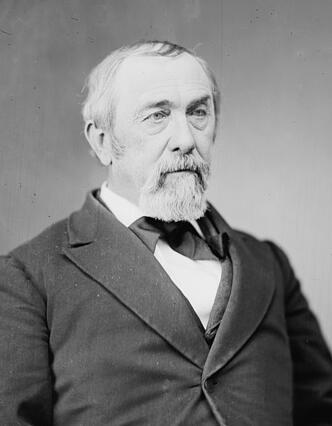
Here you will find contact information for Representative Beverly Browne Douglas, including email address, phone number, and mailing address.
| Name | Beverly Browne Douglas |
| Position | Representative |
| State | Virginia |
| District | 1 |
| Party | Democratic |
| Status | Former Representative |
| Term Start | December 6, 1875 |
| Term End | March 3, 1879 |
| Terms Served | 2 |
| Born | December 21, 1822 |
| Gender | Male |
| Bioguide ID | D000450 |
About Representative Beverly Browne Douglas
Beverly Browne Douglas (December 21, 1822 – December 22, 1878) was an American lawyer, state legislator, Confederate cavalry officer, and Democratic politician who represented Virginia in the United States House of Representatives from 1875 to 1879. Over the course of his public career, he was active in both state and national politics during a period that spanned the antebellum era, the Civil War, and Reconstruction.
Douglas was born on December 21, 1822, in Virginia. Little detailed information survives about his early childhood and family background, but he came of age in a slaveholding society shaped by the agrarian economy and political traditions of antebellum Virginia. He received a formal education appropriate to a young man of his station and studied law, preparing for a professional career that would lead him into public life. After completing his legal training, he was admitted to the bar and began the practice of law in Virginia, establishing himself within the legal and political circles of his region.
By the early 1850s, Douglas had entered elective office at the state level. He was elected to the Virginia Senate, where he represented King William, King and Queen, and Essex Counties from 1852 to 1865. His long tenure in the state senate spanned the tumultuous years leading up to the Civil War and the conflict itself. In Richmond, he participated in debates over state policy, sectional tensions, and ultimately secession, serving in the upper house of the General Assembly as Virginia moved from the Union into the Confederacy. His service in the senate during this period placed him among the influential Democratic legislators who helped shape Virginia’s response to national crises.
During the American Civil War, Douglas supplemented his legislative role with military service in the Confederate States Army. He served as a Confederate cavalry officer, reflecting his commitment to the Southern cause and the defense of Virginia. As a cavalry officer, he was part of the mounted arm that played a critical role in reconnaissance, raiding, and screening operations for Confederate forces. His dual identity as both a state senator and an officer in the Confederate cavalry underscored his prominence in Virginia’s political and military establishment during the war.
Following the Confederacy’s defeat and the end of the Civil War in 1865, Douglas returned to civilian life in a state undergoing Reconstruction and political realignment. As federal authority was reasserted and former Confederate states were gradually readmitted to representation in Congress, Douglas remained aligned with the Democratic Party, which in Virginia largely represented white conservative interests opposed to Radical Republican Reconstruction policies. He resumed his legal and political activities as Virginians sought to reestablish local control over their affairs and redefine their place in the reunited nation.
Douglas’s national political career began with his election as a Democrat to the United States House of Representatives. He was chosen to represent Virginia in the Forty-fourth Congress and was reelected to the Forty-fifth Congress, serving from 1875 to 1879. His tenure in Congress thus covered two full terms, during which he participated in the legislative process at a time when the federal government was grappling with the final phases of Reconstruction, questions of civil rights, economic policy in the wake of the Panic of 1873, and the evolving balance of power between the states and the national government. As a member of the House of Representatives, Beverly Browne Douglas represented the interests of his Virginia constituents and contributed to the deliberations and votes that shaped national policy in the mid-1870s.
Douglas’s service in Congress occurred during a significant period in American history, as the country transitioned from the immediate postwar era toward the Gilded Age. He remained a consistent Democrat, reflecting the views of many white Virginians who sought to limit federal intervention in state affairs and to restore prewar political patterns, even as the nation continued to debate the meaning of citizenship and equality after emancipation. His congressional career was cut short by his death in office. Beverly Browne Douglas died on December 22, 1878, one day after his fifty-sixth birthday, while still serving in the Forty-fifth Congress. His death ended a public life that had spanned more than two decades of legislative service in Virginia and four years in the U.S. House of Representatives, marking the close of a career deeply intertwined with the central conflicts and transformations of nineteenth-century American history.