Representative Bill Archer
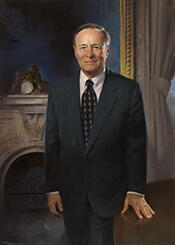
Here you will find contact information for Representative Bill Archer, including email address, phone number, and mailing address.
| Name | Bill Archer |
| Position | Representative |
| State | Texas |
| District | 7 |
| Party | Republican |
| Status | Former Representative |
| Term Start | January 21, 1971 |
| Term End | January 3, 2001 |
| Terms Served | 15 |
| Born | March 22, 1928 |
| Gender | Male |
| Bioguide ID | A000215 |
About Representative Bill Archer
William Reynolds Archer Jr. (born March 22, 1928) is an American retired lawyer and politician who represented Texas in the United States House of Representatives from 1971 to 2001. A member of the Republican Party for most of his public career, Archer served fifteen terms in Congress and rose to become chairman of the powerful House Committee on Ways and Means during the final six years of his tenure. Before entering national office, he served two terms in the Texas House of Representatives from 1967 to 1971, initially as a Democrat before switching to the Republican Party in December 1967.
Archer was born in Houston, Harris County, Texas, and was educated in local schools, graduating from St. Thomas High School. He began his higher education at Rice University and later transferred to the University of Texas at Austin. There he earned both a Bachelor of Business Administration and a Bachelor of Laws (LL.B.) degree. While at the University of Texas, he was a member of the Texas Rho chapter of the Sigma Alpha Epsilon fraternity, an affiliation that reflected his early engagement with campus and civic life.
Upon graduating from law school in 1951, Archer was admitted to the State Bar of Texas and began practicing law in Houston. Within months, following the onset of the Korean War, he was drafted into the United States Air Force. He served on active duty until 1953, attaining the rank of captain. After returning from military service, Archer entered the private sector as president of Uncle Johnny Mills, Inc., a position he held from 1953 until 1963. This combination of legal training, business leadership, and military service formed the foundation for his subsequent political career.
Archer’s entry into elective office came at the local level. From 1955 to 1962 he served as a councilman and mayor pro tempore of Hunters Creek Village, a small municipality in the Houston metropolitan area. In 1967 he expanded his involvement in business and finance by becoming a director of Heights State Bank. That same year he was elected to the Texas House of Representatives, where he served two terms from 1967 to 1971. During his first year in the legislature he changed his party affiliation from Democratic to Republican in December 1967, placing himself among the early wave of party-switching Southern officeholders during a period of political realignment.
In 1970 Archer sought national office as a candidate for the United States House of Representatives from Texas’s 7th Congressional District. The seat had been held by Republican George H. W. Bush, who vacated it to pursue a U.S. Senate campaign. Archer entered the race after Bush protégé James Baker withdrew and won the general election with approximately 65 percent of the vote. He took office on January 3, 1971, and was reelected fourteen times, serving continuously until January 3, 2001. Over the course of his thirty years in the House, the 7th District became one of the most reliably Republican constituencies in Texas. Archer’s initial 1970 victory margin proved to be his lowest; in subsequent elections he never received less than 79 percent of the vote. He ran unopposed in 1976, 1990, 1992, and 1994, and in 1998 faced no major-party opposition. His long tenure reflected both the district’s partisan alignment and his secure standing with constituents.
During his congressional service, Archer was known as a staunch fiscal and social conservative. He consistently advocated limited government and lower taxes, arguing that the federal government was taking too much from American citizens. As a legislator he supported the death penalty, opposed gay adoption, and called for reductions in welfare funding, positions that aligned him with the conservative wing of the Republican Party. His voting record and public statements emphasized cutting federal spending and restraining the growth of entitlement programs, and he was frequently described as a “tough fiscal conservative.”
Archer’s influence reached its peak when he became chairman of the House Committee on Ways and Means, a central committee in the House with jurisdiction over taxation, tariffs, Social Security, Medicare, and major elements of trade policy. He assumed the chairmanship in 1995, following the Republican takeover of the House in the 1994 elections, and held the position until the end of his congressional career in 2001. As chairman, he pursued a strategy often described as “starving the beast,” seeking to downsize the federal government by reducing the tax revenues available to it. Under his leadership, the committee played a key role in shaping tax and trade legislation in the late 1990s, including measures affecting international commerce and the federal budget.
One of Archer’s most prominent legislative initiatives involved U.S. trade relations with the People’s Republic of China. In 1999 he was instrumental in securing temporary most-favored-nation (MFN) trade status for China, working in concert with President Bill Clinton despite widespread concerns in Congress over human rights issues and the growing U.S. trade deficit. Building on that effort, Archer introduced H.R. 4444 in the House of Representatives on May 15, 2000, legislation to grant China permanent normal trade relations status and to amend the Trade Act of 1974, which had required annual review of China’s trade status. The bill, referred to the Ways and Means Committee for consideration and drafting, was presented by Archer as a top legislative priority for the remainder of the year and as vital to U.S. agricultural and commercial interests seeking access to a market encompassing roughly one-fifth of the world’s population. Archer chose not to seek reelection to the 107th Congress and retired from the House when his term ended on January 3, 2001, concluding thirty years of continuous congressional service.
Following his retirement from elective office in 2001, Archer remained active in public affairs and policy circles and maintained a residence in Washington, D.C. In 2002, after the resignation of Treasury Secretary Paul H. O’Neill, Archer was mentioned as a possible candidate to lead the Department of the Treasury, reflecting his reputation in fiscal and tax policy. He became associated with PricewaterhouseCoopers as a senior policy analyst, offering expertise on tax and economic issues, and appeared periodically as a guest lecturer. Archer also served as chairman of the International Conservation Caucus Foundation from 2006 to 2009, extending his influence into international environmental and conservation policy. He is the namesake of the Archer Fellowship Program of the University of Texas System, a distinguished and highly competitive initiative that brings students from across the UT System to Washington, D.C., for a semester of academic coursework and internships in the federal government and related institutions, thereby linking his legacy to the training of future public servants.