Representative Bill Schuette
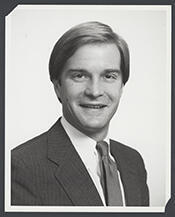
Here you will find contact information for Representative Bill Schuette, including email address, phone number, and mailing address.
| Name | Bill Schuette |
| Position | Representative |
| State | Michigan |
| District | 10 |
| Party | Republican |
| Status | Former Representative |
| Term Start | January 3, 1985 |
| Term End | January 3, 1991 |
| Terms Served | 3 |
| Born | October 13, 1953 |
| Gender | Male |
| Bioguide ID | S000143 |
About Representative Bill Schuette
William Duncan “Bill” Schuette (born October 13, 1953, in Midland, Michigan) is an American lawyer, jurist, and Republican politician who has held a series of prominent state and federal offices, including three terms in the United States House of Representatives and two terms as the 53rd attorney general of Michigan. The son of Esther Cathrin (née Little) and William H. Schuette, he later became the stepson of Carl Gerstacker, former chairman of the board of The Dow Chemical Company. Schuette was active in Republican politics from a young age, serving as a delegate to the Michigan Republican conventions in 1972 and 1974, and again in 1982, laying the groundwork for a long career in public service.
Schuette graduated from Herbert Henry Dow High School in Midland in 1972 and went on to attend Georgetown University in Washington, D.C. He studied international affairs at the Edmund A. Walsh School of Foreign Service, graduating cum laude in 1976 with a Bachelor of Science in Foreign Service. During his undergraduate years, he broadened his academic experience as an exchange student at the University of Aberdeen in Scotland from 1974 to 1975. Schuette then pursued legal studies at the University of San Francisco School of Law, earning his Juris Doctor in 1979. He was admitted to the State Bar of Michigan in 1981, beginning his professional career as an attorney before moving fully into electoral politics.
In November 1984, at the age of 31, Schuette was elected to the United States House of Representatives from Michigan’s 10th congressional district, narrowly defeating incumbent Democrat Donald J. Albosta. A member of the Republican Party, he entered Congress on January 3, 1985, and was re-elected to the two succeeding Congresses, serving three consecutive terms until January 3, 1991. During this period, a significant era in late Cold War and post–Cold War American history, Schuette contributed to the legislative process as a member of the House Budget Committee, the House Agriculture Committee, and the House Select Committee on Aging. In these roles, he participated in the democratic process and represented the interests of his Michigan constituents, engaging in federal budget deliberations, agricultural policy, and issues affecting older Americans. In 1990, while still serving in the House, he was the Republican nominee for the United States Senate from Michigan, unsuccessfully challenging Democratic incumbent Senator Carl Levin in the general election.
After leaving Congress in January 1991, Schuette transitioned to state executive service when Governor John Engler appointed him director of the Michigan Department of Agriculture. Approved by the five-member agriculture commission on January 11, 1991, he oversaw agricultural policy and regulation during a period of economic transition in Michigan. While serving as director, Schuette and his wife, Cynthia, founded the Michigan Harvest Gathering, a statewide food and fund drive organized in partnership with the Food Bank Council of Michigan to combat hunger. Over a 12-year period, the initiative raised more than $4 million and collected approximately 6 million pounds of food for people in need. Schuette resigned as director on February 25, 1994, and was succeeded by Gordon Guyer, stepping down to run for the Michigan State Senate. In November 1994, he was elected to the Michigan Senate from the 35th district, serving there until 2003. During his tenure as a state senator, he gained national recognition when President George W. Bush selected him in 2001 as the president’s personal representative to Australian-American Friendship Week in Australia.
In November 2002, Schuette was elected to the Michigan Court of Appeals for the Fourth District, succeeding Judge Donald E. Holbrook Jr. He took office in January 2003 and served as an appellate judge until his term expired on January 1, 2009, when he was succeeded by Michael J. Kelly. While on the bench, Schuette developed a reputation as a conservative jurist. In 2008, as Michigan voters considered a ballot initiative to establish a medical marijuana program for registered patients with qualifying conditions, he emerged as a spokesperson for a group opposed to the proposed law, reflecting his longstanding skepticism toward the expansion of marijuana access. After leaving the judiciary, Schuette entered private practice with Warner, Norcross & Judd, one of Michigan’s largest law firms, continuing his legal career while remaining an influential figure in Republican politics.
On November 2, 2010, Schuette was elected Michigan attorney general and took office in January 2011. His tenure as attorney general, which lasted until 2019, was marked by a series of high-profile and often controversial legal positions. In September 2011, petition language to recall Schuette was approved by Midland County authorities, citing grievances that included his efforts to limit or undermine the medical marijuana law approved by voters in 2008. That same year, he filed suit to close two Michigan abortion clinics on grounds of improper record disposal. Before the U.S. Supreme Court’s 2015 decision in Obergefell v. Hodges, Schuette actively opposed same-sex marriage, aligning with social conservatives in the state. He endorsed former Florida governor Jeb Bush for president on August 19, 2015, and in December 2016 filed suit to halt a presidential election recount in Michigan requested by Green Party candidate Jill Stein. In January 2017, U.S. District Judge David M. Lawson admonished Schuette for attempting to file an amicus brief that reversed his earlier position on whether the State of Michigan must supply bottled water to Flint residents lacking tap filters, calling it a “troubling ethical issue” and suggesting it reflected “superficial posturing.”
By the mid-2010s, Schuette was widely believed to be preparing a campaign for governor of Michigan. In July 2016, before speaking on the opening day of the 2016 Republican National Convention, he changed the name of his fundraising committee from “Bill Schuette for Attorney General” to “Bill Schuette for Michigan,” signaling his broader ambitions. Although term-limited from seeking another term as attorney general after his 2014 re-election, he continued to raise campaign funds and publicly stated in December 2016 that he had not yet decided whether to run for governor, amid reports of a falling-out with Governor Rick Snyder. On September 12, 2017, Schuette formally announced his gubernatorial campaign in Midland. He won the Republican nomination on August 7, 2018, defeating Lieutenant Governor Brian Calley and state senator Patrick Colbeck, with strong backing from President Donald Trump and Vice President Mike Pence. In the November 6, 2018 general election, however, he was defeated by Democrat Gretchen Whitmer, a former Michigan Senate minority leader, by a margin of approximately nine percentage points. During this period, Schuette also worked to strike down a proposed ballot initiative to eliminate partisan gerrymandering in Michigan; despite opposition from Schuette and allied groups, the Michigan Supreme Court allowed the initiative to appear on the November 2018 ballot, where it was approved by voters. On July 3, 2018, Ingham County prosecutor Carol Siemon requested a grand jury investigation—ultimately never conducted—into the sale of multimillion-dollar property Schuette inherited in the U.S. Virgin Islands, to determine whether any laws had been violated; his spokesperson characterized the move as a “baseless attack” on an attorney general with what they described as a strong ethical record.
In the years following his tenure as attorney general and his 2018 gubernatorial defeat, Schuette remained a prominent Republican figure in Michigan but declined to seek a return to Congress. He chose not to challenge Democratic incumbent Dan Kildee in the redrawn congressional district that included his hometown of Midland during the 2022 midterm elections. Schuette continues to reside in Midland, Michigan, with his wife, Cynthia, with whom he has two children. His family’s political legacy extended into a new generation when one of his children, Bill G. Schuette, was elected to the Michigan House of Representatives in 2022.