Representative Bill Shuster
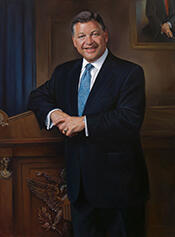
Here you will find contact information for Representative Bill Shuster, including email address, phone number, and mailing address.
| Name | Bill Shuster |
| Position | Representative |
| State | Pennsylvania |
| District | 9 |
| Party | Republican |
| Status | Former Representative |
| Term Start | May 17, 2001 |
| Term End | January 3, 2019 |
| Terms Served | 9 |
| Born | January 10, 1961 |
| Gender | Male |
| Bioguide ID | S001154 |
About Representative Bill Shuster
William Franklin Shuster (born January 10, 1961) is an American politician and lobbyist who represented Pennsylvania’s 9th Congressional District in the United States House of Representatives from 2001 to 2019. A member of the Republican Party, he served nine terms in Congress during a significant period in American political history, participating in the legislative process and representing a largely rural, strongly Republican district in south-central and western Pennsylvania. He is the son of former Republican Congressman Elmer Greinert “Bud” Shuster, who also chaired the House Transportation and Infrastructure Committee.
Shuster was born in McKeesport, Pennsylvania, to H. Patricia (née Rommel) and Bud Shuster. Of German and Irish ancestry, he was raised in Bedford County, Pennsylvania, where his family operated a farm. He attended Dickinson College in Carlisle, Pennsylvania, earning a Bachelor of Arts degree with a double major in political science and history. While at Dickinson, he became a member of the Sigma Chi fraternity. He later pursued graduate studies in Washington, D.C., receiving a Master of Business Administration from American University, an education that complemented his subsequent work in business and public policy.
Before entering elective office, Shuster worked in a variety of private-sector and agricultural roles. He spent time working on his family farm in Bedford County and held positions with the Goodyear Tire and Rubber Corporation and Bandag Incorporated. He also owned and operated an automobile dealership in East Freedom, Pennsylvania. These business and agricultural experiences helped shape his political profile as a pro-business, rural-oriented Republican with a focus on transportation, infrastructure, and economic development.
Shuster’s entry into Congress followed the resignation of his father, Bud Shuster, from the U.S. House of Representatives in January 2001 after a strong rebuke from the House Ethics Committee regarding his relationship with a transportation lobbyist. Bill Shuster ran in the special election to succeed him in Pennsylvania’s 9th Congressional District. On February 18, 2001, he secured the Republican nomination with 59 percent of the vote, defeating State Representative Patrick Fleagle, who received 32 percent, and Blair County Commissioner John Eichelberger, who received 9 percent. In the May 15, 2001 special election, Shuster defeated Democratic Centre County Commissioner Scott Conklin by a margin of 52 percent to 44 percent, winning nine of the district’s eleven counties; Conklin carried Centre County with 58 percent and Clearfield County with 55 percent. This contest remains one of the last occasions on which a Democrat came close to winning what has long been one of the most reliably Republican districts in Pennsylvania.
Following redistricting after the 2000 Census, Centre County was removed from the 9th District, while portions of Somerset, Cambria, Indiana, Fayette, and Cumberland Counties were added. In November 2002, with the district reverting to its traditional Republican lean, Shuster won his first full term by defeating Democrat John R. Henry, 71 percent to 29 percent. In 2004, he faced a serious primary challenge from businessman Michael DelGrosso, narrowly prevailing 51 percent to 49 percent, and then won the general election against Democrat Paul Politis by 70 percent to 30 percent, carrying every county in the district. He was reelected to a third full term in 2006, defeating Democrat Tony Barr 60 percent to 40 percent, losing only Clearfield, Cambria, and Fayette Counties. In 2008, he again faced Barr and expanded his margin to 64 percent to 36 percent, winning all fourteen counties in the district. In 2010, amid a strong Republican year nationally, he was reelected to a fifth full term, defeating Democrat Tom Conners 73 percent to 27 percent, once more carrying all fourteen counties.
After the 2010 Census, the 9th District shifted further west to include portions of Westmoreland, Greene, and Washington Counties. Shuster won reelection to his sixth full term in 2012, defeating Democrat Karen Ramsburg 62 percent to 38 percent. With the start of the 113th Congress in January 2013, he became chairman of the House Committee on Transportation and Infrastructure, a powerful panel his father had chaired from 1995 to 2001. He held the chairmanship for three consecutive Congresses, from 2013 through the end of his service in 2019. In the 2014 Republican primary, he was challenged by Bedford County businessman Art Halvorson and Franklin County project manager Travis Schooley; Shuster prevailed with 53 percent of the vote, while Halvorson received 34 percent and Schooley 13 percent. In 2015, while serving as Transportation and Infrastructure Committee chairman, Shuster acknowledged that he was dating Shelley Rubino, vice president of government affairs for Airlines for America (A4A), a major airline lobbying group. He stated that Rubino had agreed not to lobby him or his staff, but the relationship drew scrutiny, particularly given that he had hired a former A4A executive to the aviation subcommittee staff and that his chief of staff was married to an A4A executive, drawing comparisons to the ethics controversy that had preceded his father’s resignation.
Shuster won reelection in 2016 to what became his eighth and final full term. In the Republican primary, he again faced Art Halvorson and narrowly secured renomination with 50.6 percent of the vote in a two-way race. The campaign was noted for its intensity and unusual dynamics, including television advertisements in which Shuster’s ex-wife appeared to defend him and their family. In an unprecedented turn, Halvorson received enough write-in votes in the Democratic primary to secure that party’s nomination as well, despite being positioned to the right of Shuster and pledging that, if elected, he would caucus as a conservative Republican. In the general election, Shuster defeated Halvorson a second time, winning 63.3 percent of the vote. Throughout his tenure, he maintained a strongly conservative voting record. By 2012, he held a 90.64 percent lifetime rating from the American Conservative Union. He opposed abortion, consistently receiving a 0 percent rating from NARAL Pro-Choice America and Planned Parenthood and a 100 percent rating from the National Right to Life Committee. A strong supporter of gun rights, he backed the interests of Gun Owners of America and received an “A” rating from the National Rifle Association in 2002, 2004, 2006, 2008, 2010, and 2012. His positions often put him at odds with education unions; the National Education Association gave him a grade of “F,” and the National Association of Elementary School Principals rated him at 25 percent in 2007. He received the “Spirit of Enterprise Award” from the U.S. Chamber of Commerce and scored highly with the National Tax Limitation Committee and the American Farm Bureau Federation. In the 2012 presidential election cycle, he served as a state co-chair for Mitt Romney’s campaign in Pennsylvania.
As a legislator, Shuster focused heavily on transportation, infrastructure, and national defense. He served on the Committee on Transportation and Infrastructure throughout his entire tenure in Congress and chaired it beginning with the 113th Congress. He also served on the House Armed Services Committee, including its Subcommittee on Emerging Threats and Capabilities, and on Transportation and Infrastructure subcommittees on Highways and Transit, Railroads, Pipelines, and Hazardous Materials, and Water Resources and Environment. In 2013, as a member of the Armed Services Committee, he opposed the $380 million Medium Extended Air Defense System project, which the Army had deemed too expensive to complete. He introduced H.R. 2125, the No IRS Implementation of Obamacare Act, in May 2013, seeking to bar the Internal Revenue Service from implementing the Patient Protection and Affordable Care Act on the grounds that the IRS had violated the public trust. As Transportation and Infrastructure Committee chairman, he sponsored the Water Resources Reform and Development Act of 2013 (WRRDA), a major water infrastructure bill. In January 2014, he convened a bipartisan panel to examine the use of public-private partnerships to finance projects in water infrastructure, transportation, and economic development. He introduced the Home Heating Emergency Assistance Through Transportation Act of 2014 (H.R. 4076), which created an emergency exception to Federal Motor Carrier Safety Administration regulations to allow truckers delivering home heating fuels, such as propane, to drive longer hours during shortages. Shuster argued that the measure would provide relief to millions of Americans during an “exceptionally cold winter” that had sharply increased demand for propane used to heat approximately 12 million homes. He also introduced the Transparent Airfares Act of 2014 (H.R. 4156), which sought to change federal regulations on airline fare advertising to allow carriers to advertise base fares separately from government-imposed taxes and fees. In addition, he supported the Coast Guard and Maritime Transportation Act of 2014 (H.R. 4005), describing it as legislation to ensure that the U.S. Coast Guard had the tools necessary to carry out its missions, enforce U.S. laws on domestic waters and the high seas, and safeguard the nation’s maritime interests.
Over the course of his congressional career, Shuster participated in numerous caucuses and intra-party groups that reflected his policy interests and regional priorities. He was active in the Army Corps Reform Caucus, the Congressional Azerbaijan Caucus (serving as co-chairman), the Depot Caucus, the Intelligent Transportation Caucus, the United States Congressional International Conservation Caucus, the Older Americans Caucus, the Sportsmen’s Caucus, the Congressional Cement Caucus, and the Ohio River Basin Congressional Caucus. Within the Republican Party, he was associated with the Republican Main Street Partnership, a group of generally pragmatic, business-oriented Republicans. His work on transportation and infrastructure, coupled with his conservative voting record, made him an influential figure within the House Republican Conference on issues of national infrastructure policy.
In January 2018, Shuster announced that he would retire from Congress at the end of the 115th Congress and would not seek reelection in 2018. He stated that he wanted to devote his final year in office to working with President Donald Trump on what he described as a “massive infrastructure bill,” and that concerns about reelection could distract from that effort. Although he had served nine terms in the House, he characterized his departure as coming at the end of his eighth full term, given that his initial service began with a 2001 special election. As a result of a court-ordered redistricting in Pennsylvania prior to the 2018 elections, the configuration of his long-held 9th District was substantially altered. He was succeeded as the representative for the renumbered 9th District by Republican Dan Meuser, while most of the territory Shuster had represented became the new 13th District, won by Republican John Joyce. At the same time, his chairmanship of the House Transportation and Infrastructure Committee passed to Representative Peter DeFazio, a Democrat from Oregon’s 4th District.
After leaving Congress in January 2019, Shuster entered the private sector as a lobbyist. In 2019, he joined the international law and lobbying firm Squire Patton Boggs, where he has drawn on his long experience in transportation, infrastructure, and federal policy to advise clients on legislative and regulatory matters.