Representative Bird Segle McGuire
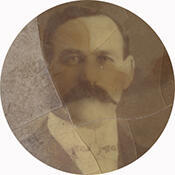
Here you will find contact information for Representative Bird Segle McGuire, including email address, phone number, and mailing address.
| Name | Bird Segle McGuire |
| Position | Representative |
| State | Oklahoma |
| District | 1 |
| Party | Republican |
| Status | Former Representative |
| Term Start | November 9, 1903 |
| Term End | March 3, 1915 |
| Terms Served | 6 |
| Born | October 13, 1865 |
| Gender | Male |
| Bioguide ID | M000464 |
About Representative Bird Segle McGuire
Bird Segle McGuire (October 13, 1865 – November 9, 1930) was an American politician and lawyer who served as a Delegate from Oklahoma Territory and later as a Representative from Oklahoma in the United States Congress from 1903 to 1915. A member of the Republican Party, he was the last U.S. Representative from Oklahoma Territory and, after statehood, was elected as an Oklahoma member of Congress, where he served four consecutive terms. Over the course of six terms in office, he contributed to the legislative process during a significant period in American history, participating in debates over statehood and representing the interests of his constituents. He was a cousin of William Neville.
McGuire was born in Belleville, St. Clair County, Illinois, on October 13, 1865. In 1867 he moved with his parents to Randolph County, Missouri, where he attended public schools. In the spring of 1881 he moved to Chautauqua County, Kansas, and subsequently went into Indian Territory, engaging in the cattle business. Seeking further education, he attended the State Normal School at Emporia, Kansas, which prepared him for a brief career in teaching.
After teaching for several terms, McGuire pursued legal studies at the law department of the University of Kansas at Lawrence. He was admitted to the bar in 1889 and commenced the practice of law in Sedan, the county seat of Chautauqua County, Kansas. He registered as a Republican the first time he voted and remained loyal to that party for the rest of his life. From 1890 to 1894 he served as prosecuting attorney of Chautauqua County, Kansas, gaining experience in public office and building a regional reputation as a lawyer and party man.
In 1894 McGuire moved to Pawnee in Indian Territory, where he opened a law practice and became increasingly involved in territorial affairs. His legal and political work led to his appointment in 1897 as assistant United States attorney for Oklahoma Territory, a position he held until after his nomination for Congress. Within territorial politics he emerged as the leader of one wing of the Oklahoma Republican Party and engaged in a protracted struggle with the last territorial governor, Frank Frantz, over party leadership and patronage appointments. This intraparty conflict shaped the Republican organization in the territory and, despite the divisions it created, resulted in McGuire being the only Republican elected to Congress from Oklahoma in 1907.
McGuire was elected as a Republican Delegate from Oklahoma Territory to the Fifty-eighth and Fifty-ninth Congresses and served from March 4, 1903, to March 3, 1907. As a territorial delegate he could not vote on the House floor but could introduce legislation and participate in debates. During his tenure Congress considered the question of statehood for the twin territories—Oklahoma Territory in the west and Indian Territory in the east. Democrats generally favored the creation of two states, Oklahoma and Sequoyah, while Republicans, backed by President Theodore Roosevelt, supported admission as a single state named Oklahoma. With Congress closely divided and Roosevelt threatening to veto any two-state measure, McGuire worked to persuade Democrats to abandon the two-state plan. According to historian Joseph B. Thoburn, McGuire proved highly effective in this effort, helping secure passage of the Oklahoma Enabling Act, which Roosevelt signed, albeit reluctantly, paving the way for single-state admission.
Upon Oklahoma’s admission to the Union on November 16, 1907, McGuire was elected as a Representative to the Sixtieth and to the three succeeding Congresses, serving from November 16, 1907, until March 3, 1915. In total, he served six terms in Congress—two as a territorial delegate and four as a state representative. During the Sixty-first Congress he was chairman of the Committee on Expenditures in the Department of the Interior, a role that placed him at the center of oversight of federal spending in areas critical to the new state, including public lands and Indian affairs. Throughout his congressional service he participated in the democratic process at the national level, representing Oklahoma’s interests during a transformative era for both the state and the nation. He was not a candidate for renomination in 1914 to the Sixty-fourth Congress and retired from elective office when his term expired in 1915.
On June 2, 1911, McGuire married Ruby Ridgeway of Kansas City, Missouri. After leaving Congress in 1915, he moved his residence from Pawnee to Tulsa, Oklahoma, where he resumed the practice of law. In addition to his legal work, he owned and operated a large ranch near Bartlesville, Oklahoma, reflecting his long-standing connection to the region’s agricultural and cattle interests. He remained active in professional and business pursuits in Tulsa during the final years of his life.
Bird Segle McGuire died in Tulsa, Tulsa County, Oklahoma, on November 9, 1930, at the age of 65. He was interred at Memorial Park Cemetery in Tulsa.