Representative Bird J. Vincent
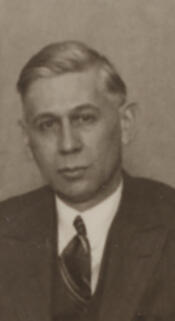
Here you will find contact information for Representative Bird J. Vincent, including email address, phone number, and mailing address.
| Name | Bird J. Vincent |
| Position | Representative |
| State | Michigan |
| District | -1 |
| Party | Republican |
| Status | Former Representative |
| Term Start | December 3, 1923 |
| Term End | March 3, 1933 |
| Terms Served | 5 |
| Born | March 6, 1880 |
| Gender | Male |
| Bioguide ID | V000101 |
About Representative Bird J. Vincent
Bird J. Vincent (March 6, 1880 – July 18, 1931) was an American soldier, attorney, and Republican politician who represented Michigan in the United States House of Representatives during a pivotal decade in the nation’s history. He was born on March 6, 1880, in Brandon Township near Clarkston, Michigan, and spent his early years in the rural communities of Oakland and Midland Counties. His upbringing in these areas helped shape his understanding of the concerns of Michigan residents, which later informed his public service at the local and national levels.
Vincent was educated in the public schools of Oakland and Midland Counties and later attended Ferris Institute (now Ferris State University) in Mecosta County, Michigan. Pursuing a career in law, he enrolled in the law department of the University of Michigan at Ann Arbor, from which he graduated in 1905. In the same year, he was admitted to the bar and commenced the practice of law in Saginaw, Michigan. This legal training and early professional experience provided the foundation for his subsequent roles in public office and his work within the judicial and legislative systems.
Vincent’s public career began in local law enforcement and municipal legal service. He served as assistant prosecuting attorney of Saginaw County from 1909 to 1914, and then as prosecuting attorney for the county from 1915 to 1917. In 1917, he resigned his post as prosecuting attorney to enter the United States Army during World War I. He served ten months in France as a first lieutenant with the Sixth Train Headquarters and the Three Hundred and Second Train Headquarters, gaining experience in military logistics and administration. After returning from the war, Vincent resumed his legal and civic career, serving as city attorney of Saginaw from 1919 to 1923.
In 1922, Vincent was elected as a Republican from Michigan’s 8th congressional district to the 68th Congress. He took office on March 4, 1923, beginning what would become five consecutive terms in the United States House of Representatives. A member of the Republican Party, he contributed to the legislative process during a period marked by postwar economic change, the Roaring Twenties, and the onset of the Great Depression. He was re-elected to the four succeeding Congresses and served continuously from March 4, 1923, until his death in 1931. During his tenure, he participated in the democratic process as a member of the House of Representatives and represented the interests of his Michigan constituents at the federal level.
Vincent’s congressional service included leadership responsibilities within the House. He served as chairman of the Committee on Elections No. 2 in the 69th Congress (1925–1927) and again in the 71st Congress (1929–1931). In this role, he was involved in the adjudication of contested election cases, an important function in maintaining the integrity of congressional representation. His work in Congress took place during a significant period in American history, as the nation grappled with issues of economic policy, veterans’ affairs, and evolving federal responsibilities in the years leading up to and including the early stages of the Great Depression.
Bird J. Vincent died in office on July 18, 1931, from heart disease while en route to San Francisco, California, from Honolulu, Hawaii, aboard the transport USS Henderson. His death placed him among the members of the United States Congress who died in office between 1900 and 1949. Following his death, he was interred in Forest Lawn Cemetery in Saginaw, Michigan. His career, spanning local prosecution, military service, municipal law, and nearly a decade in Congress, reflected a sustained commitment to public service at multiple levels of government.