Senator Blanche L. Lincoln
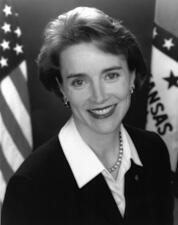
Here you will find contact information for Senator Blanche L. Lincoln, including email address, phone number, and mailing address.
| Name | Blanche L. Lincoln |
| Position | Senator |
| State | Arkansas |
| Party | Democratic |
| Status | Former Representative |
| Term Start | January 5, 1993 |
| Term End | January 3, 2011 |
| Terms Served | 8 |
| Born | September 30, 1960 |
| Gender | Female |
| Bioguide ID | L000035 |
About Senator Blanche L. Lincoln
Blanche Lambert Lincoln (born Blanche Meyers Lambert; September 30, 1960) is an American politician and political consultant who represented Arkansas in the United States Congress from 1993 to 2011. A member of the Democratic Party, she served in the U.S. House of Representatives from 1993 to 1997 and as a United States Senator from 1999 to 2011. She was first elected to the Senate in 1998, becoming the first woman elected to the Senate from Arkansas since Hattie Caraway in 1932 and, at age 38, the youngest woman ever elected to that body. Over the course of four terms in Congress—two in the House and two in the Senate—she participated actively in the legislative process and represented the interests of her Arkansas constituents during a significant period in American political history.
A seventh-generation Arkansan, Lincoln was born in Helena, Phillips County, Arkansas, the daughter of Martha (née Kelly) and Jordan Bennett Lambert. Her father was a rice and cotton farmer, and she was raised in a rural environment that would later shape her focus on agricultural and rural policy. Her older sister, Mary Lambert, would go on to become a film director. Lincoln attended local public schools in Helena and was active in student leadership, serving as student council president at Central High School from 1977 to 1978. She was raised in the Episcopal faith and remains an Episcopalian.
Lincoln attended the University of Arkansas in Fayetteville, where she was a member of the Chi Omega sorority, before transferring to Randolph-Macon Woman’s College (now Randolph College) in Lynchburg, Virginia. She graduated in 1982 with a Bachelor of Science degree in biology, having originally intended to pursue a career in nursing. After college, she moved to Washington, D.C., and began her political career as a staff assistant to U.S. Representative Bill Alexander, a Democrat representing Arkansas’s 1st congressional district. She worked in Alexander’s office until 1984, gaining experience in legislative affairs and constituent services that would later inform her own congressional service. In 1994 she married Steve Lincoln, a distant relative of President Abraham Lincoln.
Lincoln entered elective politics in 1992, challenging her former employer Bill Alexander in the Democratic primary for Arkansas’s 1st congressional district. Running under her maiden name, Blanche Lambert, she defeated Alexander by a margin of 60 to 40 percent and went on to win the general election with 70 percent of the vote against Republican Terry Hayes. Her election to the House coincided with the election of fellow Arkansan Bill Clinton as President of the United States. She was reelected to a second term under her married name, Blanche Lincoln, and served in the House from January 3, 1993, to January 3, 1997. During her House tenure she described herself as a centrist Democrat and often took positions that distinguished her from many in her party. She was among the minority of Democrats to support the Teamwork for Employees and Managers Act of 1995, which sought to change federal employment laws but was vetoed by President Clinton. She voted in favor of legislation to restrict class action lawsuits and tighten rules on personal bankruptcy, and she supported the Bush administration’s tax cuts and the permanent elimination of the estate tax. On April 5, 1995, she was one of only 27 House Democrats to vote for the Contract With America Tax Relief Act. She co-sponsored and supported a proposed constitutional amendment to require a balanced federal budget and in 1996 championed the Freedom to Farm Act, reflecting her growing prominence on agricultural issues. In 1993 she also became one of the first three women ever to play in the annual Congressional Baseball Game, alongside Ileana Ros-Lehtinen and Maria Cantwell. Pregnant in 1996, Lincoln chose not to seek a third House term and left office in January 1997.
After a brief hiatus from elected office, Lincoln returned to politics in 1998 to run for the U.S. Senate seat being vacated by retiring Senator Dale Bumpers. She won the Democratic nomination and defeated Republican state senator Fay Boozman, the brother of future Representative and Senator John Boozman, by a margin of 55 to 42 percent in the general election. Sworn in on January 3, 1999, she became the first woman elected to the Senate from Arkansas since Hattie Caraway and the youngest woman ever elected to the Senate. She was reelected in 2004, defeating Republican state senator Jim Holt by a margin of 56 to 44 percent, even as President George W. Bush carried Arkansas with 54 percent of the vote. Throughout her Senate career she concentrated heavily on agriculture, rural development, and economic issues affecting Arkansas, emerging as a leading advocate for farmers and rural communities. She was one of the primary proponents of the Delta Regional Authority, created to spur economic development in the lower Mississippi Delta region.
Lincoln’s Senate committee assignments and leadership roles reflected her policy priorities and growing influence. She served on the Senate Finance Committee, the Committee on Energy and Natural Resources, and the Special Committee on Aging, and participated in the Senate Social Security Task Force, the Rural Health Caucus, and the Senate New Democrat Coalition. On September 9, 2009, she became chair of the Senate Committee on Agriculture, Nutrition, and Forestry, becoming both the first Arkansan and the first woman to lead the committee in its 184-year history. She had earlier played a key role in brokering the compromise that led to passage of the Food, Conservation, and Energy Act of 2008, commonly known as the farm bill, which provided resources for nutrition programs, conservation, rural development, and renewable energy. She opposed an amendment to that bill that would have capped agricultural subsidy payments at $250,000 per farm per year, arguing that such a cap would unfairly harm some Arkansas farmers, particularly cotton growers; although the amendment initially passed, she threatened a filibuster against any amendment lacking a 60-vote majority, and the measure was ultimately withdrawn. In 2004 she co-founded the Senate Hunger Caucus, a bipartisan forum for addressing national and international hunger and food insecurity. She also helped form the Moderate Dems Working Group, a coalition of centrist Senate Democrats, and co-founded and co-chaired Third Way, a moderate think tank focused on economic growth, middle-class success, shared cultural values, national security, and clean energy. Within the Senate Democratic Caucus she served as Chair of Rural Outreach, underscoring her emphasis on rural and agricultural issues.
Lincoln’s voting record in the Senate often placed her among the more conservative Democrats, particularly on fiscal and regulatory matters. She was among the minority of Democrats to support the Central America Free Trade Agreement (CAFTA) and spoke out in 2009 against the Employee Free Choice Act, a pro-labor union bill, a stance that drew praise from conservative groups such as Americans for Tax Reform but sharp criticism from organized labor. In March 2007 she called for the resignation of U.S. Attorney General Alberto Gonzales, citing the firing of eight federal prosecutors as a “serious breach” between the Department of Justice and Congress; she and Senator Mark Pryor were especially angered that Gonzales had reneged on a commitment to submit a replacement for U.S. Attorney Bud Cummins of the Eastern District of Arkansas to Senate confirmation. Gonzales resigned later that year. Lincoln also took notable positions on national security and social issues: in November 2009 she voted against bringing Guantanamo Bay detainees to the United States for trial. She supported repeal of the “Don’t ask, don’t tell” policy regarding gay and lesbian service members; she missed a key procedural vote on repeal on December 9, 2010, by three minutes due to a dental appointment, later stating she would have voted in favor, and she voted for final passage of the repeal on December 18, 2010.
Health care reform during the Obama administration highlighted Lincoln’s centrist positioning and the political pressures she faced in a state trending Republican. In September 2009 she pledged to filibuster any legislation containing a public health insurance option, including the House-passed Affordable Health Care for America Act, a move that surprised and angered many liberal Democrats who viewed it as a departure from traditional party priorities. She ultimately voted in favor of the Senate’s Affordable Care Act (ACA), which became the Obama administration’s signature health care law, but she opposed the subsequent Health Care and Education Reconciliation Act of 2010, a package of amendments to the ACA advanced through the budget reconciliation process to overcome unified Republican opposition. Her votes on health care, combined with her opposition to the Employee Free Choice Act and other positions, reinforced her reputation as a conservative or centrist Democrat seeking to maintain distance from the national party brand in an increasingly hostile political environment in Arkansas.
In 2010 Lincoln sought a third Senate term amid declining support for President Obama in Arkansas. Facing a strong primary challenge from Lieutenant Governor Bill Halter, she narrowly secured renomination with the help of an early and vigorous endorsement from former President and former Arkansas Governor Bill Clinton. In the general election she was defeated in a landslide by Republican Representative John Boozman, the brother of her 1998 Senate opponent Fay Boozman, by a margin of 58 to 37 percent. Her Senate service concluded on January 3, 2011, ending an 18-year congressional career that had begun in the House in 1993.
Following her departure from the Senate, Lincoln remained in Washington, D.C., and transitioned to work in policy advocacy and consulting. After her re-election loss in November 2010, she joined the law and lobbying firm Alston & Bird as a Special Policy Advisor. In 2011 she became chair of Small Business for Sensible Regulations, a project of the National Federation of Independent Business focused on regulatory issues affecting small enterprises. In July 2013 she founded her own consulting and lobbying firm, the Lincoln Policy Group, where she serves as a principal. As of November 2020 she has been an advisor to the RATE Coalition (Reforming America’s Taxes Equitably), an organization advocating for lower corporate tax rates, particularly in the context of tax debates during the Biden administration; in that capacity she has submitted multiple testimonies to Congress on corporate tax policy. Lincoln has also remained connected to public discourse through policy work and media appearances, including appearing in the 2007 documentary “14 Women,” directed by her sister Mary Lambert, which profiled women serving in the United States Senate.