Representative Bob Beauprez
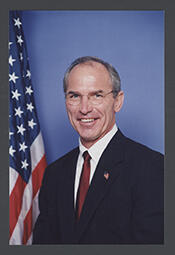
Here you will find contact information for Representative Bob Beauprez, including email address, phone number, and mailing address.
| Name | Bob Beauprez |
| Position | Representative |
| State | Colorado |
| District | 7 |
| Party | Republican |
| Status | Former Representative |
| Term Start | January 7, 2003 |
| Term End | January 3, 2007 |
| Terms Served | 2 |
| Born | September 22, 1948 |
| Gender | Male |
| Bioguide ID | B001240 |
About Representative Bob Beauprez
Robert Louis Beauprez (born September 22, 1948) is an American politician and businessman who served as a Republican Representative from Colorado in the United States House of Representatives from 2003 to 2007. A Colorado native and longtime party leader, he represented Colorado’s newly created 7th congressional district for two terms before leaving Congress to run for governor. Over the course of his career, he has been a dairy farmer, community banker, state party chairman, congressional committee member, and two-time Republican nominee for Governor of Colorado.
Beauprez was born in Lafayette, Colorado, the son of Marie (née Stengel) and Joseph C. Beauprez. He grew up on his family’s dairy farm outside Boulder, Colorado, on land originally purchased by his paternal grandparents, who had emigrated from Belgium and raised draft horses there. His mother’s family was of German descent, and his parents operated a mixed operation that included both Hereford and dairy cattle. Beauprez has frequently cited his father’s work ethic and example as a major influence on his life. Raised in a blue-collar Catholic household, he initially registered as a Democrat, as did many working-class Catholics in the area, but he later switched to the Republican Party in the 1970s, a change he has attributed to frustration with prominent Colorado Democrats of that period.
Beauprez attended Fairview High School in Boulder, where he played football and was named an all-conference offensive tackle. He went on to study physical education at the University of Colorado Boulder, earning a Bachelor of Science degree in 1970. After college, he returned to his agricultural roots, working as a dairy farmer on the family operation. He later transitioned into community banking, a move that broadened his experience in business and finance and helped establish his reputation in local civic and economic affairs.
Beauprez’s formal involvement in Republican politics began at the county level. While he had been active in the party for some time, his first significant leadership role came in 1997, when he became chairman of the Boulder County Republican Party. In 1999, with the backing of U.S. Senator Wayne Allard, he was elected chairman of the Colorado Republican Party, a position he held until 2002. His tenure as state party chairman was marked by aggressive efforts to use redistricting to improve Republican electoral prospects in Colorado. However, during this period the Republican Party lost control of the Colorado State Senate for the first time in four decades, a setback that occurred while he was at the helm of the state organization.
In 2002, Beauprez ran for the U.S. House of Representatives from Colorado’s newly created 7th congressional district, a seat widely regarded as a swing district. In one of the closest congressional races in the nation that year, he defeated Democrat Mike Feeley by just 121 votes, winning what was reported as the closest race in the country. Beauprez took office on January 3, 2003, and served two terms, leaving Congress on January 3, 2007. As a freshman member, he served on the House Transportation and Infrastructure Committee, the Veterans’ Affairs Committee, and the Small Business Committee, participating in the legislative process on issues ranging from infrastructure and transportation policy to veterans’ services and small business development. After winning reelection in 2004, he obtained a seat on the influential House Ways and Means Committee, which has jurisdiction over taxation, trade, Social Security, and major elements of federal economic policy. His service in Congress occurred during a significant period in American history, including the early years of the wars in Afghanistan and Iraq and debates over domestic security and fiscal policy, and he represented the interests of his suburban Denver–area constituents during these debates.
Beauprez chose not to seek a third term in the House in 2006, instead running for Governor of Colorado to succeed term-limited Republican Governor Bill Owens. He secured the Republican nomination in August 2006 without opposition after former rival Marc Holtzman withdrew from the race and endorsed him several months before the primary. The general election campaign against Democratic nominee and former Denver District Attorney Bill Ritter was contentious. On February 2, 2006, veterans’ groups called on Beauprez to apologize for appearing at a campaign photo opportunity in a military-issued uniform despite never having served in the armed forces; during the Vietnam War he had received three draft deferments and then a medical release. Later in the campaign, Beauprez aired advertisements criticizing Ritter’s record as district attorney, focusing on a plea bargain involving Carlos Estrada Medina, an illegal immigrant and alleged heroin dealer who later faced charges in California under an alias for suspected sexual abuse of a child. Questions arose as to how Beauprez’s campaign obtained detailed information about Medina’s record, which was not readily verifiable in public court files. Statements by his campaign manager about “federal criminal databases” prompted concerns that restricted law-enforcement databases, including the National Crime Information Center (NCIC), might have been improperly accessed. The Colorado Bureau of Investigation opened an inquiry and requested FBI involvement. Beauprez denied any improper conduct and said he had never heard of the NCIC database, although The Denver Post noted that he had cosponsored legislation in Congress relating to that system. On November 7, 2006, Beauprez lost the gubernatorial election to Ritter by 262,100 votes.
The controversy over the Medina case continued after the election. Cory Voorhis, a Senior Special Agent with U.S. Immigration and Customs Enforcement, was prosecuted for retrieving Medina’s record from the NCIC database and providing it to Beauprez’s staff. Beauprez defended Voorhis’s actions as whistleblowing, arguing that they exposed what he viewed as a pattern of lenient plea bargains during Ritter’s tenure as district attorney, and observers questioned why a Denver District Attorney employee who accessed similar information for the Ritter campaign was not also prosecuted. On April 9, 2008, a jury found Voorhis not guilty, with at least one juror stating that the panel did not believe he had acted with wrongful intent and expressing concern that he had been singled out. During the investigation Beauprez was criticized in some quarters for appearing insufficiently supportive of Voorhis, but after the acquittal it became public that Beauprez had offered assistance that Voorhis’s attorneys declined in order to avoid the appearance of a partisan relationship. In an open letter, Voorhis later praised Beauprez as “an honorable gentleman, and a great American,” and some media figures, including radio host Peter Boyles, retracted earlier criticism.
Beauprez returned to statewide politics in the 2014 election cycle. In March 2014, he announced that he would again seek the Republican nomination for governor, this time challenging incumbent Democratic Governor John Hickenlooper. Rather than competing at the Republican state assembly on April 12, he chose to petition onto the primary ballot. In the June 24, 2014, Republican primary, Beauprez won the nomination with a plurality, receiving 116,333 votes (30.24 percent) to former Representative Tom Tancredo’s 102,830 (26.73 percent), Secretary of State Scott Gessler’s 89,213 (23.19 percent), and former state Senate Minority Leader Mike Kopp’s 76,373 (19.85 percent). On July 1, he announced Douglas County Commissioner Jill Repella as his running mate. During the general election campaign, video surfaced of remarks he had made in 2010 to the Denver Rotary Club, in which he noted that 47 percent of Americans pay no federal income tax and suggested that Democrats sought a “permanent ruling political majority” by keeping more than half the population dependent on government largesse funded by others. Democrats criticized the comments as elitist and out of touch, likening them to similar remarks later made by Mitt Romney, while Beauprez’s campaign defended them, arguing that in context he was lamenting that more Americans were not prospering enough to pay federal income tax. In August 2014, he stated that, if requested by another governor such as Texas Governor Rick Perry, he would send Colorado Army National Guard troops to the U.S.–Mexico border; critics argued such a deployment would be unlawful, and Beauprez later clarified that he envisioned a humanitarian, not a military, mission. In the November 4, 2014, general election, Hickenlooper defeated Beauprez by 68,238 votes, and Beauprez formally conceded the following day.
In the years following his gubernatorial campaigns, Beauprez remained active in conservative political and policy circles. He became a member of the ReFormers Caucus of Issue One, a bipartisan group of former elected officials focused on political reform and reducing the influence of money in politics. During the 2015–2016 election cycle, he founded Colorado Pioneer Action, an organization that sponsored websites, mailers, and other communications supporting and opposing various candidates, primarily for state legislative offices. In late June 2016, the watchdog group Campaign Integrity Watchdog filed a campaign finance complaint alleging that Colorado Pioneer Action functioned as an unregistered political committee in violation of Colorado campaign finance disclosure laws. After nearly a year of pretrial motions, including multiple efforts by Beauprez and the organization to have the complaint dismissed, the case went to trial in March 2017. Colorado Pioneer Action was found to have committed multiple violations, fined $17,735, and ordered to register and disclose its contributors. Beauprez and Colorado Pioneer Action appealed the ruling to the Colorado Court of Appeals, where a decision was pending at the time of the last available reports.