Representative Bob Etheridge
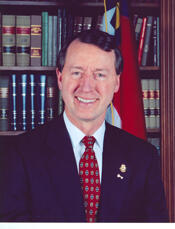
Here you will find contact information for Representative Bob Etheridge, including email address, phone number, and mailing address.
| Name | Bob Etheridge |
| Position | Representative |
| State | North Carolina |
| District | 2 |
| Party | Democratic |
| Status | Former Representative |
| Term Start | January 7, 1997 |
| Term End | January 3, 2011 |
| Terms Served | 7 |
| Born | August 7, 1941 |
| Gender | Male |
| Bioguide ID | E000226 |
About Representative Bob Etheridge
Bobby Ray “Bob” Etheridge (born August 7, 1941) is an American politician who served as the U.S. Representative for North Carolina’s 2nd congressional district from January 3, 1997, to January 3, 2011. A member of the Democratic Party, he represented his largely rural and suburban district in the United States House of Representatives for seven consecutive terms, contributing to the legislative process during a significant period in American history. Over the course of his career he also served as a county commissioner, state representative, and North Carolina superintendent of public instruction, and later sought, unsuccessfully, the Democratic nomination for Governor of North Carolina in 2012.
Etheridge was born on August 7, 1941, in Sampson County, North Carolina, to John P. Etheridge and Beatrice Coats Etheridge. He attended Cleveland School in Johnston County from 1947 to 1959, where he was a standout high school basketball player. Coming from a family without a tradition of higher education, he became the first in his family to earn a college degree when he attended Campbell University on an athletic scholarship and received a business degree in 1965. Etheridge subsequently completed graduate work in the field of economics. Immediately after college he served in the United States Army from 1965 to 1967. In addition to his public service, he has been a part-time tobacco farmer and hardware store owner, maintaining close ties to the agricultural and small-business communities that would later form a core part of his political base.
Etheridge’s political career began at the local level in Harnett County, North Carolina. He was elected a Harnett County commissioner in 1973 and served through 1976, chairing the board from 1974 to 1976. Building on his local government experience, he won election to the North Carolina House of Representatives in 1978. He served five terms in the state legislature from 1979 to 1988, during which he rose to chair the powerful House Appropriations Committee. In the General Assembly he gained a reputation for strong stances on educational issues and fiscal matters, helping shape state budget priorities and school policy.
In 1988 Etheridge was elected North Carolina Superintendent of Public Instruction, a statewide office he held for two terms from 1989 to 1996. As superintendent he oversaw the state’s public school system during a period of growing emphasis on standards, accountability, and educational reform. His tenure further solidified his profile as an advocate for public education and positioned him as a prominent Democratic figure in state politics. After leaving the superintendent’s office, he turned his attention to federal office, seeking to represent North Carolina in Congress.
In 1996 Etheridge ran for the U.S. House of Representatives from North Carolina’s 2nd congressional district. In the general election he defeated incumbent Republican Congressman David Funderburk by a margin of 53 percent to 46 percent, beginning his service in the 105th Congress on January 3, 1997. He was reelected in 1998 with 57 percent of the vote, in 2000 with 58 percent, and from 2002 through 2008 he never won reelection with less than 65 percent of the vote, reflecting his electoral strength in the district over multiple cycles. During his seven terms in the House, from 1997 to 2011, Etheridge served on the Agriculture Committee and the Homeland Security Committee, among others, and focused particularly on farm issues, educational matters, and efforts to provide a balanced federal budget. Representing a district with substantial agricultural interests, he was an advocate for rural communities and farm policy, and he also engaged in debates over national security and domestic preparedness following the creation of the Department of Homeland Security.
Etheridge’s legislative interests included energy and health care policy. In 2006 he joined U.S. Representative Stephanie Herseth in proposing increased research and development of biofuels as a means of reducing the United States’ dependence on foreign oil, reflecting his interest in alternative energy and its potential benefits for farmers and rural economies. He supported major health care reform efforts during the administration of President Barack Obama, voting in November 2009 to pass the Affordable Health Care for America Act in the House and later voting for the Patient Protection and Affordable Care Act, landmark legislation that reshaped the nation’s health insurance system.
Etheridge’s congressional career was marked late in his tenure by a widely publicized incident in June 2010. While walking on a Washington, D.C., sidewalk, he was approached by two young men who said they were students working on a project and who asked if he “fully supported the Obama agenda” while video recording his response. In the video, Etheridge repeatedly asked, “Who are you?” and was seen grabbing one of the young men by the wrists, neck, and back of the shirt while continuing to demand their identities, as one of them asked several times to be released. Etheridge later issued a statement saying, “I deeply and profoundly regret my reaction, and I apologize to all involved,” and he called a press conference at which he stated there was no excuse for his actions, attributing his behavior in part to having had a “long day.” A subsequent article in The New York Times reported that unnamed Republican political strategists acknowledged they were behind the episode. Political analysts discussed the potential impact of the confrontation on Etheridge’s reelection prospects against Republican challenger Renee Ellmers. Shortly afterward, a 32-year-old man, Brandon Leslie, alleged that he had been involved in a similar incident with Etheridge in 1996 when he was a high school student; that account was later disputed by the retired principal, who stated that “the student was in the wrong,” though the principal did not detail the nature of the exchange between Leslie and Etheridge.
In the 2010 election Etheridge faced Republican nominee Renee Ellmers and Libertarian nominee Tom Rose. Ellmers defeated Etheridge by a narrow margin, receiving 49.5 percent of the vote to Etheridge’s 48.7 percent. Etheridge contested the result and requested a recount of the vote. On November 19, 2010, North Carolina State Board of Elections director Gary Bartlett confirmed that Ellmers had won by about 1,483 votes, a margin of approximately 0.8 percent. Later that day Etheridge conceded the election, ending his seven-term tenure in the U.S. House of Representatives on January 3, 2011. Remaining active in public life, he continued to be identified with Democratic politics in North Carolina and, in 2012, sought the Democratic nomination for Governor of North Carolina, though he was unsuccessful in that bid.