Representative Bob Filner
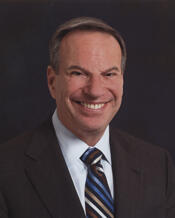
Here you will find contact information for Representative Bob Filner, including email address, phone number, and mailing address.
| Name | Bob Filner |
| Position | Representative |
| State | California |
| District | 51 |
| Party | Democratic |
| Status | Former Representative |
| Term Start | January 5, 1993 |
| Term End | January 3, 2013 |
| Terms Served | 10 |
| Born | September 4, 1942 |
| Gender | Male |
| Bioguide ID | F000116 |
About Representative Bob Filner
Robert Earl Filner (September 4, 1942 – April 20, 2025) was an American politician and educator who served ten terms as a Democratic member of the United States House of Representatives from California from 1993 to 2012 and was the 35th mayor of San Diego from December 2012 until his resignation in August 2013. Over a long public career, he held local, state, and federal offices, chaired the House Committee on Veterans’ Affairs from 2007 to 2011, and became known both for his advocacy on behalf of veterans and minority communities and for controversies that ultimately ended his political life.
Filner was born in the Squirrel Hill neighborhood of Pittsburgh, Pennsylvania, the son of Sarah F. and Joseph H. Filner. He was Jewish, and his upbringing was shaped by his father’s work as a labor union organizer, his service as a U.S. Army veteran, and later his career as an international metal trader. Filner attended Cornell University, where he worked on The Cornell Daily Sun, the student newspaper, and became active in the civil rights movement. In June 1961, as a Freedom Rider, he was arrested in Jackson, Mississippi, after arriving at the bus station and charged with “disturbing the peace and inciting a riot.” Refusing to post bond, he remained incarcerated for two months. He graduated from Cornell in 1963 with a degree in chemistry and went on to earn a doctorate in the history of science from Cornell six years later.
While completing his Ph.D., Filner moved to San Diego, California, where he joined the faculty of San Diego State University as a history professor. He taught there for more than 20 years, building a parallel career in public service and politics. In the mid-1970s he worked in Washington, D.C., for prominent Minnesota Democrats, serving on the staff of U.S. Senator Hubert Humphrey in 1975 and Congressman Don Fraser in 1976. He later worked in 1984 for Congressman Jim Bates, who represented the San Diego area. Filner’s elective political career began in 1979 when his opposition to the closing of a neighborhood school led him to run for the San Diego Unified School District Board of Education. He defeated a longtime incumbent and gained notice for a “back to basics” approach to education that won him wide praise; his colleagues elected him president of the board in 1982.
Filner advanced in local government when he was elected to the San Diego City Council in 1987 and reelected in 1991. On the council he continued to cultivate a reputation as an outspoken and combative advocate for his constituents, and his colleagues selected him as deputy mayor of San Diego. The 1990 census brought significant changes to California’s representation in Congress, with the state gaining seven new seats. One of these was the 50th Congressional District in south San Diego, a heavily Democratic and ethnically diverse district that included much of southern San Diego, the cities of Chula Vista and National City, and all of Imperial County, encompassing most of California’s border with Mexico except for Imperial Beach. In 1992, Filner entered a five-way Democratic primary for the new seat.
The 1992 primary for the 50th District pitted Filner against several prominent Democrats, including his former employer Jim Bates, who had lost his seat in 1990 in a sexual harassment scandal and whose home had been drawn into the new district, and veteran state senator Wadie Deddeh, who was term-limited. In a closely contested race, Filner narrowly defeated Deddeh, with Bates finishing third. Given that the district was almost 40 percent Hispanic and strongly Democratic—redistricting in 2000 later increased the Hispanic share to 53 percent—Filner’s victory in the November general election, where he received 57 percent of the vote, was effectively assured. He was reelected nine times, facing no substantive Republican opposition and running unopposed in 1998. After the 2000 census, the district was renumbered as the 51st Congressional District, and Filner continued to represent it until 2012. During his time in the House of Representatives, he participated actively in the legislative process and represented the interests of his diverse border district’s constituents.
In Congress, Filner became a founding member of the Congressional Progressive Caucus and also joined the Congressional Motorcycle Safety Caucus and the International Conservation Caucus. He was known for his combative personality and for personally intervening in constituent service matters. He served on the House Committee on Transportation and Infrastructure, including its Subcommittees on Aviation; Highways and Transit; and Water Resources and Environment. His most prominent role came on the House Committee on Veterans’ Affairs, where he served as a member for many years and became chairman when Democrats gained control of the House after the 2006 elections. As chairman from 2007 to 2011, and later as ranking member after Republicans retook the House in 2010, Filner advocated increased funding for veterans’ benefits, expanded spending on veterans’ health care, and a new GI Bill for veterans of the wars in Afghanistan and Iraq.
Filner’s district included one of the largest populations of Filipino Americans in the United States, and he devoted significant attention to issues affecting the Philippines and Filipino veterans. He championed legislation allowing Filipino veterans to maintain a small government stipend if they returned to the Philippines, secured burial benefits and access to Veterans Affairs clinics, and in 2009 brokered a deal providing $198 million in pension benefits for Filipino veterans who had served with U.S. forces in World War II, structured as $15,000 lump-sum payments in the 2009 federal stimulus bill. In recognition of these efforts, Representative Antonio Diaz introduced a bill in the Philippine House of Representatives in February 2009 to confer honorary Filipino citizenship on Filner and U.S. Senators Daniel Inouye, Daniel Akaka, and Ted Stevens. Filner also took controversial positions on other issues, including joining 30 other House Democrats in voting not to count Ohio’s 20 electoral votes in the 2004 presidential election, despite President George W. Bush’s 118,457-vote margin in the state. In 2008 he sponsored a House resolution, which passed, in support of National Aviation Maintenance Technician Day. He was among a group of U.S. officials who argued that the People’s Mujahedin of Iran (MEK), a major component of the National Council of Resistance of Iran, should be removed from the State Department’s list of terrorist organizations; the designation was lifted on September 28, 2012.
Filner’s congressional career was not without controversy. On August 20, 2007, he was involved in an altercation with a United Airlines employee at Dulles International Airport near Washington, D.C., after becoming upset that his baggage had not arrived on the carousel. According to reports, he entered the baggage claim office, became irritated when asked to wait while the employee assisted another customer, and attempted to enter an employee-only area. Airline staff repeatedly asked him to leave, and airport police were called. Filner, who was en route to visit U.S. troops in Iraq, later issued a statement asserting that press accounts were factually incorrect and that the charges were “ridiculous.” He was charged with assault and battery but ultimately entered an Alford plea to reduced charges of trespassing. The House Ethics Committee opened a probe into the incident but later dropped it. Throughout his House tenure, Filner also maintained a bitter rivalry with fellow Democrat Juan Vargas, who challenged him in three Democratic primaries amid mutual accusations of corruption. Despite this history, Vargas endorsed Filner in the 2012 San Diego mayoral race and was elected to succeed him in Congress.
On June 8, 2011, Filner announced that he would not seek reelection to the House of Representatives in 2012 and would instead run for mayor of San Diego. In the June 5, 2012, primary election, he placed second with 30.7 percent of the vote, advancing to a November runoff against Republican city councilmember Carl DeMaio. In the general election, Filner defeated DeMaio by a margin of 52.5 percent to 47.5 percent. At age 70, he became San Diego’s first elected Democratic mayor since 1992 and only the second since 1971. He resigned his House seat on December 3, 2012, in order to assume the mayoralty. In his first speech as mayor, Filner pledged to focus on rebuilding San Diego’s neighborhoods, improving city services, increasing staffing for public safety, attracting jobs to the city, and strengthening regional ties with Tijuana.
As mayor, Filner pursued several contentious policy initiatives. In January 2013, after meeting with the San Diego chapter of Americans for Safe Access, he directed the San Diego Police Department and city code compliance officers to stop enforcing city codes against medical marijuana dispensaries and to cease forwarding cases to the City Attorney’s Office. In April 2013, he proposed an ordinance to restore permanent legal status to dispensaries, but the City Council rejected his plan and instructed the City Attorney to draft an alternative measure, while federal authorities continued to raid and prosecute dispensaries within the city. Filner also clashed with the tourism industry over the city’s Tourism Marketing District, a hotelier-run entity funded by a 2 percent surcharge on hotel rooms to promote San Diego as a destination. Although the City Council had voted in 2012 to renew the district for 39½ years, outgoing mayor Jerry Sanders had not signed the agreement. Filner withheld his signature, seeking concessions including higher hotel worker wages, protections for the city from liability, and greater control over the use of funds. The district sued to compel his signature, but Superior Court Judge Timothy Taylor ruled that the mayor had discretion not to sign. Filner and the hoteliers eventually reached a compromise, and he signed the contract, though in late May 2013 he temporarily withheld payments to the district until it agreed to provide upfront funding for a centennial celebration in Balboa Park.
Filner’s mayoralty came to an abrupt end amid multiple allegations of sexual harassment by women who had worked with or around him. Under mounting public and political pressure, he resigned as mayor in August 2013. He later pleaded guilty in state court to charges of false imprisonment and battery arising from his conduct in office. These developments effectively ended his political career. Robert Earl Filner died on April 20, 2025, closing a public life that had spanned civil rights activism, academic service, local and national elected office, and a controversial final chapter in municipal government.