Representative Bob Riley
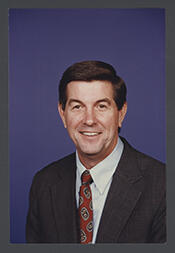
Here you will find contact information for Representative Bob Riley, including email address, phone number, and mailing address.
| Name | Bob Riley |
| Position | Representative |
| State | Alabama |
| District | 3 |
| Party | Republican |
| Status | Former Representative |
| Term Start | January 7, 1997 |
| Term End | January 3, 2003 |
| Terms Served | 3 |
| Born | October 3, 1944 |
| Gender | Male |
| Bioguide ID | R000258 |
About Representative Bob Riley
Robert Renfroe Riley (born October 3, 1944) is an American retired politician and businessman who served as the 52nd governor of Alabama from 2003 to 2011 and as a United States Representative from Alabama from 1997 to 2003. A member of the Republican Party, he represented Alabama’s 3rd congressional district in the U.S. House of Representatives for three terms before being elected governor. His service in Congress and as governor occurred during a significant period in American history, and he participated actively in the democratic process while representing the interests of his constituents.
Riley was born in Ashland, Alabama, a small town in Clay County where his family had ranched and farmed for six generations. Growing up in this rural environment, he was exposed early to agricultural life and small-town business practices that would later inform his political and economic views. After completing his early education in Alabama, he attended the University of Alabama. While there, he became a member of the Phi Kappa Sigma fraternity and pursued studies in business, graduating with a degree in business administration. His academic training in business laid the foundation for a career in the private sector before he entered public office.
Prior to his election to Congress, Riley built a diverse business career in Alabama. He owned a car dealership and a trucking company, and he also worked as a cattleman and as a commercial and residential realtor. These ventures gave him experience in agriculture, transportation, real estate, and retail, and helped establish his reputation as a businessman in his home region. When he decided to seek public office in the mid-1990s, he did so without prior elected experience, presenting himself as a political outsider with a business background.
Riley was first elected to the U.S. House of Representatives in 1996, in his first run for elected office, to represent Alabama’s 3rd congressional district. Running as a Republican, he defeated Democratic State Senator T. D. “Ted” Little of Auburn and Libertarian candidate John Sophocleus by just over 6,000 votes. His victory made him only the second Republican to represent the district since Reconstruction; the first had been Glenn Andrews, who served from 1965 to 1967 when the area was designated as the 4th District. Riley took office in January 1997 and served three consecutive terms, remaining in the House until 2003. He was reelected in 1998 with relative ease, winning 58 percent of the vote against Democrat Joe Turnham, and in 2000 he faced only a Libertarian opponent. During his tenure in Congress, Riley contributed to the legislative process, participated in committee work and floor debates, and represented the interests of his constituents in east-central Alabama at a time marked by economic change and, in his final term, the immediate post–September 11 era.
A supporter of term limits, Riley imposed a three-term limit on himself and chose not to run for reelection to the House in 2002. Instead, he sought the governorship of Alabama. In the November 2002 gubernatorial election, he ran as the Republican nominee and narrowly defeated the Democratic incumbent, Governor Don Siegelman, by approximately 3,000 votes, the narrowest margin in Alabama’s gubernatorial history. The result was controversial, as initial election-night tallies had shown Siegelman leading by more than 2,000 votes before subsequent corrections reversed the outcome. Riley took office as governor in January 2003, moving from the federal legislative arena to the state’s chief executive position.
Riley’s first term as governor was marked by an ambitious and controversial attempt at tax and governmental reform. In 2003 he proposed a sweeping package known as “Amendment One,” which sought to overhaul Alabama’s tax system and address the state’s fiscal challenges. The plan included income tax reductions for lower-income brackets, offset by increases in certain consumption, property, and higher-bracket income taxes, and was projected to raise approximately $1.2 billion in additional state revenue annually. It also contained accountability measures such as changes to teacher tenure policies, new accountability standards for school systems, bans on “pass-through pork,” and provisions for scholarship programs and other education initiatives. Riley framed the proposal in moral and Christian terms, arguing that the existing tax structure placed an unfair burden on the poorest citizens. The measure drew support from pro-business organizations, including the Business Council of Alabama and various chambers of commerce, as well as from education groups like the Alabama Education Association and reform-minded nonprofit organizations. Opposition came from groups such as the Alabama Farmers Federation and the Alabama chapter of the Christian Coalition, many of whom had supported Riley’s 2002 campaign. Critics argued that the plan would raise taxes broadly and capitalized on its complexity to sow public doubt. On September 9, 2003, Alabama voters rejected Amendment One by a wide margin, with 68 percent opposed. Despite the defeat, Riley gained national recognition; Governing magazine named him “Public Official of the Year” in 2003, and Time magazine cited him as one of the nation’s most courageous politicians for his willingness to tackle the state’s fiscal structure. In the aftermath, he worked to repair relations within his political base and pursued more incremental reforms, including efforts to raise the minimum tax threshold in Alabama.
During his governorship, Riley presided over a period of economic growth and pursued industrial recruitment and development. He claimed credit for helping to spur economic development in Alabama, pointing to projects such as the establishment of an aeronautics engineering facility in Mobile by EADS, the parent company of Airbus, which was seen as a potential precursor to a full aircraft assembly plant if future contracts were secured. Under his administration, Alabama’s unemployment rate fell from 5.3 percent in January 2003, when he took office, to 3.3 percent in March 2006, the lowest rate recorded in the state since statistics began in 1976 and among the lowest in the nation at that time. Critics, however, contended that he did not match the industrial recruitment successes of some predecessors, noting, for example, that Alabama failed to secure a Kia automotive manufacturing plant that was ultimately located in Georgia in 2006, a point emphasized by former Governor Siegelman. Riley also became embroiled in controversy over property tax appraisals, as opponents charged that his administration, through the state revenue commissioner, had effectively raised taxes by ordering annual rather than quadrennial property reappraisals, while Riley maintained that he was simply following the law and legal advice.
Riley’s tenure also intersected with several high-profile political and public issues. In 2003, Alabama politics drew national attention when Chief Justice Roy Moore of the Alabama Supreme Court refused to remove a Ten Commandments monument from the state judicial building. Riley was reported to have been personally sympathetic to Moore’s position but asserted that he had no authority to prevent Moore’s removal by a judicial ethics panel, and he ultimately played only a limited role in the dispute. Moore later challenged Riley in the Republican gubernatorial primary on June 6, 2006. Riley’s handling of natural disasters also shaped public perceptions of his administration. In July 2005 he was criticized by some residents of Mobile County after issuing a mandatory evacuation order for the entire county in advance of Hurricane Dennis, with critics arguing that a more targeted, layered approach would have been preferable. In contrast, his response to Hurricane Katrina in August 2005 was widely viewed as effective. On August 28, 2005, he declared a state of emergency for the approaching storm and requested an expedited major disaster declaration from President George W. Bush for six south Alabama counties, which was granted by the evening of August 29. By August 30, 350 National Guard troops had been activated. Public opinion polls reflected changing views of his leadership: his approval rating stood at 36 percent with 52 percent disapproving on May 10, 2005, but by September 20, 2005, it had risen to 58 percent approval and 38 percent disapproval, a shift widely attributed to his perceived effectiveness in responding to Katrina. By February 14, 2006, his approval rating was 52 percent with 43 percent disapproving, and by August 2006 it had climbed to 62 percent approval and 35 percent disapproval.
Riley also became involved in international controversy related to an Alabama citizen. On November 9, 2005, he called for a citizens’ boycott of Aruba, alleging that the local government there was engaged in a cover-up surrounding the disappearance of Natalee Holloway, an Alabama teenager who had vanished on the island earlier that year. This action drew national media attention and highlighted his willingness to intervene publicly on behalf of a constituent in a high-profile case. Riley completed his second term as governor in January 2011, concluding a political career that included three terms in the U.S. House of Representatives and eight years as Alabama’s chief executive, following a long tenure in private business.