Representative Bobbi Fiedler
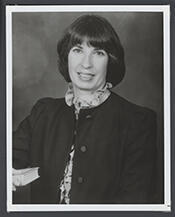
Here you will find contact information for Representative Bobbi Fiedler, including email address, phone number, and mailing address.
| Name | Bobbi Fiedler |
| Position | Representative |
| State | California |
| District | 21 |
| Party | Republican |
| Status | Former Representative |
| Term Start | January 5, 1981 |
| Term End | January 3, 1987 |
| Terms Served | 3 |
| Born | April 22, 1937 |
| Gender | Female |
| Bioguide ID | F000102 |
About Representative Bobbi Fiedler
Roberta Frances “Bobbi” Fiedler (née Horowitz; April 22, 1937 – March 3, 2019) was an American politician who served three terms as a Republican U.S. Representative from California from 1981 to 1987. A member of the Republican Party, she contributed to the legislative process during this significant period in American history, participating in the democratic process and representing the interests of her constituents in the United States House of Representatives.
Fiedler was born to Jack and Sylvia (Levin) Horowitz in Santa Monica, California, on April 22, 1937. She grew up in a Jewish family as the younger of two sisters and attended public schools in the Santa Monica area. Her father, a former champion boxer, owned a construction business, and her upbringing in Southern California’s postwar environment shaped her later engagement with local civic issues. She continued her education at Santa Monica Technical School from 1955 to 1957 and at Santa Monica City College from 1955 to 1959, combining technical and community college studies while remaining rooted in the region she would later represent.
Fiedler’s political career emerged from local activism in the Los Angeles public school system. As a parent at Lanai Road Elementary School in Encino, she mobilized other mothers in opposition to court-ordered desegregation busing in the mid-1970s. In 1976 she founded Bustop, a grassroots organization formed to protest mandatory busing; the group rapidly expanded to an estimated 30,000 members within weeks, reflecting widespread concern in the San Fernando Valley over long-distance student transportation, with some children reportedly bused up to 50 miles from home. Building on the visibility and influence she gained through Bustop, Fiedler ran for the Los Angeles City Board of Education and, in a notable upset in 1977, defeated board president Robert Docter, a supporter of desegregation busing. During her tenure on the board, she and fellow member Roberta Weintraub became known as outspoken opponents of desegregation busing policies.
In 1980, Fiedler sought national office, running as a Republican for the U.S. House of Representatives against Democrat James C. Corman, a 20-year incumbent, chairman of the Democratic Congressional Campaign Committee, and a leading contender to chair the powerful House Committee on Ways and Means. The district was approximately 62 percent Democratic, and national Republican strategists initially targeted Corman more to embarrass him than with the expectation of defeating him. The campaign unfolded in what contemporaneous accounts described as a racially charged atmosphere in the San Fernando Valley, with desegregation busing serving as the central issue. Corman’s support for racial integration drew intense criticism from Fiedler, whom his campaign manager later characterized as “the leader of LA’s anti-busing movement.” The Republican Party raised more than a million dollars on her behalf, and Corman was frequently picketed by anti-busing activists. On election day, the race was extremely close; Corman ultimately lost to Fiedler by about 750 votes out of roughly 200,000 cast, a margin of less than 0.4 percent. Observers later suggested that President Jimmy Carter’s early public concession of the presidential race to Ronald Reagan, made while polls were still open in California, may have depressed Democratic turnout, with anecdotal reports of voters leaving lines and going home rather than casting ballots.
Fiedler took office in January 1981 as a Republican Representative from California and served in Congress until January 1987, completing three terms. Following her narrow 1980 victory, redistricting placed her in the same district as Republican Representative Barry Goldwater Jr. When Goldwater chose to run instead for the U.S. Senate, Fiedler faced only token opposition in the Republican primary and was easily re-elected in the general election. In 1982 she defeated Democrat George Henry Margolis by a wide margin, winning 71.8 percent of the vote to his 24.1 percent in what had become a heavily Republican district. She secured another landslide victory in 1984, defeating Democrat Charlie Davis 72.3 percent to 25.9 percent. During her tenure, Fiedler was regarded as an independent-minded Republican; she broke with much of her party’s leadership by supporting abortion rights and the Equal Rights Amendment. She was one of several Jewish women elected to Congress from California, followed by Barbara Boxer in 1982 and Jane Harman in 1992, building on a legacy that began with Mae Ella Nolan, the first woman elected from California in 1923.
In 1986, Fiedler chose not to seek re-election to the House of Representatives and instead pursued the Republican nomination for the U.S. Senate seat held by three-term Democratic incumbent Alan Cranston. Her Senate campaign was soon overshadowed by legal controversy. In January 1986 she was charged with political corruption after an undercover investigation allegedly indicated that she had offered $100,000 to State Senator Ed Davis, a fellow Republican and rival in the senatorial primary, in exchange for his withdrawal from the race. The case did not go to trial; in February 1986 Judge Robert Altman dismissed the charges. Nonetheless, the episode damaged her candidacy, and she received only 7.2 percent of the vote in the Republican primary, effectively ending her bid for higher office.
After leaving Congress, Fiedler remained active in Republican politics and public affairs in California. She contributed to the successful campaigns of President George H. W. Bush and California Governor Pete Wilson, and she used her experience and political network to assist several Republican women in winning local and state offices. In 1993, Los Angeles Mayor Richard Riordan appointed her to the city’s Community Redevelopment Agency, where she served one term. Governor Pete Wilson later named her to the California Lottery Commission, on which she also completed one term before stepping down. In subsequent years, she continued to engage in regional political issues, notably as a prominent supporter of the movement advocating secession of the San Fernando Valley from the City of Los Angeles.
Fiedler’s personal life included three marriages and two children. Her first husband, a pharmacist, was the father of her children; the couple divorced in 1977, the same year she rose to prominence on the Los Angeles school board. In 1987 she married her former congressional chief of staff, Paul Clarke, who remained her husband until his death in 1996. Two years later, in 1998, she married Harry Coleman, a Los Angeles-based political activist, further intertwining her personal life with the political community in which she had long been a central figure. Roberta Frances “Bobbi” Fiedler died in Northridge, Los Angeles, on March 3, 2019.