Representative Bobby Bright
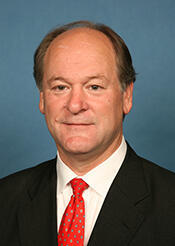
Here you will find contact information for Representative Bobby Bright, including email address, phone number, and mailing address.
| Name | Bobby Bright |
| Position | Representative |
| State | Alabama |
| District | 2 |
| Party | Democratic |
| Status | Former Representative |
| Term Start | January 6, 2009 |
| Term End | January 3, 2011 |
| Terms Served | 1 |
| Born | July 21, 1952 |
| Gender | Male |
| Bioguide ID | B001264 |
About Representative Bobby Bright
Bobby Neal Bright Sr. (born July 21, 1952) is an American retired lawyer, farmer, and former politician who served as a U.S. Representative from Alabama and was previously the three-term Mayor of Montgomery, Alabama. A member of the Democratic Party during his tenure in Congress, he represented Alabama’s 2nd congressional district from January 3, 2009, to January 3, 2011. His district included just over half of the city of Montgomery, as well as most of the Wiregrass Region in the southeastern part of the state. His 2008 congressional campaign ran on the message of “America First,” and his voting record indicated that he was the most conservative member of the House Democratic Caucus in the 111th Congress. He is the first Mayor of Montgomery to be elected to Congress.
Bright was born in Midland City, Dale County, Alabama, in the Wiregrass Region, and grew up as the son of a sharecropper on one of the cotton farms typical of that area. He was raised in a large family with 13 siblings and spent his youth working on the family farm, experiences that shaped his later emphasis on agriculture, rural development, and work ethic. After graduating from high school, he took a job in metalworking to save money for college, working every day to pay for his education. These early years in the Wiregrass Region, marked by farm labor and industrial work, provided the foundation for his later identification with small-town and agricultural interests.
Pursuing higher education while working, Bright attended Auburn University, where he earned a Bachelor of Arts degree in political science in 1975. After graduation, he took a position as an auditor, gaining early experience in finance and administration. He continued his studies at Troy State University (now Troy University), receiving a Master of Science degree in criminal justice in 1977. Bright then began a career as a corrections officer in the Alabama prison system. His work in corrections, where he was deeply affected by the number of young people entering penitentiaries, led him to conclude that he could have a greater impact through the law. He enrolled at the Thomas Goode Jones School of Law at Faulkner University in Montgomery, earning his Juris Doctor in 1982. Bright subsequently practiced law for approximately fifteen years, building a career as an attorney before entering electoral politics.
Bright’s political career began at the municipal level in Montgomery. In 1999 he ran for mayor and was elected after defeating longtime incumbent Republican Mayor Emory Folmar, a dominant figure in the city’s politics for many years. He was re-elected in 2003 in a landslide victory over challenger Scott Simmons and later won a third term, serving a total of three terms as mayor. During his tenure, he focused on economic development, fiscal discipline, and urban revitalization. He played a central role in the revitalization of Montgomery’s downtown and riverfront, including the development of the Renaissance Montgomery complex and the Montgomery Riverwalk Stadium. He worked to bring new jobs to the area and to preserve existing employment, and was recognized by the Governor of Alabama as the state’s “Tourism Advocate of the Year” for his efforts to build the tourism industry. As mayor, he balanced the city’s budget every year, created a $30 million rainy day fund, secured millions of dollars in federal grants for key projects, maintained an “AA” credit rating—then the best in the state—by restraining spending and debt, and implemented an international prescription drug buying program to save money on municipal health costs. Throughout his mayoral service he had not publicly claimed affiliation with any political party.
In 2008 Bright announced that he would run as a Democrat for the open seat in Alabama’s 2nd congressional district, following the decision of eight-term Republican Representative Terry Everett not to seek re-election. The district, which had been in Republican hands since 1965 and had a Cook Partisan Voting Index of R+16, was one of the most Republican-leaning districts in the nation represented by a Democrat after his victory; it gave Republican presidential nominee John McCain 63 percent of the vote in 2008. Bright, whose positions reflected the views of many Alabama Democrats, opposed abortion and gun control, while supporting what he described as “a strong, honorable plan” to end the Iraq War. Considered the strongest Democratic contender in the district in decades, he received strong backing from state and national Democratic leaders and easily won the Democratic nomination against two minor primary opponents. In the general election he faced Republican State Representative Jay Love; both men were deacons at First Baptist Church in Montgomery. Bright received the endorsement of Republican State Senator Harri Anne Smith, whom Love had defeated in the Republican primary. Major political handicappers, including CQ Politics, The Cook Political Report, and The Rothenberg Political Report, rated the race a toss-up in its final days. In the November 4, 2008, election, Bright won 143,997 votes to Love’s 142,231, a margin of 1,766 votes, or just over 0.6 percentage points. Each candidate carried eight of the district’s sixteen counties, but Bright’s 30-point margin in the district’s share of Montgomery County proved decisive. Love declined to request a recount and conceded. Bright’s victory, along with that of Parker Griffith in the 5th district, gave Alabama two white Democratic congressmen for the first time since Tom Bevill and Glen Browder left the House in 1997.
Bobby Bright served as a Representative from Alabama in the United States Congress from 2009 to 2011, completing one term in office during a significant period in American history. In the 111th Congress he joined the Blue Dog Coalition, aligning himself with fiscally conservative Democrats. Analyses of his voting record showed that he voted with the Democratic leadership approximately 71.7 percent of the time, making him the second most conservative member of the House Democratic Caucus, and National Journal named him the most conservative Democrat during the first session of that Congress. His committee assignments reflected the agricultural, military, and small-business profile of his district. He served on the Committee on Agriculture, including the Subcommittee on Conservation, Credit, Energy, and Research and the Subcommittee on Specialty Crops, Rural Development and Foreign Agriculture. On the Committee on Armed Services, he sat on the Subcommittee on Readiness, the Subcommittee on Air and Land Forces, and the Subcommittee on Terrorism and Unconventional Threats. Because of his focus on small business, he requested and received a waiver to serve on the Committee on Small Business, where he served on the Subcommittee on Regulations, Healthcare and Trade and the Subcommittee on Rural and Urban Entrepreneurship.
Bright’s legislative record in Congress underscored his conservative Democratic profile. He voted twice against the American Recovery and Reinvestment Act of 2009, one of only seven Democrats to oppose the final version of the economic stimulus package. In February 2009 he voted in favor of the Omnibus Appropriations Act, 2009, and later that year supported the “Cash for Clunkers” program to stimulate automobile sales. In July 2009 he voted against establishing multi-year federal spending caps through fiscal year 2014. On health care, he opposed both the House version of the Affordable Health Care for America Act in November 2009 and the Senate version of the Affordable Care Act in March 2010, though he declined to sign a petition circulated by Representative Steve King calling for complete repeal of the law, describing such an effort as premature. In April 2009 he voted against the Matthew Shepard and James Byrd Jr. Hate Crimes Prevention Act. Bright’s first sponsored bill was incorporated into the American Recovery and Reinvestment Act, which was signed into law on February 17, 2009. In November 2009 he joined Representative Walt Minnick of Idaho in introducing H.R. 4072, the American Manufacturing Efficiency and Retraining Investment Collaboration Act (AMERICA Works), which sought to reorganize public job training funds to support flexible skills and industry-recognized credentials for new workers and returning servicemembers. Throughout his term he emphasized service to small businesses and his independence from party leadership, even as some observers, including political analyst Nate Silver, speculated that he might eventually switch parties; Bright publicly stated after Parker Griffith’s party switch in December 2009 that he intended to remain a Democrat.
In the 2010 election cycle Bright was unopposed in the Democratic primary. The Republican nomination was won by Montgomery City Council member Martha Roby, who defeated Tea Party-backed candidate and former Marine Rick Barber in the GOP primary. Facing a difficult re-election campaign in a heavily Republican district during a national Republican wave, Bright ran advertisements portraying himself as “independent and conservative” and highlighting his support for small business and his breaks with Democratic leadership. Under criticism from Roby for his earlier vote to elect Nancy Pelosi as Speaker of the House, Bright publicly pledged that he would not support Pelosi for Speaker again. In the November 2010 general election, Roby defeated Bright as Republicans regained control of the House of Representatives. In November 2010, he thus failed in his bid for a second term and left Congress at the conclusion of the 111th Congress.
After leaving Congress, Bright returned to private life in Alabama, remaining identified with conservative positions and the interests of his home region. In February 2018 he filed to run for his former House seat, this time as a Republican, stating that during his one term in Congress he had not been able to do everything he wanted because his conservative beliefs had constrained him within the Democratic caucus. He criticized incumbent Martha Roby for no longer serving on the Agriculture and Armed Services Committees, arguing that those assignments were vital for a district with a large military presence and significant agricultural sector. In the first round of the Republican primary he finished second with 28 percent of the vote and advanced to a runoff against Roby. In the July 2018 runoff Roby defeated Bright by a margin of 68 percent to 32 percent, ending his attempt to return to Congress.
Bright is married to retired District Judge Lynn Clardy Bright. The couple has three children. A native of the Wiregrass Region who rose from a sharecropper’s farm to serve as mayor of the state capital and as a member of the U.S. House of Representatives, he has remained closely associated with agriculture, small business, and conservative Democratic—and later Republican—political traditions in Alabama.