Representative Boyd Anderson Tackett
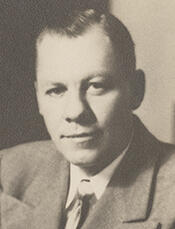
Here you will find contact information for Representative Boyd Anderson Tackett, including email address, phone number, and mailing address.
| Name | Boyd Anderson Tackett |
| Position | Representative |
| State | Arkansas |
| District | 4 |
| Party | Democratic |
| Status | Former Representative |
| Term Start | January 3, 1949 |
| Term End | January 3, 1953 |
| Terms Served | 2 |
| Born | May 9, 1911 |
| Gender | Male |
| Bioguide ID | T000005 |
About Representative Boyd Anderson Tackett
Boyd Anderson Tackett (May 9, 1911 – February 23, 1985) was a Democratic U.S. Representative from Arkansas who served two terms in the United States Congress from 1949 to 1953. Over the course of his career, he was active in state and national politics, contributing to the legislative process during a significant period in American history and representing the interests of his Arkansas constituents in the House of Representatives.
Tackett was born near Black Springs in Montgomery County in southwestern Arkansas. During his childhood, he moved with his parents to Glenwood, Arkansas, where he attended the local public schools. Seeking higher education within the state, he enrolled at Arkansas Polytechnic College in Russellville, attending from 1930 to 1932. He then continued his studies at Ouachita College in Arkadelphia from 1932 to 1933, and subsequently entered the University of Arkansas School of Law in Fayetteville. He completed his legal education there, graduating in 1935.
After being admitted to the bar, Tackett began practicing law in a series of small Arkansas communities, including Glenwood, Murfreesboro, and Nashville. His early legal career quickly intersected with public service. In 1936, he was elected to the Arkansas House of Representatives, marking his formal entry into elective office. He later served as the prosecuting attorney of the 9th Judicial Circuit of Arkansas, a position he held until 1943. In that role, he was responsible for prosecuting criminal cases within the circuit, gaining experience that would inform his later work as a legislator.
With the United States’ involvement in World War II, Tackett entered military service. In 1943, he enlisted in the United States Army and served as a corporal in the Signal Corps. His service continued until his discharge in 1944, after which he returned to civilian life and resumed his law practice in Nashville, Arkansas. This combination of legal, legislative, and military experience positioned him for higher office in the postwar period.
In 1948, Tackett was elected as a Democrat to represent Arkansas’s 4th Congressional District in the U.S. House of Representatives, taking his seat in the 81st Congress in January 1949. He was subsequently reelected to the 82nd Congress, serving continuously from 1949 to 1953. During these two terms, he participated in the democratic process at the national level, contributing to the legislative work of the House during a transformative era that included the early Cold War and the beginning of the postwar domestic policy debates. As a member of the House of Representatives, he represented the interests of his district’s constituents and took part in shaping federal policy affecting Arkansas and the nation.
Tackett chose not to seek reelection to the House in 1952. Instead, he became a candidate for the Democratic nomination for governor of Arkansas. In that race he was unsuccessful, losing the nomination to Francis Cherry. Following this defeat, he returned to private life and resumed the practice of law, this time establishing himself in Texarkana, Arkansas. He continued his legal career there for many years, remaining in practice until his retirement in 1980.
In his later years, Tackett moved back to Nashville, Arkansas, in 1983. He lived there until his death on February 23, 1985. He was interred at Restland Memorial Park in Nashville, Arkansas, closing a life spent largely in public service and the law within the state where he was born and built his career.