Representative Brad Ellsworth
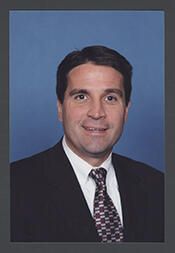
Here you will find contact information for Representative Brad Ellsworth, including email address, phone number, and mailing address.
| Name | Brad Ellsworth |
| Position | Representative |
| State | Indiana |
| District | 8 |
| Party | Democratic |
| Status | Former Representative |
| Term Start | January 4, 2007 |
| Term End | January 3, 2011 |
| Terms Served | 2 |
| Born | September 11, 1958 |
| Gender | Male |
| Bioguide ID | E000289 |
About Representative Brad Ellsworth
John Bradley Ellsworth (born September 11, 1958) is an American politician and former law enforcement officer who represented Indiana’s 8th congressional district in the United States House of Representatives from January 3, 2007, to January 3, 2011. A member of the Democratic Party, he served two terms in Congress and was the Democratic nominee for the United States Senate from Indiana in 2010, when he was defeated by former Senator Dan Coats.
Ellsworth was born in Jasper, Indiana, the son of Margaret (née Scherle) and Jim Ellsworth. He spent his early childhood in Huntingburg, Indiana, before the family moved to Evansville while he was still in grade school, after his father took a job as a crane operator at the Alcoa plant in Warrick County. The youngest of four children, Ellsworth grew up in a working-class household; his brother Eric later became president and CEO of the YMCA of Greater Indianapolis, and another brother, Joe, became a founding partner and president of Fire & Rain Marketing/Communications, headquartered in Evansville. Ellsworth attended William Henry Harrison High School in Evansville, graduating in 1976.
After high school, Ellsworth enrolled at Indiana State University–Evansville (now the University of Southern Indiana), where he studied sociology and became a member of the Sigma Tau Gamma fraternity. To help pay for his education, he worked in the paint and hardware department at a local Sears store. He earned his bachelor’s degree in sociology and then pursued graduate study in criminology at Indiana State University in Terre Haute, obtaining a master’s degree in that field. In recognition of his public service, Rose-Hulman Institute of Technology awarded him an honorary Doctor of Humane Letters at its 2008 commencement. Ellsworth later attended and graduated from the FBI National Academy, further strengthening his professional credentials in law enforcement.
Ellsworth began his career in public service in 1982 with the Vanderburgh County Sheriff’s Department. Over the next 23 years, he rose through the ranks, ultimately holding every merit rank in the department. During his tenure he was twice decorated for heroism in the line of duty. He also played a significant role in community-oriented policing initiatives, including instituting the first Drug Abuse Resistance Education (DARE) program in the Evansville–Vanderburgh School Corporation. In 1998, Ellsworth ran for sheriff of Vanderburgh County and won by a large margin; he was subsequently re-elected without opposition to a second term, underscoring his popularity and reputation as a law enforcement official. While serving as sheriff, he became increasingly visible in local and regional politics, which set the stage for his later congressional career.
In 2005, Ellsworth announced his candidacy for Indiana’s 8th congressional district, challenging six-term Republican incumbent John Hostettler. The race quickly drew national attention. By June 30, 2006, Hostettler had raised $287,000 and had $195,000 on hand, compared to Ellsworth’s $1,036,000 raised and $676,000 on hand. Both national party committees invested heavily in the contest: as of mid-July 2006, the National Republican Congressional Committee had spent $163,000 in the district, while the Democratic Congressional Campaign Committee had spent $166,000 on Ellsworth’s behalf. The Cook Political Report rated the race a toss-up by mid-August. Early in September, the Rothenberg Political Report identified Hostettler as one of the three most endangered House incumbents in the country; Washington Post analyst Chris Cillizza ranked him the most vulnerable House incumbent in the nation, and columnist Robert D. Novak rated the seat a likely Democratic pickup. A mid-October poll commissioned by the Evansville Courier & Press showed Ellsworth leading Hostettler 55 percent to 32 percent. The two candidates debated on October 23, 2006, at public television station WVUT at Vincennes University in a forum sponsored by the League of Women Voters. On November 7, 2006, Ellsworth won a landslide victory with 61 percent of the vote to Hostettler’s 39 percent, the largest margin of defeat suffered by any House incumbent in the 2006 election and the first of 30 House seats to flip from Republican to Democratic in that cycle.
Ellsworth took office in the 110th Congress on January 3, 2007, representing a largely rural and socially conservative district in southwestern Indiana. He was generally regarded as a conservative Democrat with a populist streak. Reflecting the views of many of his constituents, he opposed abortion and gun control, and he was one of 16 House Democrats who voted against providing federal funds for embryonic stem cell research. At the same time, on economic and fiscal issues he more often aligned with his party’s positions, and he joined the Blue Dog Coalition, a group of fiscally conservative House Democrats. Ellsworth’s committee assignments reflected both his district’s interests and his background. He served on the Committee on Agriculture, including the Subcommittee on Conservation, Credit, Energy, and Research and the Subcommittee on General Farm Commodities and Risk Management; the Committee on Armed Services, including the Subcommittee on Seapower and Expeditionary Forces and the Subcommittee on Terrorism and Unconventional Threats; and the Committee on Small Business, including the Subcommittee on Contracting and Technology and the Subcommittee on Investigations and Oversight.
During his congressional service, Ellsworth was active in securing federal funding for infrastructure, education, and community projects in southwestern Indiana. In July 2007, he designated $2 million to extend the John T. Myers lock chamber on the Ohio River and $750,000 for manufacturing and engineering equipment for the University of Southern Indiana. He also obtained $350,000 for construction of a campus perimeter road system at the University of Southern Indiana and another $350,000 for a portion of University Parkway construction. Smaller projects he helped secure House approval for included $200,000 to restore Evansville’s historic Alhambra Theater, $135,000 for emergency warning sirens in Vanderburgh County, and $75,000 to train utility workers at Ivy Tech Community College. On major national legislation, Ellsworth’s voting record reflected both his moderate Democratic orientation and the pressures of representing a swing district. He initially voted against the American Recovery and Reinvestment Act of 2009 in January of that year, but later supported the final version of the stimulus package. He condemned the National Right to Life Committee for failing to support expansion of the State Children’s Health Insurance Program (SCHIP); although he had voted against an earlier version of the SCHIP expansion, he joined other Democrats in voting for the final bill. In the contentious debate over health care reform, Ellsworth authored a November 2009 amendment intended to restrict federal funding for elective abortions. Americans United for Life criticized the amendment as insufficient, arguing that it did not fully eliminate public funding for abortion because it allowed federal subsidies to be disbursed by an independent contractor. Ellsworth later voted for the Stupak Amendment, which imposed stricter limits on abortion funding in the House version of the bill, but ultimately supported the final Senate version of the Affordable Care Act, which did not contain the Stupak language.
Ellsworth’s political strength in his district was confirmed when he won re-election on November 4, 2008, defeating Republican challenger Greg Goode by a margin of 65 percent to 35 percent. His second term coincided with the early years of the Obama administration and the economic downturn, placing him at the center of debates over economic recovery, health care, and federal spending. His record during this period reflected the balancing act of a Democrat representing a socially conservative area, as he sought to maintain his independence on social issues while supporting key elements of his party’s economic agenda.
On February 19, 2010, following the surprise announcement by Democratic Senator Evan Bayh that he would not seek re-election, Ellsworth declared his candidacy for Bayh’s seat in the United States Senate. Because Bayh’s retirement was announced the day before the filing deadline for the primary, no Democrat was able to gather the required signatures to appear on the primary ballot, leaving the choice of nominee to the Indiana Democratic state committee. The committee ultimately selected Ellsworth as the party’s Senate candidate. In the general election, he faced Republican Dan Coats, who had previously held the same Senate seat from 1989 to 1999. In the November 2010 election, Ellsworth was defeated, receiving about 40 percent of the vote. He failed to carry his home county of Vanderburgh and even lost his own congressional district, although he did carry Vigo County, home to Terre Haute. State Representative Trent Van Haaften replaced Ellsworth on the ballot for the 8th District House seat but lost to Republican Larry Bucshon with only 37 percent of the vote. Since Ellsworth left office, Democrats have crossed the 40 percent mark in the 8th District only once, underscoring the district’s subsequent shift toward the Republican Party.
Ellsworth’s service in Congress concluded on January 3, 2011, marking the end of his two terms in the House of Representatives. His tenure coincided with a significant period in American political and economic history, including the Iraq War, the financial crisis, and the enactment of major domestic legislation such as the economic stimulus and health care reform. Throughout his time in office, he participated in the legislative process, represented the interests of his constituents in Indiana’s 8th congressional district, and sought to balance conservative social views with more traditionally Democratic positions on economic issues.
Following his defeat in the 2010 Senate race, Ellsworth transitioned to the private sector while remaining in Indiana. He joined Evansville-based Vectren Corporation as president of its southern Indiana gas and electric utility division, applying his experience in public administration and regional affairs to the energy industry. His post-congressional career continued his long-standing connection to southwestern Indiana, where he had built his reputation as a sheriff, legislator, and community leader.