Representative Bradbury Cilley
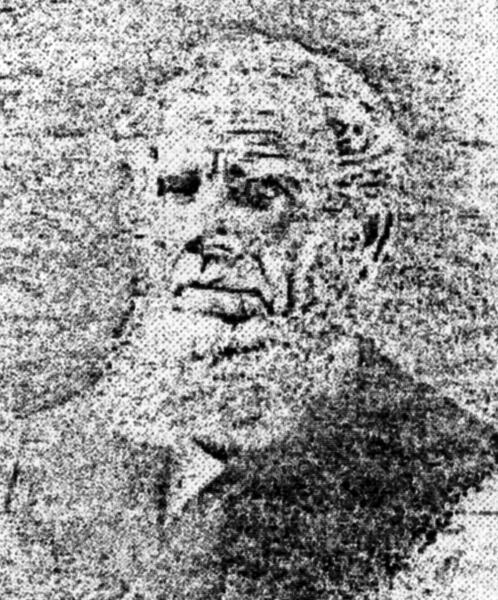
Here you will find contact information for Representative Bradbury Cilley, including email address, phone number, and mailing address.
| Name | Bradbury Cilley |
| Position | Representative |
| State | New Hampshire |
| District | -1 |
| Party | Federalist |
| Status | Former Representative |
| Term Start | May 24, 1813 |
| Term End | March 3, 1817 |
| Terms Served | 2 |
| Born | February 1, 1760 |
| Gender | Male |
| Bioguide ID | C000394 |
About Representative Bradbury Cilley
Bradbury Cilley (February 1, 1760 – December 17, 1831) was an American politician, militia officer, and a United States Representative from New Hampshire. Born in Nottingham in the Province of New Hampshire, he was the son of Colonel Joseph Cilley, a noted officer of the Revolutionary era, and Sara Longfellow. Raised in a rural New England community, he attended the common schools of Nottingham and from an early age was engaged in agricultural pursuits, a vocation he would continue throughout his life alongside his public service.
Cilley’s family connections placed him within a prominent New Hampshire lineage that would produce several national legislators. He was the uncle of Jonathan Cilley, who later served as a United States Representative from Maine, and Joseph Cilley, who became a United States Senator from New Hampshire in the nineteenth century. On November 19, 1792, he married Martha “Patty” Poor, the daughter of General Enoch Poor, further linking him to leading military and political families of the Revolutionary generation. These familial ties, combined with his local standing as a farmer and community leader, helped establish his influence in New Hampshire public life.
Cilley’s early public career was rooted in local governance. He served for many years as Moderator of the town of Nottingham, presiding over town meetings and local decision-making in 1788, 1798, 1802, 1807, 1808, 1812, 1813, 1821, 1825, and 1827. In this capacity he played a central role in the conduct of town affairs over several decades, reflecting the trust placed in him by his fellow citizens and his sustained involvement in the civic and political life of his community.
At the federal level, Cilley first entered national service when President John Adams appointed him United States marshal for the district of New Hampshire on March 19, 1798. He held this position until May 3, 1802. As U.S. marshal, he was responsible for executing federal court orders, overseeing the custody of prisoners, and performing various administrative and law-enforcement duties on behalf of the national government in New Hampshire during the formative years of the early republic.
Cilley’s most prominent public role came in the United States Congress. A member of the Federalist Party representing New Hampshire, he was elected as a Federalist to the Thirteenth and Fourteenth Congresses and served as a United States Representative at-large for New Hampshire from March 4, 1813, to March 3, 1817. His two terms in office coincided with a significant period in American history, encompassing the War of 1812 and the immediate postwar years. During this time, he contributed to the legislative process, participated in the democratic governance of the young nation, and represented the interests of his New Hampshire constituents in debates over war, finance, and national policy.
In addition to his civil offices, Cilley was active in the state militia. From 1814 to 1816 he served as a colonel and aide on the staff of New Hampshire Governor John Taylor Gilman. In this role he assisted in the organization and oversight of militia forces during the closing phase of the War of 1812 and its aftermath, reflecting the close interconnection between civil and military responsibilities in early nineteenth-century New England.
After the conclusion of his congressional service and his continued involvement in state and local affairs, Cilley gradually retired from public life. He returned to Nottingham, where he resumed his agricultural pursuits and lived quietly in the community that had long been the center of his personal and political activities. Bradbury Cilley died in Nottingham on December 17, 1831, at the age of 71 years and 319 days. He was interred in the General Joseph Cilley Burying Ground in Nottingham Square, resting among members of the extended Cilley family whose service spanned both the Revolutionary era and the early decades of the United States.