Representative Brady Preston Gentry
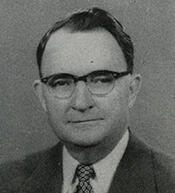
Here you will find contact information for Representative Brady Preston Gentry, including email address, phone number, and mailing address.
| Name | Brady Preston Gentry |
| Position | Representative |
| State | Texas |
| District | 3 |
| Party | Democratic |
| Status | Former Representative |
| Term Start | January 3, 1953 |
| Term End | January 3, 1957 |
| Terms Served | 2 |
| Born | March 25, 1896 |
| Gender | Male |
| Bioguide ID | G000124 |
About Representative Brady Preston Gentry
Brady Preston Gentry served as a Representative from Texas in the United States Congress from 1953 to 1957. A member of the Democratic Party, Brady Preston Gentry contributed to the legislative process during 2 terms in office.
Brady Preston Gentry’s service in Congress occurred during a significant period in American history. As a member of the House of Representatives, Brady Preston Gentry participated in the democratic process and represented the interests of constituents.
Brady Preston Gentry (March 25, 1896 – November 9, 1966) was a U.S. Representative from Texas. Born in Colfax, Texas, Gentry attended the public schools and East Texas State College, Commerce, Texas. He graduated from Cumberland University, Lebanon, Tennessee, and studied law. He was admitted to the bar and began practice in Tyler, Texas. In 1918, Gentry enlisted in the United States Army; he served in Europe and rose to the rank of captain of Infantry. Gentry was the county attorney of Smith County 1921–1924 and the county judge of Smith County 1931–1939. He served as chairman of the Texas State Highway Commission 1939–1945. Gentry was elected as a Democrat to the Eighty-third and Eighty-fourth Congresses (January 3, 1953 – January 3, 1957). He was not a candidate for renomination in 1956 to the Eighty-fifth Congress. After leaving Congress, Gentry resumed the practice of law. He was one of the majority of the Texan delegation to decline to sign the 1956 Southern Manifesto opposing the desegregation of public schools ordered by the Supreme Court in Brown v. Board of Education. He died in Houston, Texas, November 9, 1966. He was interred in Rose Hill Cemetery, Tyler, Texas.