Representative Brian Baird
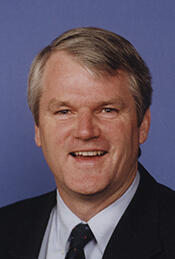
Here you will find contact information for Representative Brian Baird, including email address, phone number, and mailing address.
| Name | Brian Baird |
| Position | Representative |
| State | Washington |
| District | 3 |
| Party | Democratic |
| Status | Former Representative |
| Term Start | January 6, 1999 |
| Term End | January 3, 2011 |
| Terms Served | 6 |
| Born | March 7, 1956 |
| Gender | Male |
| Bioguide ID | B001229 |
About Representative Brian Baird
Brian Norton Baird (born March 7, 1956) is an American psychologist, educator, and politician who represented Washington’s 3rd congressional district in the United States House of Representatives from January 3, 1999, to January 3, 2011. A member of the Democratic Party, he served six consecutive terms in Congress and played an active role in legislative deliberations during a significant period in recent American history, contributing to national policy while representing the interests of his Southwest Washington constituents.
Baird was born in Chama, New Mexico, to Edith Shaw and William Norton “Bill” Baird, who served as a town councilman and mayor. He grew up in a family engaged in public service and civic life, an environment that helped shape his later interest in politics and community leadership. His younger sister is actress Maggie Baird, making him the maternal uncle of singer-songwriters Billie Eilish and Finneas O’Connell. These family connections, together with his early exposure to local government through his father’s service, provided a formative backdrop for his later public career.
Baird pursued higher education in psychology, earning a Bachelor of Science degree from the University of Utah, where he graduated Phi Beta Kappa in 1977. He went on to obtain both a Master of Science degree and a Ph.D. in clinical psychology from the University of Wyoming. Trained as a clinical psychologist, he became a licensed practitioner and developed a professional focus on communication, ethics, and the psychology of persuasion—areas that would later inform both his academic work and his approach to public service.
Before entering Congress, Baird built a substantial academic and professional career. He served as chairman of the Department of Psychology at Pacific Lutheran University in Tacoma, Washington, where he taught and conducted research. He published several journal articles and authored or co-authored three books: “Are We Having Fun Yet?: Enjoying the Outdoors With Partners, Families, and Groups” (1995), “The Internship, Practicum, and Field Placement Handbook: A Guide for the Helping Professions” (first published 1996, with later editions including a 2004 fourth edition), and “Character Politics and Responsibility” (2010). In addition to his university responsibilities, he regularly taught professional development courses for attorneys and judges on communications, ethics, and the psychology of persuasion, further establishing his reputation as an expert in applied psychology.
Baird’s first bid for Congress came in 1996, when he challenged Republican incumbent Linda Smith for Washington’s 3rd congressional district and lost by only 887 votes, a narrow margin that underscored his emerging strength as a candidate. When Smith vacated the seat in 1998 to pursue an unsuccessful campaign for the United States Senate, Baird ran again and defeated State Senator Don Benton with 54.7 percent of the vote. He took office on January 3, 1999, and was subsequently reelected five times, never again facing a race as close as his initial contest. During his tenure, he served in the House through a period marked by the late 1990s economic expansion, the September 11, 2001, terrorist attacks, the wars in Afghanistan and Iraq, and the financial crisis of 2008, participating in the democratic process at a time of major national and international challenges.
In Congress, Baird held a number of influential committee assignments and leadership roles. He served on the House Committee on Science and Technology, where he chaired the Subcommittee on Energy and Environment and sat on the Subcommittee on Research and Science Education. He also served on the House Transportation and Infrastructure Committee, including the Subcommittees on Coast Guard and Maritime Transportation, Highways and Transit, and Water Resources and Environment. Over the course of his service he was a member of the House Science Committee, the House Budget Committee, and the House Select Committee on Continuity in Government. Within the Democratic Caucus, he served as a senior regional whip, sat on the Democratic Steering Committee, was elected president of the 1998 Democratic Freshman Class, and was a member of the New Democrat Coalition, reflecting a centrist, pro-growth orientation within his party.
Baird was notably active in a wide range of congressional caucuses, reflecting broad policy interests. He co-founded the Congressional Career and Technical Education Caucus, the Congressional Caucus to Control and Fight Methamphetamine, and the Congressional National Parks Caucus. He also participated in numerous other caucuses, including the Addiction, Treatment, and Recovery Caucus; Community College Caucus; Community Health Centers Caucus; Congressional Boating Caucus; Congressional Brain Injury Task Force; Congressional Caucus on Intellectual Property Promotion and Piracy Prevention; Congressional China Caucus; Congressional Coast Guard Caucus; Congressional Coastal Caucus; Congressional Diabetes Caucus; Congressional Fire Service Caucus; Congressional Fitness Caucus; Congressional Mental Health Caucus; Congressional Native American Caucus; Congressional Port Security Caucus; Congressional Rural Caucus; Congressional Ski and Snowboard Caucus; the Democratic Caucus; Friends of New Zealand Caucus; Hellenic Caucus; House Education Caucus; House Science, Technology, Engineering and Math Education Caucus; International Conservation Caucus; Medical Malpractice Caucus; New Democrat Caucus; Northwest Energy Caucus; Prochoice Caucus Democratic Task Force; Renewable Energy and Energy Efficiency Caucus; U.S.–China Working Group; Congressional Law Enforcement Caucus; Mountain West Caucus; and Middle East Economic Partnership Caucus. His participation in this extensive network of caucuses underscored his engagement with issues ranging from education, health, and mental health to energy, conservation, transportation, and international affairs.
Baird emphasized direct engagement with his constituents throughout his congressional service. On his official House website, he noted that he flew home nearly every weekend, hosted more than 280 town hall meetings, and visited every high school, port, hospital, and countless businesses and organizations in Southwest Washington. In total, he held over 300 town halls—approximately one for every week and a half he was in office. While many of these meetings drew around 50 participants, those held during periods of intense national debate attracted crowds of up to 3,000 people. This extensive outreach was a hallmark of his representation and reflected his stated commitment to accessibility and accountability in public office.
Baird also engaged in high-profile foreign policy and humanitarian issues. On February 19, 2009, he joined Representative Keith Ellison of Minnesota and Senator John Kerry of Massachusetts on a visit to Gaza to observe firsthand the destruction following the Gaza War and to meet with international and local relief agencies. The trip, which was not formally sanctioned by the Obama Administration, marked the first time in more than three years that members of the U.S. government had entered Gaza. Baird publicly described the devastation and human suffering he witnessed as “staggering,” citing destroyed neighborhoods, leveled schools, damaged infrastructure, and the loss of civilian life. After his third visit to Gaza in February 2010, he called for the United States to press more forcefully for an end to the blockade and for the delivery of humanitarian supplies, suggesting that U.S. military aid to Israel could be reconsidered as a means of encouraging a more robust humanitarian response.
On December 9, 2009, Baird announced that he would not seek reelection in 2010, bringing his six-term congressional career to a close at the end of the 111th Congress on January 3, 2011. After leaving Congress, he continued his involvement in public affairs and education. From 2011 to 2015, he served as president of Antioch University Seattle, where he drew on his experience in higher education and public service to lead the institution. He also remained active in political reform efforts as a member of the ReFormers Caucus of Issue One, a bipartisan group of former elected officials focused on strengthening American democracy and reducing the influence of money in politics. Following his retirement from Congress, Baird and his family moved to Edmonds, Washington, and he continued to write and speak on American politics, public policy, and civic responsibility.
In his personal life, Baird is married to Rachel Nugent, and they have two children together. In addition to his ongoing work as an author and lecturer, he has maintained his professional identity as a psychologist and educator, integrating his academic background with his experience in elective office. His career reflects a combination of clinical expertise, classroom teaching, institutional leadership, and legislative service, spanning local, national, and international concerns over several decades.