Representative Brian P. Bilbray
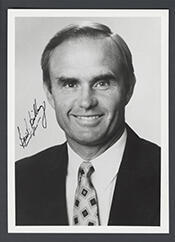
Here you will find contact information for Representative Brian P. Bilbray, including email address, phone number, and mailing address.
| Name | Brian P. Bilbray |
| Position | Representative |
| State | California |
| District | 50 |
| Party | Republican |
| Status | Former Representative |
| Term Start | January 4, 1995 |
| Term End | January 3, 2013 |
| Terms Served | 7 |
| Born | January 28, 1951 |
| Gender | Male |
| Bioguide ID | B000461 |
About Representative Brian P. Bilbray
Brian Phillip Bilbray (born January 28, 1951) is an American politician and lobbyist who served as a Republican member of the U.S. House of Representatives from California from 1995 to 2001 and again from 2006 to 2013. Over the course of seven terms in Congress, he represented coastal districts in San Diego County, including California’s 49th and later the 50th and 52nd congressional districts, and became particularly known for his hard-line positions on immigration and his work on energy and commerce issues.
Bilbray was born in Coronado, California, and grew up in Imperial Beach in San Diego County. He attended local schools and became closely associated with the coastal communities he would later represent, working various jobs and developing an early interest in public service at the local level. His upbringing in a working-class, beachside environment helped shape his later political identity as a representative of suburban and coastal constituencies with strong ties to military installations and border issues.
Bilbray attended Southwestern College in Chula Vista, California, and later studied at San Diego State University. While he did not complete a four-year degree, he became active in local civic affairs and entered politics through municipal government. His early career included service in local offices in San Diego County, where he gained experience in land use, environmental, and infrastructure issues that would inform his later legislative work. By the 1980s and early 1990s he had established himself as a recognizable figure in regional politics, building a base that enabled his eventual election to Congress.
Bilbray was first elected to the U.S. House of Representatives in 1994 as part of the Republican wave election, taking office on January 3, 1995. He served in Congress from 1995 to 2001, representing a district that included parts of San Diego County. During this initial period in the House, he positioned himself as a fiscal conservative with a pragmatic streak on some social issues. He co-authored legislation that led to the transfer of the Mount Soledad Veterans Memorial from the City of San Diego to the federal government, a significant local and national veterans’ landmark. He also authored legislation aimed at reforming the federal budget process, reflecting his interest in fiscal policy and government accountability. After losing his seat in the 2000 election, he left Congress in January 2001 and worked in the private sector, including as a lobbyist, while remaining active in Republican politics.
In March 2005, Bilbray moved to Carlsbad, California, to take care of his mother, who owned a home there, returning him to the political orbit of northern San Diego County. The following year, he sought a return to Congress in the 2006 special election to fill the vacancy in California’s 50th congressional district created by the resignation of Republican Representative Randy “Duke” Cunningham, who had pleaded guilty in December 2005 to felony charges of conspiracy and tax evasion and subsequently went to prison. The race to succeed Cunningham was highly contested, particularly on the Republican side, with 14 Republicans and only 2 Democrats officially running. In the all-party special election held on April 11, 2006, Bilbray emerged as the leading Republican, receiving about 15 percent of the total vote, in a virtual tie with Republican businessman Eric Roach and slightly ahead of former State Assemblyman Howard Kaloogian. The campaign was marked by intraparty conflict, including an attack advertisement by businessman Alan Uke accusing Roach of outsourcing jobs. During the race, Senator John McCain canceled a planned fundraiser for Bilbray after Bilbray publicly criticized McCain’s immigration bill as “amnesty” for illegal immigrants.
Bilbray advanced to a June 6, 2006 runoff against Democrat Francine Busby, Libertarian Paul King, and independent William Griffith. National observers viewed the contest as a bellwether, with Republican National Committee Chairman Ken Mehlman describing the district as having “the perfect storm in favor of the Democrats.” Bilbray won the runoff with 49 percent of the vote and was sworn in on June 13, 2006, before the final vote count was certified. The Democratic National Committee’s Voting Rights Institute raised concerns about the fairness and accuracy of the vote count, and an election contest lawsuit sought a hand recount. The court ultimately dismissed the suit on the ground that, once the House of Representatives had sworn in Bilbray, the court lacked jurisdiction to hear the challenge. Bilbray was reelected in subsequent general elections and continued to serve through the 112th Congress.
During his renewed congressional tenure, Bilbray became one of the most prominent Republican voices on immigration policy. He served as Chairman of the House Immigration Reform Caucus, using that platform to advocate for stricter enforcement of immigration laws and to oppose proposals he characterized as granting “amnesty” to undocumented immigrants. He was also a member of the influential House Energy and Commerce Committee, where he served on the Subcommittees on Oversight and Investigations, Communications and Technology, and Energy and Power. In the 109th Congress he served on the House Armed Services, Veterans’ Affairs, and Government Reform Committees, reflecting his district’s strong military presence and his interest in defense and veterans’ issues. Over his career he consistently supported free trade agreements, voting in favor of trade pacts with Korea, Colombia, and Panama, all of which passed.
Ideologically, Bilbray presented a complex profile. He signed the Taxpayer Protection Pledge, committing to oppose tax increases, and generally maintained a conservative record on fiscal and immigration matters. At the same time, he positioned himself as moderate on some social issues. He was a member of both the moderate Republican Main Street Partnership and the conservative Republican Study Committee, two groups that often took conflicting positions on policy. He also joined Republicans for Choice, aligning with a more libertarian wing of the party on reproductive rights. For example, the Republican Main Street Partnership supported embryonic stem cell research and opposed the Federal Marriage Amendment, while the Republican Study Committee opposed embryonic stem cell research and supported the amendment. His voting record during his second stint in Congress was considered more conservative than during his first, and in 2006 CQ Politics reported that he voted in agreement with President George W. Bush 93 percent of the time, earning him a 93 percent Presidential Support Score.
Bilbray’s legislative activity in his later terms reflected both his conservative leanings and his district’s priorities. In October 2011 he voted for a bill to prohibit public funding for abortions, which passed the House by a vote of 251–172. The following month he introduced legislation designed to benefit veterans by providing job training and internships funded through federal grants, underscoring his ongoing focus on veterans’ affairs. In 2011 he also voted for the National Defense Authorization Act for Fiscal Year 2012, which included a controversial provision allowing the government or the military to detain American citizens and others indefinitely without trial, a measure that drew significant civil liberties criticism. Throughout his tenure he participated actively in the legislative process and represented the interests of his constituents in San Diego County, including coastal communities, military families, and border-area residents.
Following redistricting after the 2010 census, Bilbray ran for reelection in 2012 as the incumbent in California’s newly drawn 52nd congressional district. Under California’s “top-two” system, an all-parties primary was held on June 5, 2012, after which Bilbray advanced to a November 6 runoff against Democrat Scott Peters, a Port of San Diego Commissioner. The general election was extremely close, and the outcome remained uncertain for ten days as provisional and late-arriving ballots were counted. On November 16, 2012, with Peters leading by 51 percent to 49 percent, Bilbray conceded defeat. His service in Congress concluded on January 3, 2013, marking the end of a congressional career that spanned seven terms over nearly two decades and coincided with a period of significant political and policy change in the United States.