Representative Brian Higgins
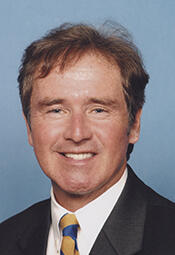
Here you will find contact information for Representative Brian Higgins, including email address, phone number, and mailing address.
| Name | Brian Higgins |
| Position | Representative |
| State | New York |
| District | 26 |
| Party | Democratic |
| Status | Former Representative |
| Term Start | January 4, 2005 |
| Term End | February 2, 2024 |
| Terms Served | 10 |
| Born | October 6, 1959 |
| Gender | Male |
| Bioguide ID | H001038 |
About Representative Brian Higgins
Brian Michael Higgins (born October 6, 1959) is an American former politician who served as a Democratic member of the United States House of Representatives from New York from 2005 until his resignation on February 2, 2024. Over ten consecutive terms in Congress, he represented a Western New York district centered on Buffalo and Niagara Falls, which was designated New York’s 27th congressional district from 2005 to 2013 and the 26th congressional district from 2013 to 2024. During his tenure, Higgins was a member of several key House committees and numerous caucuses, and he became known as a centrist, pro‑union moderate with a strong focus on economic development, health care, Social Security, and international peace efforts.
Higgins was born in Buffalo, New York, and raised in the city’s South Buffalo neighborhood, a community with a strong Irish-American presence; his grandparents emigrated from Ireland. He attended local schools before enrolling at Buffalo State College, where he earned a Bachelor of Arts degree in political science in 1984 and a Master of Arts degree in history in 1985. He later pursued graduate study in public administration at Harvard University’s John F. Kennedy School of Government, receiving a Master of Public Administration (MPA) in 1996. In addition to his academic credentials, Higgins taught courses at Buffalo State College in the history and economics departments, focusing on state and local government and the economic history of Buffalo and Western New York, reflecting his early interest in public policy and regional revitalization.
Higgins began his political career in municipal government, serving on the Buffalo Common Council from 1988 to 1993 as the representative of the South District. Over five and a half years on the Council, he developed a reputation as a thoughtful, soft‑spoken lawmaker attentive to both district and citywide concerns. In 1993, during his final year on the Council, a Buffalo News survey of 158 Western New York business, community, and government leaders rated him “Buffalo’s Best Lawmaker,” giving him the highest score of any political figure, 3.81 out of a possible 5. Commentators in that survey praised him as “a very bright, responsible public official” and “the best Councilman in Buffalo,” noting his vision for the city’s future. After leaving the Council, Higgins continued to build his profile in public affairs and regional policy, which helped pave the way for his entry into state-level office.
In 1998, Higgins ran for the New York State Assembly on both the Democratic and Conservative Party lines, reflecting his centrist positioning. He was elected to represent the 145th Assembly District and served from 1999 to 2004. During his Assembly tenure, he also ran with the endorsements of the Working Families Party in 2000 and 2004. Early in his legislative career he supported certain anti-abortion measures, but beginning in 2003 he identified himself as pro‑choice, a position that would later be reflected in high ratings from reproductive rights organizations. His work in the Assembly further established his interest in economic development, social insurance, and local governance, and it positioned him as a viable candidate when an opening emerged in Congress.
Higgins entered national politics in 2004 when Representative Jack Quinn, a moderate Republican who had represented the heavily Democratic 27th congressional district since 1993, unexpectedly announced his retirement. Although the district had been made somewhat more favorable to Quinn after the 2000 redistricting—partly by adding rural Chautauqua County—it remained the most Democratic district in the country represented by a Republican. In April 2004, Higgins declared his candidacy and narrowly defeated Erie County Comptroller Nancy Naples in the general election. He took office in January 2005 and was subsequently reelected without serious difficulty, never receiving less than 60 percent of the vote and surpassing 70 percent in both 2006 and 2008. In his first four terms, he represented the southern two‑thirds of Buffalo as well as Chautauqua County. Following the 2010 census, the district was renumbered as the 26th, and a court‑appointed special master redrew it to be more compact and more strongly Democratic. Higgins’s district then encompassed all of Buffalo, several inner‑ring suburbs previously represented by Louise Slaughter, and a large portion of Niagara County, including nearly all of Niagara Falls and North Tonawanda, while Chautauqua County was reassigned to a Southern Tier district.
During his time in Congress, Higgins served on several influential committees, including the United States House Committee on Ways and Means and the United States House Committee on the Budget. In December 2008, after only two terms in the House, he secured a coveted seat on the Ways and Means Committee, which has broad jurisdiction over tax, trade, and entitlement policy. He served on its Subcommittee on Select Revenue Measures and its Subcommittee on Oversight. After Republicans gained control of the House in the 2010 elections, Higgins left Ways and Means and became a member of the House Committee on Foreign Affairs and the House Committee on Homeland Security. On Homeland Security, he rose to the position of Ranking Member of the Subcommittee on Counterterrorism and Intelligence. Over the course of his career he also participated in a wide array of caucuses, including serving as co‑chair of the House Cancer Caucus, the Revitalizing Older Cities Task Force, the Great Lakes Task Force, the Historic Preservation Caucus, the Northeast‑Midwest Congressional Coalition, and the Northern Border Caucus. He was a member of the House Steel Caucus, the China Caucus, the Arts Caucus, the Medicare for All Caucus, the Congressional Arts Caucus, the Congressional Wildlife Refuge Caucus, the Afterschool Caucuses, the Black Maternal Health Caucus, the Blue Collar Caucus, the Congressional Caucus on Turkey and Turkish Americans, and the Congressional Equality Caucus, among others.
Higgins’s legislative priorities reflected his self‑description as a pro‑union moderate focused on job growth, infrastructure, health care, and social insurance. He advocated for allowing seniors to purchase prescription drugs from Canada and pressed for legislation enabling the federal government to negotiate volume discounts on prescription medications. A strong supporter of strengthening Social Security, he opposed privatization and cuts to benefits, including raising the retirement age, and he supported full funding for the Social Security Administration to reduce backlogs and improve service. In 2010 he joined many colleagues in a letter to President Barack Obama urging that Social Security not be weakened as part of deficit‑reduction efforts, emphasizing that the program is prohibited by law from adding to the federal deficit. In February 2014 he introduced H.R. 3997, a bill requiring the Social Security Commissioner to submit an estimated annual budget to Congress before sending it to the President, restricting the closure or limitation of field and hearing offices without justification, and establishing procedures for any such changes. His district included nearly 150,000 senior citizens, and he frequently framed his Social Security work in terms of protecting those who had contributed to the system throughout their working lives.
Health care policy was another central focus of Higgins’s congressional career. He voted for the Patient Protection and Affordable Care Act (“Obamacare”) and later argued that the law was both necessary and a starting point for broader reform. He urged health care providers to adopt Accountable Care Organizations and comparative effectiveness research to determine which treatments work best, and he consistently supported the creation of a national health care program with a public option to compete with private insurance plans. Higgins joined a group of House members in urging Senate Majority Leader Harry Reid to include a public option in Senate health reform legislation. His positions earned him a perfect 100 percent rating from the American Public Health Association in 2009, as well as a 100 percent score from NARAL Pro‑Choice America in 2011 and from Planned Parenthood in 2012, reflecting his firmly pro‑choice stance by that time. Earlier, in 2006, the National Right to Life Committee had given him a 9 percent rating, also indicating a pro‑choice voting record.
Economic development and infrastructure investment were hallmarks of Higgins’s work on behalf of Western New York. He was instrumental in securing $279 million over 50 years for Erie County governments and agencies from the New York Power Authority as part of the Niagara Power Project’s 50‑year relicensing agreement, funding he promoted as a catalyst for regional redevelopment. Through his role on the House Transportation and Infrastructure Committee, he played a pivotal part in obtaining federal approval for the construction of a new federal courthouse in downtown Buffalo. Higgins also advanced a sweeping infrastructure proposal, the “Nation Building Here at Home Act,” which called for approximately $1.2 to $1.25 trillion over five years to rebuild the nation’s roads, bridges, railroads, ports, and airports—a plan he contrasted with overseas reconstruction efforts in Iraq and Afghanistan, emphasizing that it was a long‑term nation‑building initiative rather than a short‑term stimulus. Throughout his congressional campaigns, he received significant financial support from Western New York business executives; in the 2012 cycle, his reelection committee raised more than $1 million, about two‑thirds of it from individual donors associated with major regional businesses.
Higgins’s foreign policy interests included a sustained engagement with international peace processes. Drawing on his Irish heritage, he took an active role in supporting peace in Northern Ireland. In 2006 he joined Representatives James T. Walsh and Tim Murphy in traveling to Ireland and the United Kingdom, where they met with Irish Foreign Minister Dermot Ahern, Secretary of State for Northern Ireland Peter Hain, U.S. Ambassador to Ireland James C. Kenny, U.S. Ambassador to the United Kingdom Robert H. Tuttle, and leaders of the principal political parties involved in the peace process. During this visit, the delegation announced confirmation of the Irish Republican Army’s weapons decommissioning. Higgins later stated that he was honored to represent the United States at “this important moment in the Irish peace process,” explaining that their goal was to focus international attention on stalled negotiations and build momentum for full implementation of the Good Friday Accords. Beyond Ireland, he supported efforts for peace in South Asia, Africa, and the Middle East, including in Iraq, Afghanistan, and Darfur. His broader voting record and public statements placed him near the center of the Democratic Party, and in the 117th Congress he voted in line with President Joe Biden’s stated positions 100 percent of the time, according to an analysis by FiveThirtyEight.
Higgins’s profile within New York politics rose significantly during his early congressional terms. In 2007, the Drum Major Institute, a progressive think tank, awarded him an “A+” on its Congressional Scorecard for middle‑class issues. When Senator Hillary Rodham Clinton was nominated to serve as Secretary of State in the Obama administration, several media outlets identified Higgins as a leading candidate to be appointed to her vacant Senate seat. He was one of six names on New York Governor David Paterson’s short list, and a WKBW‑TV online poll reported that 75 percent of respondents would support his selection. Ultimately, Paterson appointed Representative Kirsten Gillibrand to the Senate. On January 31, 2009, Higgins led a delegation of Western New York elected officials in welcoming Senator Gillibrand to the region and moderated an economic roundtable at the Bioinformatics Center of Excellence on the Buffalo Niagara Medical Campus, underscoring his ongoing emphasis on regional economic strategy and biomedical research.
Throughout his congressional career, Higgins maintained that he was an independent-minded centrist within the Democratic Party, even as his voting record aligned closely with party positions. He supported abortion rights, the strengthening of Social Security, expanded federal investment in health care and infrastructure, and robust federal support for cancer research, particularly at Buffalo’s Roswell Park Comprehensive Cancer Center, the nation’s first major medical facility devoted exclusively to cancer treatment and research. He was active in caucuses focused on older industrial cities, the Great Lakes, historic preservation, and the arts, reflecting both his regional priorities and broader policy interests. After nearly two decades in the House, Higgins announced on November 12, 2023, that he would resign from Congress, citing impatience with what he described as growing dysfunction in the institution. His resignation took effect on February 2, 2024, concluding a long tenure in which he consistently emphasized economic revitalization, social insurance protections, and international peace as central themes of his public service.