Senator Brock Adams
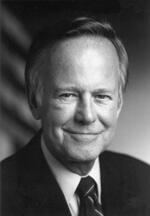
Here you will find contact information for Senator Brock Adams, including email address, phone number, and mailing address.
| Name | Brock Adams |
| Position | Senator |
| State | Washington |
| Party | Democratic |
| Status | Former Representative |
| Term Start | January 4, 1965 |
| Term End | January 3, 1993 |
| Terms Served | 10 |
| Born | January 13, 1927 |
| Gender | Male |
| Bioguide ID | A000031 |
About Senator Brock Adams
Brockman Adams (January 13, 1927 – September 10, 2004) was an American lawyer and Democratic Party politician from the state of Washington who served in all three branches of the federal government’s political leadership: as United States Attorney for the Western District of Washington from 1961 to 1964, as a member of the United States House of Representatives from 1965 to 1977, as the 5th United States Secretary of Transportation from 1977 to 1979, and as a United States Senator from Washington. His congressional service occurred during a significant period in American history, and he participated actively in the legislative process and represented the interests of his constituents. He was forced to retire from the Senate in January 1993 due to public and widespread allegations of sexual harassment, sexual assault, and rape.
Adams was born in Atlanta, Georgia, and attended public schools in Portland, Oregon, and Seattle, Washington. He graduated in 1944 from Broadway High School in Seattle. During World War II, he served in the United States Navy from 1944 to 1946. After his military service, he enrolled at the University of Washington, where he quickly emerged as a prominent student leader. In 1948 he was elected president of the Associated Students of the University of Washington (ASUW), becoming the first student to both hold that office and receive the President’s Medal of Excellence as the university’s top scholar. He was also a member of Phi Beta Kappa. In 1949, Mary Maxwell served as secretary to ASUW president Adams; later that year he introduced Maxwell to his friend Bill Gates, whom she would later marry. Adams graduated from the University of Washington in 1949 and went on to Harvard Law School, where he earned his Juris Doctor in 1952.
Upon completion of his legal studies, Adams was admitted to the Washington state bar in 1952 and opened a private law practice in Seattle. He became a member of the American Bar Association and developed expertise in banking and financial law. From 1954 to 1960 he taught law for the American Bankers Association, further solidifying his reputation in the legal and financial communities. In 1961 President John F. Kennedy appointed him United States Attorney for the Western District of Washington, a position he continued to hold under President Lyndon B. Johnson until 1964. In that capacity, Adams was the chief federal prosecutor in the region, overseeing federal criminal and civil litigation and gaining the public profile that would support his entry into elective office.
Adams was elected as a Democrat to the United States House of Representatives from Washington’s 7th congressional district and began his service on January 3, 1965. He served six consecutive terms in the House, remaining in office until January 22, 1977. During his House tenure, which overlapped with the Great Society era, the Vietnam War, and the early stages of the modern budget process, he compiled a record as an active legislator. He became the first chair of the newly created House Committee on the Budget during the 94th Congress, playing a central role in implementing the congressional budget process established by the Congressional Budget and Impoundment Control Act of 1974. His prominence in the House and his leadership on fiscal matters led some observers to consider him a strong potential candidate for Speaker of the House.
On January 22, 1977, Adams resigned his House seat to join President Jimmy Carter’s Cabinet as the fifth United States Secretary of Transportation, following Senate confirmation. As Transportation Secretary from 1977 to July 20, 1979, he served during a tumultuous period marked by debates over deregulation, energy policy, and transportation safety. His tenure drew sharply contrasting assessments: The Wall Street Journal in 1979 labeled him the “biggest disappointment” in the Carter Cabinet, while Public Citizen president Joan Claybrook, who headed the National Highway Traffic Safety Administration under Adams, described him as “absolutely one of the best transportation secretaries we’ve ever had.” After resigning his Cabinet post on July 20, 1979, Adams resumed the practice of law, this time in Washington, D.C., where he worked as a lobbyist for CSX Corporation and other railroad carriers, maintaining close ties to transportation and infrastructure policy.
Adams returned to elective office when he was elected to the United States Senate from Washington in 1986. In that race he narrowly defeated incumbent Republican Senator Slade Gorton, winning 50.66 percent of the vote. A member of the Democratic Party, Brockman Adams served as a Senator from Washington in the United States Congress from 1987 until his retirement in January 1993. During his single Senate term, he compiled a liberal voting record and was strongly supportive of his party’s leadership. His service in Congress, encompassing his earlier House tenure and his Senate term, spanned a significant period in American political life, including the latter years of the Cold War and the beginning of the post–Cold War era.
Adams’s Senate career was overshadowed and ultimately ended by serious allegations of sexual misconduct. In 1987 Kari Tupper, the daughter of a longtime friend, accused Adams of drugging and assaulting her. In 1992 The Seattle Times published an exposé in which eight women made statements alleging that Adams had committed various acts of sexual misconduct, including sexual assault, sexual abuse, and rape. Multiple women stated that they were drugged after being served suspicious drinks and then assaulted or raped. An unnamed source in the article said that Adams had long been known by his staff and associates for aggressively kissing and handling women within his reach. A former Democratic Party activist alleged that in the early 1970s, when Adams was serving in the House of Representatives, he invited her to a Seattle bar, gave her what he called “Vitamin C” after she mentioned having a cold, and then followed her home, where she said he pushed her onto a couch and raped her. Another woman in her thirties told Washingtonian magazine that, while seated to Adams’s right at a formal luncheon shortly after she had taken a new job on Capitol Hill, he slid his hand under her skirt to the upper part of her thigh; when she tried to move her leg away and then to remove his hand, she said he dug his fingers into her skin.
Adams publicly denied the allegations at a press conference. However, already under scrutiny from the earlier, highly publicized accusation that he had drugged and molested a young female aide in 1987—a matter in which no criminal charges were brought—he faced mounting political pressure. In the wake of the 1992 exposé and the cumulative effect of the accusations, Adams was forced to drop out of his 1992 reelection campaign and to retire from the Senate when his term ended in January 1993. In later assessments, particularly in light of the #MeToo movement that gained prominence in 2017, some commentators have viewed Adams’s legacy as emblematic of a broader culture of harassment and abuse of power in government. A 2020 PBS exposé on the workplace environment for women in Washington, D.C., in the 1990s described a climate of “sexual harassment and sexual entitlement” in some Senate offices and noted that young women on Capitol Hill were informally warned to avoid certain members, a list that included Adams along with John Conyers, Ted Kennedy, Bob Packwood, Mel Reynolds, Gus Savage, and Strom Thurmond.
In retirement, Adams lived in Stevensville, Maryland. He died there on September 10, 2004, at the age of 77, from complications of Parkinson’s disease. His career and personal papers, including the Brock Adams Papers (1947–1993) and a substantial photograph collection dating from circa 1920 to 1992, along with related collections such as the Richard J. Carbray papers, document his long tenure in public life and remain available to researchers studying both his political work and the broader context of American politics in the second half of the twentieth century.