Representative Bruce Barton
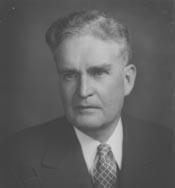
Here you will find contact information for Representative Bruce Barton, including email address, phone number, and mailing address.
| Name | Bruce Barton |
| Position | Representative |
| State | New York |
| District | 17 |
| Party | Republican |
| Status | Former Representative |
| Term Start | January 5, 1937 |
| Term End | January 3, 1941 |
| Terms Served | 2 |
| Born | August 5, 1886 |
| Gender | Male |
| Bioguide ID | B000211 |
About Representative Bruce Barton
Bruce Fairchild Barton (August 5, 1886 – July 5, 1967) was an American author, advertising executive, and Republican politician who served as a Representative from New York in the United States Congress from 1937 to 1941. A prominent figure in both the advertising industry and national politics, he represented a Manhattan district in the U.S. House of Representatives for two terms and became widely known during the 1940 election season as one of the Republican leaders targeted by President Franklin D. Roosevelt in the slogan “Martin, Barton, and Fish!”
Barton was born on August 5, 1886, in Robbins, Tennessee, the son of William E. Barton, a Congregational clergyman and prolific religious writer, and Esther Treat Bushnell, an elementary school teacher. His mother descended from several colonial Connecticut leaders, including Francis Bushnell, Robert Treat, and John Davenport. The family moved frequently during his early years before settling in the Chicago metropolitan area, and Barton was raised in Oak Park, Illinois, a suburb about ten miles from downtown Chicago. He grew up with three siblings—Charles William Barton (born 1887), Helen (born 1889), and Robert Shawmut Barton (born 1894)—in a household strongly shaped by Christian faith and intellectual pursuits. His parents also took in additional children, including a boy named Webster Betty and an African-American girl named Rebecca, whose mother had asked the Bartons to care for her.
From an early age, Barton was drawn to journalism and enterprise. At nine years old he sold newspapers in his spare time, and as a teenager he edited his high school newspaper and worked as a reporter for the Oak Park Weekly, a local paper. He also helped manage his uncle’s maple syrup business, to which he contributed marketing ideas that aided its success. Barton first enrolled at Berea College in Kentucky in 1903, following in his father’s footsteps, and later transferred to Amherst College in Massachusetts. He graduated from Amherst in 1907, an experience that broadened his intellectual horizons and prepared him for a career that would combine writing, business, and public life.
After college, Barton worked as a publicist and magazine editor, gaining experience in both writing and promotion. In 1919 he co-founded the advertising agency Barton, Durstine & Osborn (BDO), which quickly became a significant presence in the emerging world of modern advertising. In 1928 BDO merged with the George Batten Company to form Batten, Barton, Durstine & Osborn (BBDO). Barton rose steadily within the firm and, in 1939, replaced Roy S. Durstine as president of BBDO. He headed the agency until 1961, helping to establish Madison Avenue in New York City as the center of the American advertising industry. Under his leadership, BBDO became one of the major creative advertising firms in the United States, advancing institutional advertising for large corporations and crafting campaigns that shaped national consumer culture. Among other notable achievements, Barton helped create the character of Betty Crocker and has been credited with naming General Motors and General Electric, as well as contributing to an early version of the circular General Electric logo and its associated catchphrase. Beyond advertising, he served on the Peabody Awards Board of Jurors from 1940 to 1942, reflecting his broader influence in media and communications.
Barton’s public career was not without controversy. From 1928 to 1932 he conducted a secret sexual affair with BBDO employee Frances Wagner King, who had presented herself at the firm as unmarried. When her husband later threatened to sue Barton for alienation of affection, Barton paid the couple $25,000 in hush money. In 1932, during a meeting with her attorney, King informed Barton that she was suing him for slander and seeking $250,000 in damages based on an unfavorable job reference he had given a prospective employer. She also claimed to be writing a novel about an advertising man loosely based on Barton and offered to drop the suit and suppress the book in exchange for a $50,000 settlement. After Barton’s arrest under a civil order arising from the slander suit, newspapers publicized the affair and King’s allegations. Barton responded by filing a criminal blackmail charge against King on April 17, 1933. Her trial ran from July 18 to August 2, 1933, and on August 2 a jury found her guilty of blackmail. She served two years in prison before an appeals court reduced her sentence to three to six years. Her attorney, who had arranged for the typesetting of her novel, orchestrated Barton’s arrest, and offered to withdraw the slander suit in exchange for a settlement, was later disbarred in 1936.
Parallel to his business career, Barton developed into a nationally recognized author and commentator. Initially sympathetic to progressive ideas as a young man, he increasingly embraced Republican politics after World War I and became an influential advocate for business-oriented, yet socially conscious, values. He wrote hundreds of magazine articles and syndicated newspaper columns, as well as a series of bestselling books that promoted his vision of the American Dream, blending his small-town upbringing and strong Christian convictions with admiration for American business leaders. His most famous work, The Man Nobody Knows (1925), offered a highly popular and controversial portrayal of Jesus as a vigorous, modern executive and master salesman, in deliberate contrast to the meek image common in contemporary religious teaching. The book included chapter titles such as “The Executive,” “His Advertisements,” and “The Founder of Modern Business,” casting Jesus as a model for modern business leadership. While some critics, including journalist William L. Shirer, derided the book’s arguments as “idiotic ramblings,” it resonated with a wide American audience in the 1920s and became a publishing phenomenon. In a heavily revised 1956 edition, editors at Bobbs-Merrill, with Barton’s consent, removed many of the explicit business and advertising analogies and references to contemporary figures such as Henry Ford, George Perkins, and Jim Jeffries. Historians have debated the meaning of Barton’s work: Otis Pease argued that, despite its sometimes simplistic analogies, The Man Nobody Knows was fundamentally critical of the cruder commercial ethos of its day and urged business-minded Americans to emulate a Jesus characterized by humaneness, sociability, service to others, intolerance of hypocrisy and cruelty, and moral courage.
Barton’s political involvement deepened in the 1920s and 1930s. He became an active supporter of the Republican Party around 1919 and subsequently advised the party and several Republican presidential candidates from the era of President Calvin Coolidge in the 1920s through that of Dwight D. Eisenhower in the 1950s. A staunch opponent of President Franklin D. Roosevelt and the New Deal, Barton offered his public relations expertise to numerous Republican campaigns. He entered elective office himself in 1937, when he won a special election to fill the unexpired term of Democratic Representative Theodore A. Peyser of New York, who had died on August 8, 1937. Taking his seat in the U.S. House of Representatives as a Republican from a Manhattan district, Barton served two terms from 1937 to 1941. During his tenure in Congress, he participated in the legislative process at a time of intense national debate over economic recovery, social welfare, and foreign policy on the eve of World War II, consistently aligning himself with opponents of Roosevelt’s domestic program.
In 1940 Barton sought higher office, running as the Republican candidate for the United States Senate from New York. He was defeated by the Democratic incumbent, Senator James M. Mead. During that campaign, he became a particularly visible symbol of Republican opposition to Roosevelt. The president’s speechwriters coined the memorable phrase “Martin, Barton, and Fish!”—referring to Republican leaders Joseph W. Martin Jr., Bruce Barton, and Hamilton Fish III—to portray them collectively as reactionary foes of the New Deal. The slogan proved effective in shaping public perceptions, and some later commentators used it to characterize Barton as a political reactionary. Historian Otis Pease, however, argued that this image was misleading and that Barton in fact belonged to the more liberal wing of the Republican Party, urging it to broaden its appeal to working-class and average voters. Barton himself played a role in securing the 1940 Republican presidential nomination for Wendell Willkie, a comparatively liberal internationalist, underscoring the complexity of his political stance.
After leaving Congress in 1941, Barton returned full-time to his work at BBDO and to writing, continuing to shape American advertising and public discourse through the 1940s and 1950s. He remained a respected figure in Republican circles and continued to advise party leaders and candidates, including those in the Eisenhower era, while maintaining his public presence as an author and commentator on business, religion, and American life. Barton retired from active leadership at BBDO in 1961, concluding more than four decades at the forefront of the advertising industry. He died on July 5, 1967, leaving behind a substantial body of personal and professional papers, now held by the Wisconsin Historical Society, and a legacy that intertwined religion, business, media, and politics in ways that influenced both his contemporaries and later interpretations of American culture in the early twentieth century.