Representative Bruce L. Braley
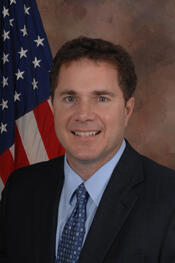
Here you will find contact information for Representative Bruce L. Braley, including email address, phone number, and mailing address.
| Name | Bruce L. Braley |
| Position | Representative |
| State | Iowa |
| District | 1 |
| Party | Democratic |
| Status | Former Representative |
| Term Start | January 4, 2007 |
| Term End | January 3, 2015 |
| Terms Served | 4 |
| Born | October 30, 1957 |
| Gender | Male |
| Bioguide ID | B001259 |
About Representative Bruce L. Braley
Bruce Lowell Braley (born October 30, 1957) is an American politician and attorney who served as the U.S. Representative for Iowa’s 1st congressional district from January 3, 2007, to January 3, 2015. A member of the Democratic Party, he represented eastern Iowa in the United States House of Representatives for four consecutive terms and contributed to the legislative process during a significant period in American history. In 2014 he was the Democratic nominee for an open United States Senate seat in Iowa, but was defeated in the general election.
Braley was born in Grinnell, Iowa, the son of Marcia L. (née Sherwood) and Byard C. Braley. He is of English, Scots-Irish, and German ancestry. His family owned and operated a farm near Brooklyn, Iowa, and he was raised in this rural environment, which helped shape his later political emphasis on agricultural and small-town issues. Growing up in central Iowa, he was exposed early to the economic and social concerns of farm families and working-class communities that would later form a core part of his congressional constituency.
After graduating from high school in Iowa, Braley attended Iowa State University in Ames. While at Iowa State, he became a member of the Phi Kappa Psi fraternity and pursued undergraduate studies that prepared him for a career in law and public service. He went on to earn his Juris Doctor from the University of Iowa College of Law in Iowa City. His legal education at the state’s flagship law school provided the foundation for his subsequent work as a trial lawyer and his later involvement in legislative issues related to consumer protection, workplace safety, and civil justice.
Following law school, Braley began practicing law in Waterloo, Iowa, in 1983. He joined the firm Dutton, Braun, Staack & Hellman, P.L.C. (later known as Dutton, Daniels, Hines, Kalkoff, Cook & Swanson, P.L.C.), where he worked as a trial lawyer for 23 years. In this role he represented individuals in civil litigation, gaining experience in complex cases and building a reputation as an advocate for injured workers and consumers. His long tenure in private practice in Waterloo, a major city within the district he would later represent, helped establish his local profile and connections within the community.
Braley entered electoral politics in 2006, when eight-term Republican Congressman Jim Nussle vacated Iowa’s 1st congressional district seat to make an unsuccessful run for governor. The district, which had been in Republican hands since 1979 and encompassed much of eastern Iowa, had been trending Democratic in presidential elections since 1988. In the 2006 midterm election, Braley ran as a Democrat for the open seat and defeated Republican opponent Mike Whalen, a Quad Cities businessman. He took office on January 3, 2007, representing a district that included key population centers such as Waterloo, Dubuque, and, after redistricting, Cedar Rapids.
During his four terms in Congress, Braley was identified by the non-partisan website OnTheIssues.org as a “Populist-Leaning Liberal.” He participated actively in the legislative process and was involved in major policy debates of the late 2000s and early 2010s. On climate and energy issues, he argued that Congress could not delay action on climate change, telling the Des Moines Register in a December 23, 2008, article that “We have ignored this problem for far too long.” On June 26, 2009, he voted to pass an emissions trading measure designed to limit greenhouse gas emissions and impose new requirements on electric utilities. On economic policy, he supported the American Recovery and Reinvestment Act of 2009 in response to the Great Recession and backed raising the federal minimum wage from $7.25 to $10.10 per hour. He opposed the construction of the Keystone XL pipeline, aligning with environmental and climate-focused concerns. Reflecting a bipartisan gesture, he sat with Republican Representative Charlie Dent of Pennsylvania at President Barack Obama’s 2012 State of the Union address, later praising the president’s emphasis on strengthening the middle class, economic fairness, job creation, and investment in education.
Health care and reproductive rights were central elements of Braley’s congressional record. He voted on November 7, 2009, for House passage of H.R. 3962, the Affordable Health Care for America Act, which included a public health insurance option, and on March 21, 2010, he supported the final version of the Patient Protection and Affordable Care Act (PPACA). He consistently took a pro-choice stance on abortion. He received 100 percent ratings from Planned Parenthood in 2008, 2010, and 2012, and 100 percent position ratings from NARAL Pro-Choice America in 2007 and from 2009 through 2012. He voted against H.R. 3, the No Taxpayer Funding for Abortion Act, on May 4, 2011; against H.R. 358, which sought to amend the PPACA to prohibit abortion coverage, on October 13, 2011; and against H.R. 3541, the Prenatal Nondiscrimination Act of 2012, on May 31, 2012.
Braley’s electoral fortunes reflected both the competitiveness of his district and broader national trends. In 2008 he was easily reelected and became the second member of Iowa’s congressional delegation to endorse a presidential candidate that cycle, announcing his support for former North Carolina Senator John Edwards on December 5, 2007, in Waterloo. After Edwards withdrew, Braley endorsed Senator Barack Obama on April 30, 2008. In the 2010 midterm election, amid a strong Republican year, he narrowly defeated Republican challenger Ben Lange, an attorney from Independence, Iowa, by about 4,000 votes out of more than 215,000 cast. A margin of roughly 4,300 votes in his home base of Black Hawk County enabled him to overcome Republican coattails from gubernatorial candidate Terry Branstad and Senator Chuck Grassley; Grassley carried every county in the district, and Branstad carried all but three. Following redistricting before the 2012 election, Braley’s district lost heavily Democratic Davenport but gained Cedar Rapids and several northeastern Iowa counties. On April 3, 2012, he announced his reelection campaign in his hometown of Brooklyn, Iowa. Ben Lange and Dubuque businessman Rod Blum sought the Republican nomination, with Lange ultimately winning the primary and facing Braley in a rematch. Braley led all Iowa congressional candidates in out-of-state campaign contributions, receiving about 3.5 times as much from out-of-state donors as from in-state, and raised approximately $2.46 million for his reelection effort, with lawyers and lobbyists, labor groups, and health-related interests among his largest sources of support. Although a Republican activist and a political opponent filed House ethics complaints concerning his fundraising, the charges were found to be without merit. Braley spent about $2.11 million during the campaign and won reelection in 2012 by a substantially wider margin than in 2010.
In 2014 Braley chose not to seek another term in the House and instead ran for the U.S. Senate seat being vacated by retiring Senator Tom Harkin. As the Democratic nominee in a closely watched race, he faced Republican state senator Joni Ernst. Despite his established profile as a four-term congressman and his record on economic, health care, and environmental issues, Braley was defeated in the general election, and his Senate bid marked the end of his congressional service on January 3, 2015. After leaving office, he returned to private life and the practice of law, concluding a period of federal legislative service that had spanned eight years and coincided with major national debates over health care reform, economic recovery, and climate policy.